


-
 By:
Valerie Puffenberger, PMHNP-BC
By:
Valerie Puffenberger, PMHNP-BC -
Editor:
Phyllis Rodriguez, PMHNP-BC
-
Clinical Reviewer:
Dr. Ash Bhatt, MD, MRO
 By:
By:
 Editor:
 Clinical Reviewer:
Key Takeaways
- So many people do not get remission even after two well-managed treatment, but you can stop this by identifying the underlying symptoms that still persists.
- The single biggest turning point in treatment-resistant cases is an undiagnosed thyroid issue, bipolar pattern, or an anxiety disorder that might have been working against the treatment.
- In so many patients, TMS gave them their first real remission after six failed medications. It is an evidence-based option that can help even after several antidepressants haven’t worked.
If you’ve taken your antidepressant exactly as prescribed, given it the recommended six to eight weeks, and still feel like you’re underwater, you’re not imagining it, and you’re not failing at treatment. This is one of the more common, and more frustrating, experiences in depression care that has a name: treatment-resistant depression (TRD).
In this article, we’ll walk through what TRD actually means clinically, why standard treatment for depression doesn’t work for everyone, the signs to watch for, and the treatment pathways that help people move forward when the first, second, or even third approach hasn’t worked.
What Is Treatment-Resistant Depression?
Treatment-resistant depression describes major depressive disorder that hasn’t improved after adequate trials of standard treatment. Clinically, that usually means a person has tried at least two different antidepressants, at the right dose, for a long enough period, without meaningful improvement in symptoms.
That definition matters because it rules out the most common reason treatment “fails” in the short term: not giving it enough time or a high enough dose. TRD isn’t about a medication that hasn’t kicked in yet. It’s about a pattern of non-response across multiple, properly administered attempts.
It also helps to separate TRD from what clinicians sometimes call difficult-to-treat depression, which can involve slow progress, partial response, or complicating factors like chronic illness, but still responds to treatment eventually with the right adjustments. TRD is more specific, and it should always be evaluated by a mental health professional rather than self-diagnosed based on frustration with slow progress.
How Common Is Treatment-Resistant Depression, and Why Does It Happen to Some People and Not Others?
TRD is far more common than most people assume. Data from the landmark STAR*D trial, funded by the National Institute of Mental Health, found that only about a third of patients reached remission after their first antidepressant, and remission rates dropped further with each subsequent treatment attempt, falling to just 13% by the fourth medication trial. In level 4, seven to 10 percent of participants became symptom-free, with no statistically significant differences between the medications in terms of remission, response rates or side effect burden.
That data point matters for a simple reason: it tells us treatment resistance is a well-documented pattern that researchers have spent decades studying, precisely because so many people experience it.
Quick Stats Box
- Roughly 7–10% of patients considered highly treatment-resistant became symptom-free after switching to a fourth-line medication combination, according to NIMH’s STAR*D findings.
- In a secondary analysis of STAR*D data, about a third of patients did not achieve remission or adequate response after two treatment trials, meeting criteria for treatment-resistant depression.
- In 2021, an estimated 14.5 million U.S. adults had at least one major depressive episode with severe impairment, representing 5.7% of all U.S. adults Anxiety and Depression Association of America
Why do some people respond quickly while others don’t? It’s usually a layered mix of an underlying diagnosis that was never fully explored, biological differences in how the brain responds to medication, and outside factors, medical conditions, substance use, unresolved trauma, that quietly interfere with treatment. We’ll walk through each of these mechanisms in the next section, because understanding why treatment stalls is the difference between trying the same approach a fifth time and actually changing course.
Signs That Your Depression May Be Treatment-Resistant
TRD more often looks like partial relief that plateaus, or symptoms that shift shape without actually lifting. If you’ve been in treatment for a while and still feel stuck, these are the patterns worth paying attention to.
1. Emotional signs
This often shows up as sadness, hopelessness, or a numb detachment that persists no matter how consistent you’ve been with treatment, including a loss of interest in things that used to matter to you.
2. Cognitive signs
It can look like ongoing trouble concentrating, harsh self-critical thinking, memory lapses, or difficulty making even small decisions, especially if these are new or worsening rather than improving.
3. Physical signs
Unrelenting fatigue, disrupted sleep, appetite changes, and a general loss of motivation are common, particularly when they don’t track with anything else going on in your life.
4. Functional impact
The clearest sign is often a quality of life that keeps declining, pulling away from relationships, or feeling like you’re doing everything “right” in treatment while still losing ground.
None of these signs alone confirms TRD. But when several of them persist despite consistent treatment, it’s a strong signal to bring your care team back to the table for a fresh look.
Why Doesn’t Depression Treatment Work for Everyone?
This is the question most people actually want answered, and the honest response is that there’s rarely one single cause. A few categories tend to come up again and again in patients who aren’t responding:
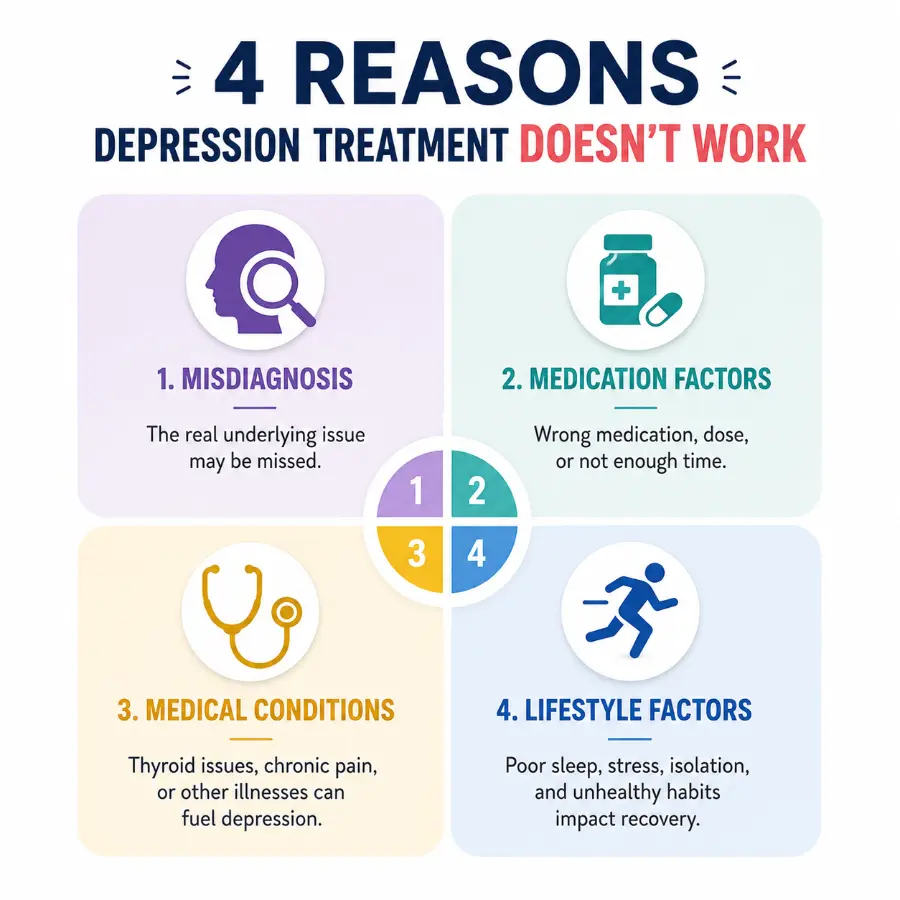
- An incorrect or incomplete diagnosis:
Depression symptoms can overlap heavily with other conditions, and if the underlying diagnosis is off, treatment will miss the mark no matter how consistently it’s followed. This includes:
- Bipolar disorder, where antidepressants alone can sometimes worsen mood instability
- Anxiety disorders that are driving or amplifying depressive symptoms
- ADHD, particularly in adults, where untreated attention issues mimic depressive fatigue
- PTSD, where trauma responses are misread as standalone depression
- Medication-related factors:
Sometimes the diagnosis is right, but the dose was never actually raised to a therapeutic level, the medication wasn’t given long enough to take full effect, or interactions with other prescriptions blunted its effectiveness.
- Underlying medical conditions:
Physical health and mental health are deeply connected, and certain conditions can produce depressive symptoms that won’t respond to psychiatric medication alone:
- Thyroid disorders
- Hormonal imbalances
- Vitamin deficiencies, particularly B12 and D
- Chronic illness and the fatigue or pain that comes with it
- Lifestyle factors:
These don’t cause depression on their own, but they can actively work against treatment:
- Alcohol use
- Substance misuse
- Chronic sleep disruption
- Ongoing, unmanaged stress
Dr. Ash Bhatt’s Clinical Perspective:
A patient comes to me on their third antidepressant, convinced medication simply “doesn’t work” for them. We run a full evaluation, and it turns out their thyroid panel was never checked, or their “depression” was actually the depressive phase of undiagnosed bipolar II. Once we treat the actual condition, the same medications that failed before start working. I don’t consider a case truly treatment-resistant until we’ve ruled these out first.
Who’s at Higher Risk for Treatment-Resistant Depression?
Certain factors don’t guarantee TRD, but they meaningfully raise the odds, and knowing yours can help your provider build a more targeted plan from the start rather than reacting after multiple failed attempts.
- A history of childhood trauma or adverse childhood experiences. Meta-analytic evidence shows that any form of childhood maltreatment is associated with more than double the risk of developing depression later in life, and individuals with this history are more likely to develop a chronic, treatment-resistant course that responds less predictably to standard antidepressants.
- Age. One large cohort study found that the risk of treatment-resistant depression increased by roughly 33% with every additional decade of age, likely tied to accumulating medical comorbidities and longer illness duration.
- Being female. A 13-year nationwide cohort study found that women with depression were considerably more likely to develop TRD than men, 21.24% compared to 14.02%.
- Co-occurring psychiatric conditions. Anxiety disorders, ADHD, substance use disorders, and personality disorders are all more prevalent in people with major depression and are predictive of slower or weaker treatment response.
- Chronic physical health conditions. Diabetes, heart disease, functional gastrointestinal disorders, thyroid disease, and autoimmune conditions like lupus and rheumatoid arthritis have all been linked to worse depression outcomes and prognosis.
- Severity and duration of the current episode. The longer and more severe an untreated or under-treated episode runs, the harder it tends to be to reverse, which is part of why early, accurate treatment matters so much.
If several of these apply to you, it’s worth raising them directly with your provider, even before starting treatment. This context shapes the plan from day one, instead of being pieced together after several rounds of trial and error.
How Is Treatment-Resistant Depression Actually Diagnosed?
Diagnosing TRD isn’t as simple as noting that two medications didn’t work, it requires a genuinely comprehensive evaluation:
- A full psychiatric evaluation to map out symptom history, severity, and how your mood, sleep, and functioning have changed over time, this is where conditions like bipolar disorder or an anxiety disorder often first surface.
- A detailed review of your medical history, including past diagnoses, family psychiatric history, and any major life events or trauma that could be contributing to your current symptoms.
- A complete medication history, covering not just which antidepressants you’ve tried, but the exact doses, how long you stayed on each one, and what side effects or partial responses you experienced, details that are easy to lose track of but critical for spotting patterns.
- A physical examination and lab work when appropriate, such as thyroid panels, vitamin D and B12 levels, and metabolic testing, since several medical conditions can produce depression-like symptoms that won’t respond to psychiatric medication alone.
- Standardized depression screening tools, like the PHQ-9 or Hamilton Depression Rating Scale, to measure symptom severity objectively and track change over time rather than relying on subjective impressions alone.
- A structured process of ruling out other conditions, particularly bipolar disorder, substance-related mood symptoms, and personality disorders, since each of these changes the treatment plan significantly if missed.
This step is often where the real breakthrough happens, well before any new treatment is even introduced. Getting the diagnosis right reshapes everything that follows.
Treatment Options for Treatment-Resistant Depression
Once the diagnosis is confirmed and any contributing factors are addressed, treatment for TRD typically layers several approaches together rather than relying on any single one. Here’s what that looks like in practice.
- Medication Adjustments
This can mean switching to a different class of antidepressant entirely rather than another drug in the same family, combination therapy using two medications together, or augmentation strategies, like an atypical antipsychotic or mood stabilizer, to boost the effect of the first. Our medication management program is built specifically around this kind of ongoing adjustment rather than a set-it-and-forget-it prescription.
- Evidence-based Psychotherapy
Cognitive Behavioral Therapy (CBT) targets the thought patterns that reinforce depression; Dialectical Behavior Therapy (DBT) is especially useful when emotional regulation is a major struggle; Acceptance and Commitment Therapy (ACT) helps build psychological flexibility; and trauma-informed therapy addresses cases where past trauma is actively driving current symptoms, which is common in TRD specifically.
- Brain stimulation therapies
For depression that hasn’t responded to medication and therapy alone, these have become some of the most researched next steps available:
- Transcranial Magnetic Stimulation (TMS) is a non-invasive, FDA-approved option that uses magnetic pulses to stimulate underactive brain regions involved in mood regulation.
- Electroconvulsive Therapy (ECT) remains one of the most effective treatments available for severe, treatment-resistant cases, particularly when safety is a concern and a faster response is needed.
- Esketamine or ketamine therapy is used in clinically appropriate cases under close medical supervision, and has shown rapid effects in patients who haven’t responded to more conventional approaches.
- Lifestyle and whole-person support
Medication and therapy do the heavy lifting, but they work better when supported by consistent sleep, balanced nutrition, regular physical activity, structured stress management, and involved family support, which affect how well it works.
Dr. Ash Bhatt’s Clinical Perspective: Do not consider TMS as an experimental fallback. In the patients I’ve referred for it after multiple failed medications, roughly half see a meaningful response, and about a third reach full remission, numbers that hold up against many oral antidepressants. And combining medication management, therapy, and a stimulation-based option into one coordinated plan instead of testing each in isolation changes the outcome.
If you’re navigating this kind of layered approach, our medication management and depression treatment programs are built around this exact philosophy, coordinating every piece of your care rather than treating each one separately.
When Should You Seek Specialized Treatment?
Standard outpatient care is enough for many people. But certain signs mean it’s time to bring in a higher level of support:
- Symptoms that persist despite following treatment as prescribed
- Repeated medication failures, especially after two or more adequate trials
- Increasing suicidal thoughts, even if they feel passive or fleeting
- Difficulty functioning at work, school, or home
- Substance use developing alongside depression, which often signals a need for dual diagnosis care
If any of this sounds like where you are right now, please don’t wait for things to get worse before reaching out. A comprehensive evaluation can identify what’s actually driving your symptoms and connect you with a level of care, whether that’s intensive outpatient support or inpatient mental health treatment, that matches what you’re dealing with.
If you are currently having thoughts of harming yourself, please call or text 988 to reach the Suicide & Crisis Lifeline, available 24/7.
Can People Recover from Treatment-Resistant Depression?
Yes, and this deserves as much weight as everything above it. A TRD diagnosis doesn’t mean treatment has permanently failed. It means the approach used so far wasn’t the right fit, not that no approach will work.
Recovery from TRD typically comes with adjustment along the way rather than getting everything right on the first attempt, and that’s normal, not a setback. What consistently makes the difference for the patients we see is staying engaged with a care team that keeps reassessing, rechecking the diagnosis, adjusting medications, adding therapy or brain stimulation when needed, rather than repeating the same approach and hoping for a different result. With that kind of personalized, ongoing care, many people with TRD do reach real, lasting improvement. It may take longer for some than others, but longer is not the same as impossible.
Moving Forward When Standard Treatment Hasn’t Worked
Needing a different approach to depression treatment isn’t a personal failure, and it isn’t a sign that recovery is out of reach. It’s a signal that your care needs to be reevaluated with fresh eyes, deeper diagnostic work, and treatment options that go beyond what’s already been tried. If you’ve been doing everything asked of you and still aren’t feeling better, that’s exactly the moment to seek a comprehensive evaluation and a personalized care plan — not to give up on the process.
Call at 888-534-2295 | Verify Insurance coverage