
Insurance Disclaimer
We may contact your insurance provider to verify benefits and obtain any required authorizations. Verification of benefits is not a guarantee of payment or coverage. Coverage and payment are subject to your health plan’s terms, limitations, and exclusions at the time services are provided. Any services denied or not covered by your insurer may become your financial responsibility.
Anthem Rehab Coverage: Everything You Need To Know
About Anthem Insurance

Anthem, now part of Elevance Health, is one of the largest health insurance providers in the United States and serves millions of members through employer-sponsored plans, individual and family plans, Medicaid, and Medicare Advantage coverage.
As a Blue Cross Blue Shield licensee operating in multiple states, Anthem provides access to one of the largest healthcare networks in the country, including extensive medical, behavioral health, pharmacy, and virtual care services. In addition to traditional healthcare coverage, many Anthem plans include behavioral health benefits such as therapy, psychiatric care, medication-assisted treatment (MAT), detox, inpatient rehab, outpatient programs, and treatment for co-occurring mental health disorders like anxiety, depression, PTSD, and addiction. One thing that makes Anthem unique compared to many insurers is its integration with Carelon Behavioral Health (formerly Beacon Health Options), which specializes in behavioral health management and addiction treatment coordination.
For those researching Anthem rehab coverage, many Anthem plans help cover medically necessary addiction and mental health treatment under federal mental health parity laws. Depending on the specific plan and state, coverage may include medical detox, residential rehab, Partial Hospitalization Programs (PHPs), Intensive Outpatient Programs (IOPs), outpatient therapy, dual diagnosis treatment, telehealth behavioral health services, and long-term recovery support. Anthem PPO plans are often viewed favorably because they may allow broader provider flexibility and nationwide BlueCard access, while HMO-style plans may require members to stay within Anthem’s network for the best coverage and lowest costs. Many treatment providers and patients online describe Anthem as offering relatively strong behavioral health benefits overall, though prior authorization and ongoing utilization reviews are common for higher levels of care like detox and residential rehab. Many rehab centers that work with Anthem can verify benefits and manage the authorization process on the patient’s behalf before treatment begins.
How Does Anthem Insurance work for substance abuse treatment?
Anthem insurance works for substance abuse treatment by covering medically necessary addiction and behavioral health services, but the exact process depends on your plan, state, provider network, and whether Carelon Behavioral Health manages your benefits. In many cases, Anthem may cover detox, inpatient rehab, residential treatment, PHP, IOP, outpatient therapy, medication-assisted treatment (MAT), psychiatric care, and dual diagnosis treatment for people dealing with addiction and mental health conditions together. When someone seeks care, the treatment center usually verifies Anthem benefits, checks in-network status, estimates deductibles or copays, and submits prior authorization for higher levels of care like detox, residential rehab, PHP, or IOP. Anthem’s own provider resources note that prior authorization is part of the process for many services, and Carelon often handles utilization management and clinical reviews for behavioral health and substance use disorder claims.
What makes Anthem different from some insurers is its connection to Elevance Health, Blue Cross Blue Shield networks, and Carelon Behavioral Health, which can give members broad provider access but also a more structured approval process. Patients and treatment providers online commonly report that Anthem coverage is strongest when the facility is in-network and experienced with Anthem/Carelon authorizations, while delays or denials are more likely when documentation does not clearly show medical necessity. PPO plans usually offer more flexibility for choosing rehab centers, while HMO and Medicaid-style plans may have tighter network rules. The best step is to have the rehab center verify benefits before admission, confirm whether Anthem or Carelon is reviewing the claim, and ask what levels of care are covered so there are no surprises once treatment starts.
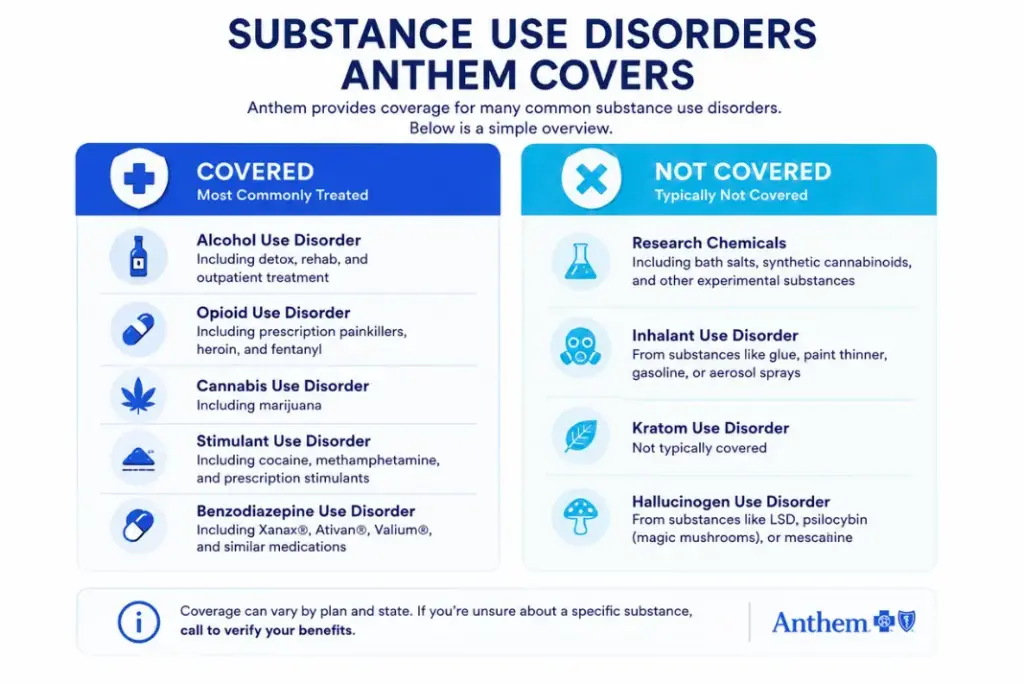
Does Anthem Cover Substance Abuse and Mental Health Disorders?
Yes, Anthem generally covers both substance abuse treatment and mental health treatment, including care for co-occurring disorders where addiction and mental health conditions happen at the same time. Depending on the Anthem plan and state, coverage may include medical detox, inpatient rehab, residential treatment, PHP, IOP, outpatient therapy, psychiatric care, medication-assisted treatment (MAT), telehealth behavioral health services, and treatment for conditions like anxiety, depression, PTSD, bipolar disorder, and trauma-related disorders alongside addiction recovery. One thing that makes Anthem stand out compared to some insurers is its integration with Carelon Behavioral Health, which focuses heavily on whole-person behavioral healthcare and coordinated treatment between medical and mental health providers. Anthem and Carelon both publicly emphasize integrated care models and evidence-based behavioral health treatment across addiction and mental health services.
Patients and treatment providers online often describe Anthem’s behavioral health coverage as relatively strong when using in-network providers, especially under PPO plans that allow broader access to rehab centers and specialists. However, many people also mention that prior authorization, utilization reviews, and Carelon-managed behavioral health approvals can play a major role in determining coverage for higher levels of care like detox, residential rehab, PHP, and IOP. Providers frequently note that Anthem tends to approve treatment more smoothly when clinical documentation clearly shows medical necessity, relapse risk, withdrawal symptoms, or co-occurring mental health conditions requiring integrated care. Another important thing many members do not realize is that behavioral health benefits may sometimes be “carved out” to Carelon even if the insurance card only shows Anthem, so rehab centers often verify both Anthem medical benefits and Carelon behavioral health benefits before admission.
Does Anthem Cover Luxury Rehab Treatment?
Yes, Anthem may cover treatment at a luxury rehab center, but coverage is generally based on the medical necessity of the clinical treatment, not the luxury amenities themselves. Depending on the Anthem plan and state, insurance may help pay for medical detox, inpatient rehab, therapy, psychiatric care, medication-assisted treatment (MAT), PHP, IOP, and dual diagnosis treatment for co-occurring mental health conditions like anxiety, depression, PTSD, or trauma — even when care takes place at a high-end facility. However, features such as private suites, spa treatments, gourmet meals, concierge transportation, executive accommodations, or resort-style experiences are usually considered non-medical and are typically not covered. Anthem’s behavioral health benefits are often managed through Carelon Behavioral Health, which commonly requires prior authorization and ongoing utilization reviews for residential treatment claims.
Many patients and rehab providers online describe Anthem PPO plans as the best option for accessing luxury rehab because PPOs may include partial out-of-network benefits and BlueCard nationwide access, allowing members to seek treatment outside their home state more easily than many regional insurers. At the same time, people frequently mention that Anthem’s approval process can feel highly structured, especially for residential rehab, with authorizations often granted in stages based on clinical progress and ASAM Criteria. A valuable tip many admissions teams recommend is asking whether the luxury rehab facility is both in-network with Anthem and recognized through the BlueCard system, because this can dramatically reduce out-of-pocket costs. It is also important to request a written breakdown of what Anthem may cover versus what will remain private-pay before admission, since many upscale facilities bundle non-covered amenities into their pricing. Some Anthem plans also provide access to care navigators or member advocates through Carelon who can help coordinate authorizations, provider selection, and step-down care after treatment.
Does Anthem Cover Residential Rehab Treatment?
Yes, Anthem commonly covers residential rehab treatment for drug addiction, alcohol addiction, and co-occurring mental health disorders when the treatment is considered medically necessary. Depending on the Anthem plan and state, coverage may include medical detox, inpatient residential rehab, therapy, psychiatric care, medication-assisted treatment (MAT), PHP, IOP, family counseling, and dual diagnosis treatment for conditions like anxiety, depression, PTSD, trauma, or bipolar disorder alongside addiction recovery. Anthem behavioral health benefits are often managed through Carelon Behavioral Health, which uses ASAM Criteria and evidence-based clinical guidelines to determine the appropriate level of care and whether residential treatment is medically necessary versus outpatient care. Prior authorization is usually required before admission, and Anthem/Carelon commonly reviews treatment progress throughout the stay to determine whether additional residential days will continue to be covered.
Many patients and treatment providers online describe Anthem PPO plans as offering relatively strong flexibility for residential rehab because PPO members may have access to broader provider networks and BlueCard nationwide coverage, while HMO and Medicaid-style Anthem plans often have more restrictive network rules. Providers frequently note that Anthem approvals tend to go more smoothly when facilities submit detailed ASAM-based documentation explaining withdrawal risks, relapse history, mental health symptoms, failed outpatient attempts, and the need for 24/7 structured care. Some online patient experiences mention frustrations with utilization reviews and staggered approvals, where coverage is extended in shorter increments rather than approving an entire stay upfront, but many providers say this is increasingly common across the insurance industry. One of the most helpful things someone can do before admission is ask the rehab center whether they regularly work with Anthem and Carelon authorizations, because experienced admissions teams can often reduce delays, explain expected out-of-pocket costs, and coordinate continued-stay reviews directly with the insurer.
Does Anthem Cover Outpatient Drug and Alcohol Treatment?
Anthem commonly covers outpatient drug and alcohol treatment, and many Anthem members use outpatient care either as a starting point for recovery or as step-down care after detox or residential rehab. Depending on the specific Anthem plan and state, coverage may include standard outpatient therapy, Intensive Outpatient Programs (IOPs), Partial Hospitalization Programs (PHPs), medication-assisted treatment (MAT), psychiatric care, relapse prevention, family counseling, telehealth behavioral health services, and treatment for co-occurring disorders like anxiety, depression, PTSD, bipolar disorder, or trauma alongside addiction recovery. Anthem’s behavioral health benefits are frequently managed through Carelon Behavioral Health, which uses ASAM Criteria and clinical guidelines to determine the appropriate level of outpatient care and whether prior authorization is required for services like PHP or IOP. Anthem provider policies specifically recognize PHP and IOP as covered structured treatment levels designed for members who need more support than weekly therapy but do not require 24/7 inpatient supervision.
Many providers and patients online describe Anthem PPO plans as especially strong for outpatient behavioral healthcare because of the flexibility to access broader provider networks and BlueCard coverage across multiple states. Lower-intensity outpatient therapy is often easier to get approved than residential rehab, while PHP and IOP programs commonly require clinical reviews, authorization updates, and ongoing documentation showing progress and continued medical necessity. Providers who work regularly with Anthem and Carelon often note that outpatient approvals tend to go more smoothly when treatment plans clearly document relapse risk, withdrawal history, mental health symptoms, and why a structured outpatient setting is needed instead of traditional weekly counseling. Another important thing many members overlook is that Anthem increasingly supports integrated and virtual behavioral health programs, including telehealth therapy and virtual IOP/PHP options in some markets, which can make ongoing recovery care more accessible for people balancing work, school, or family responsibilities.
Additional Information about Anthem
One important thing many people do not realize about Anthem is that its behavioral health system is heavily connected to Carelon Behavioral Health, one of the largest behavioral health management organizations in the country, serving tens of millions of members nationwide. Because of this integration, Anthem often provides far more structured coordination between detox, rehab, outpatient treatment, psychiatry, telehealth, and long-term recovery support than many insurers that treat addiction care as isolated short-term treatment. Anthem and Carelon publicly emphasize “whole-person” and recovery-focused care models, meaning treatment approvals are often tied not only to detox symptoms, but also to mental health conditions, relapse risk, housing stability, chronic pain, trauma history, and long-term recovery planning.
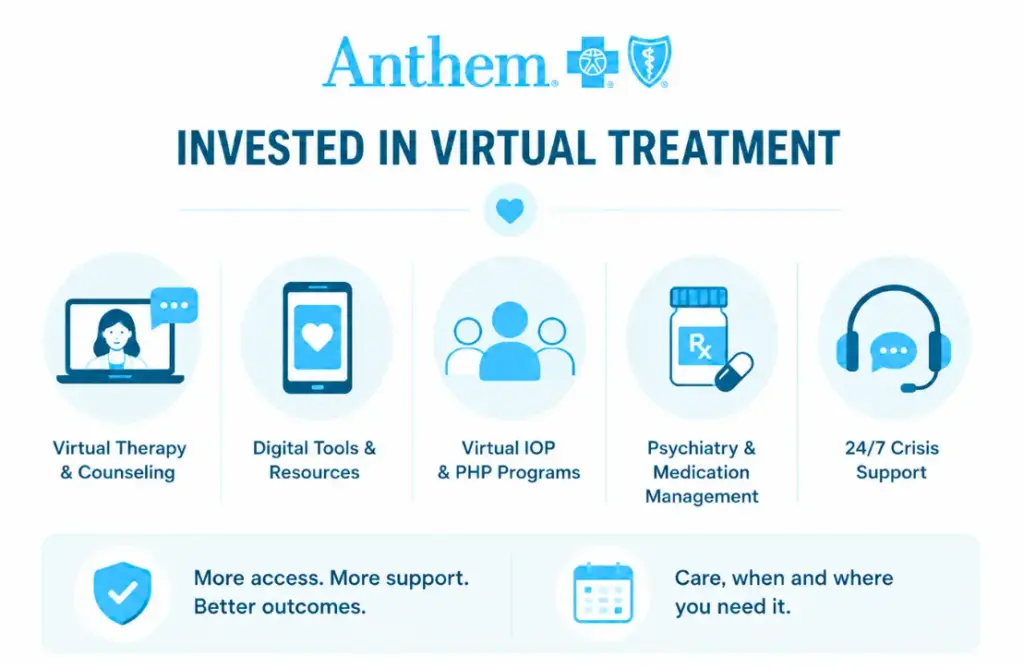
Another valuable thing to know is that Anthem has invested heavily in virtual behavioral health and telehealth recovery support, which can be extremely helpful after detox or inpatient rehab. Research consistently shows that ongoing engagement in treatment significantly improves long-term recovery outcomes, and studies cited by behavioral health organizations show telehealth follow-up can improve retention in addiction care after discharge. Anthem and Carelon now support telehealth therapy, virtual IOPs, messaging support, and digital behavioral health tools designed to reduce the “white space” between appointments — a time when relapse risk is often highest. Many providers and patients online say this ongoing step-down support is one of Anthem’s biggest strengths compared to insurers that focus mainly on crisis stabilization or short inpatient stays.
Personalize your treatment plan
with a benefits specialist. Call us.
Safely Detox at Castillian

Find Addiction Treatment
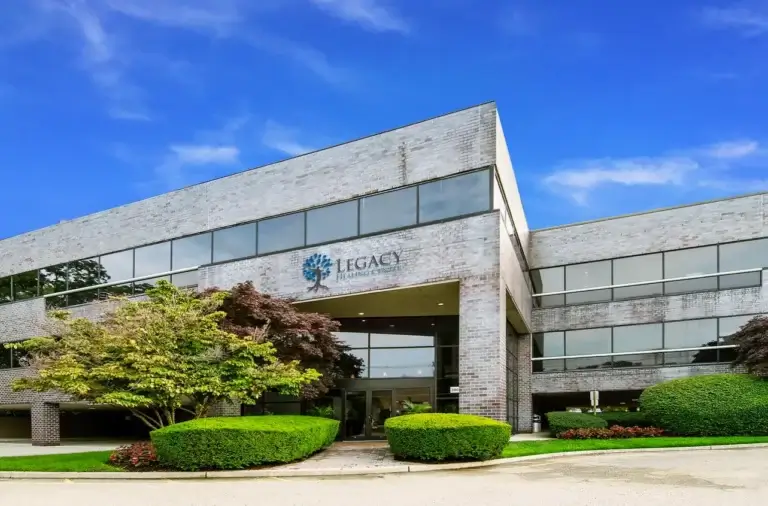
Legacy Healing Center Parsippany, NJ
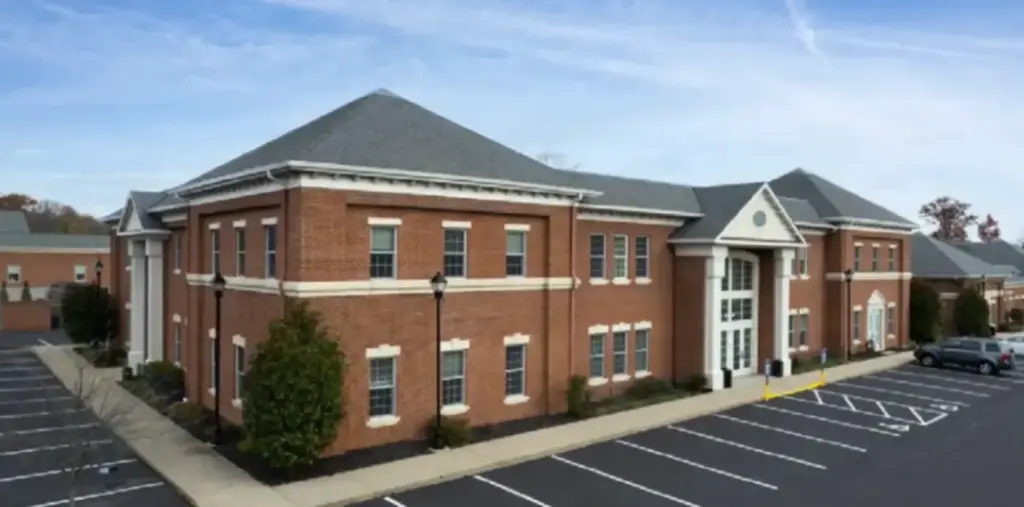
Legacy Healing Center Cincinnati, OH