
Disclaimer: A treatment center will attempt to verify your health insurance benefits and/or necessary authorizations on your behalf. Please note, that this is only a quote of benefits and/or authorization. We cannot guarantee payment or verification eligibility as conveyed by your health insurance provider will be accurate and complete. Payment of benefits is subject to all terms, conditions, limitations, and exclusions of the member’s contract at the time of service. Your health insurance company will only pay for services that it determines to be “reasonable and necessary.” The treatment center will make every effort to have all services preauthorized by your health insurance company. If your health insurance company determines that a particular service is not reasonable and necessary, or that a particular service is not covered under your plan, your insurer will deny payment for that service and it will become your responsibility. We respect your privacy. We request this information to provide you with detailed coverage of benefits. By sharing your phone number, you agree to receive SMS messages via text from us – including details about your benefits. Message and data rates may apply, and frequency varies, text STOP to unsubscribe or HELP for assistance. Sharing this information is not a condition of treatment.
Medical Mutual Rehab Coverage: Everything You Need To Know
About Medical Mutual Insurance
Medical Mutual is one of the oldest and largest health insurance providers based in Ohio, offering coverage for individuals, families, employers, and Medicare members since 1934.
Known for its strong regional provider network and focus on whole-person care, Medical Mutual offers medical, behavioral health, pharmacy, and wellness benefits that may help members access mental health services and substance abuse treatment, including detox, inpatient rehab, outpatient programs, therapy, and medication-assisted treatment (MAT). Medical Mutual also provides access to behavioral health case managers, care navigators, and support resources designed to help members coordinate addiction and mental health treatment more effectively.
If you’re looking into Medical Mutual rehab coverage, many plans may help pay for addiction and mental health treatment, including detox, inpatient rehab, outpatient programs, therapy, and medication-assisted treatment (MAT). Medical Mutual also covers many types of care for people dealing with both substance abuse and mental health conditions like anxiety, depression, PTSD, or bipolar disorder at the same time. The exact coverage depends on your specific plan, whether the treatment center is in-network, and if prior authorization is required, but many rehab facilities can help verify your benefits and walk you through the approval process before treatment begins.
How Does Medical Mutual Insurance work for substance abuse treatment?
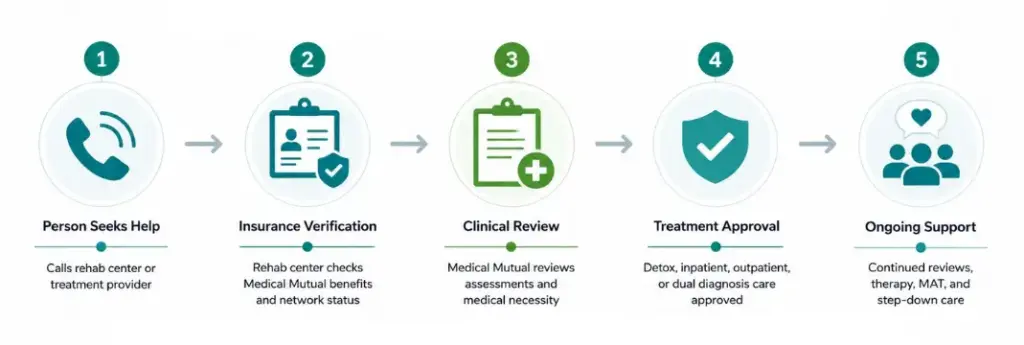
Medical Mutual works for substance abuse treatment much like other major insurance providers, but the process is usually centered around verifying what level of care is medically necessary before treatment begins. In many cases, Medical Mutual may help cover detox, inpatient rehab, outpatient treatment, therapy, medication-assisted treatment (MAT), and care for co-occurring mental health disorders like anxiety, depression, or PTSD. Once a person reaches out to a rehab center, the facility will often contact Medical Mutual directly to verify benefits, check whether the center is in-network, estimate out-of-pocket costs, and determine whether prior authorization is required for services like detox or residential rehab.
Compared to some insurance providers that outsource behavioral health management, Medical Mutual generally manages coverage through its own plan structure and medical necessity review process. Like most major insurers, Medical Mutual may require clinical documentation and treatment assessments before approving higher levels of care, especially inpatient or residential treatment. Many plans cover both substance abuse treatment and mental health services under behavioral health benefits, which can make it easier for patients with dual diagnosis conditions to receive integrated care. PPO plans often provide more flexibility for choosing rehab centers, including some out-of-network options, while HMO-style plans may require members to stay within the provider network to receive the best coverage and lowest costs. Before treatment starts, many rehab centers can handle the insurance verification and authorization process on the patient’s behalf, helping reduce delays and confusion during admission.
Does Medical Mutual Cover Substance Abuse and Mental Health Disorders?
Yes, Medical Mutual generally covers both substance abuse treatment and mental health treatment as part of its behavioral health benefits, and many plans also include coverage for co-occurring disorders — when someone is dealing with addiction and a mental health condition like anxiety, depression, PTSD, or bipolar disorder at the same time. Depending on the specific plan, Medical Mutual may help cover detox, inpatient rehab, outpatient treatment, therapy, psychiatric care, medication-assisted treatment (MAT), counseling, and virtual mental health services. Like other major insurers, Medical Mutual’s coverage is guided by federal mental health parity laws, which require mental health and substance use treatment to be covered similarly to physical medical care.
Many patients and treatment providers online describe Medical Mutual as having solid behavioral health coverage overall, especially for in-network treatment in Ohio and the Midwest, though approval requirements and out-of-pocket costs can vary depending on the plan type. PPO plans typically offer more flexibility for choosing rehab centers and therapists, while HMO-style plans may require members to stay within the provider network to receive the highest level of coverage. Medical Mutual also offers behavioral health case management and care navigation resources, which can help members coordinate addiction and mental health treatment more smoothly. Because co-occurring disorders are extremely common in addiction recovery, many rehab centers that accept Medical Mutual provide integrated dual diagnosis treatment designed to address both conditions together rather than separately. Before beginning treatment, it’s important to verify benefits, ask whether prior authorization is required, and confirm whether the facility is in-network, since these factors can affect how much Medical Mutual will pay toward treatment.
Does Medical Mutual Cover Luxury Rehab Treatment?
Yes, Medical Mutual may cover luxury rehab treatment, but like most major insurance providers, it typically covers the clinical and medically necessary parts of treatment — not the luxury amenities themselves. This means Medical Mutual may help pay for services like medical detox, residential rehab, therapy, psychiatric care, medication-assisted treatment (MAT), and dual diagnosis treatment for co-occurring mental health disorders, even if they take place at a high-end rehab facility. Coverage depends heavily on the specific plan, whether the facility is in-network, and whether Medical Mutual determines the level of care is medically necessary. Many people searching online report that PPO plans tend to offer more flexibility for luxury or out-of-network rehab centers, while HMO-style plans may have stricter network limitations and prior authorization requirements. Before admission, most luxury rehab centers that work with Medical Mutual can verify benefits, explain out-of-pocket costs, and separate covered clinical services from private-pay amenities like private suites, spa treatments, or concierge services.
Medical Mutual Plans that Cover Rehab
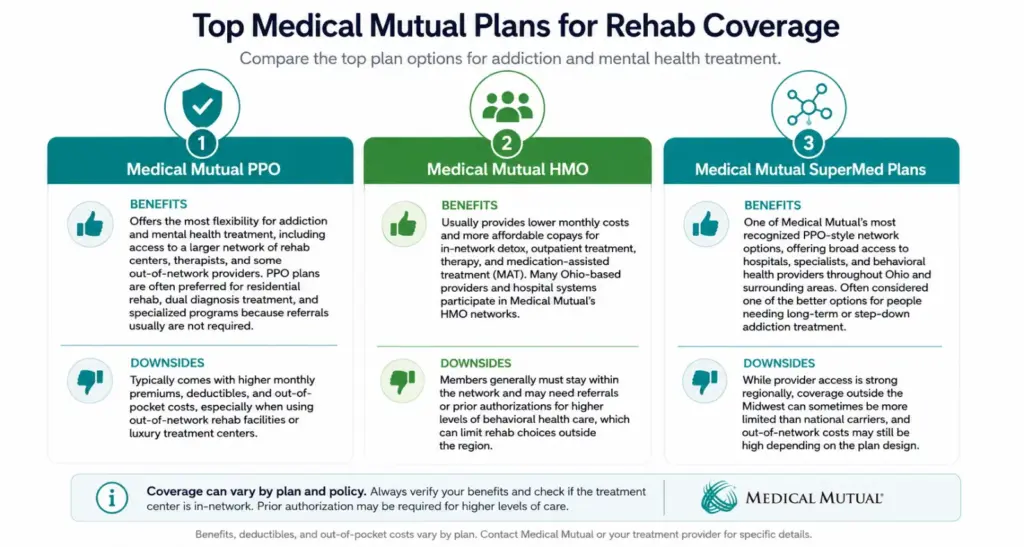
Medical Mutual offers PPO, HMO, and EPO plans that can be used for addiction treatment services, understanding the differnces can help you choose the best option for the specific addiction and mental health treatment you are seeking.
Does Medical Mutual Cover Residential Rehab Treatment?
Yes, Medical Mutual may cover residential rehab treatment for drug addiction, alcohol addiction, and co-occurring mental health disorders when the treatment is considered medically necessary. Depending on the specific plan, coverage may include medical detox, inpatient residential rehab, therapy, psychiatric care, medication-assisted treatment (MAT), and dual diagnosis treatment for conditions like anxiety, depression, PTSD, or bipolar disorder alongside addiction recovery. Like most major insurance providers, Medical Mutual typically requires prior authorization for residential rehab and may review clinical information to determine whether inpatient care is appropriate versus outpatient treatment.
Compared to some national insurers, Medical Mutual is often viewed as having particularly strong provider access in Ohio and the Midwest, especially through PPO and SuperMed networks that give members broader access to hospitals, behavioral health providers, and rehab programs. However, coverage can vary significantly depending on the plan type, deductible, network status, and length-of-stay approvals. PPO plans generally provide the most flexibility for residential rehab and out-of-network treatment centers, while HMO-style plans may require patients to stay within Medical Mutual’s network to receive the highest level of coverage. One important thing many people do not realize is that residential rehab approvals are often reviewed throughout treatment — sometimes every few days — to confirm continued medical necessity before additional days are covered. Before entering rehab, it’s helpful to ask the treatment center to verify benefits, estimate out-of-pocket costs, confirm dual diagnosis coverage, and handle prior authorization directly with Medical Mutual to help avoid delays or unexpected bills.
Does Medical Mutual Cover Outpatient Drug and Alcohol Treatment?
Yes, Medical Mutual commonly covers outpatient drug and alcohol treatment, and outpatient care is often easier to get approved than residential rehab because it is considered a lower-cost and less restrictive level of care. Depending on the plan, coverage may include outpatient therapy, Intensive Outpatient Programs (IOPs), Partial Hospitalization Programs (PHPs), medication-assisted treatment (MAT), psychiatric care, virtual therapy, and treatment for co-occurring mental health disorders like anxiety, depression, or PTSD. Many people choose outpatient treatment because it allows them to continue working, attending school, or living at home while receiving structured support several days per week. PPO and SuperMed plans often provide more flexibility when choosing providers, while HMO-style plans may require members to stay in-network for the best coverage, so it’s always a good idea to verify benefits and ask whether prior authorization is required before beginning treatment.
Additional Information about Medical Mutual
One unique thing about Medical Mutual is that it is a regional, nonprofit insurer deeply rooted in Ohio, rather than a massive national for-profit insurance company. Because of this, many people in Ohio and the Midwest know Medical Mutual for its strong local provider relationships and its large SuperMed PPO network, which is one of the largest provider networks in Ohio. This local focus can sometimes make it easier for members to find in-network behavioral health providers, hospitals, and rehab centers compared to some national carriers that rely more heavily on outsourced networks or third-party behavioral health management companies.
Personalize your treatment plan
with a benefits specialist. Call us.
Safely Detox at Castillian

Find Alcohol Treatment
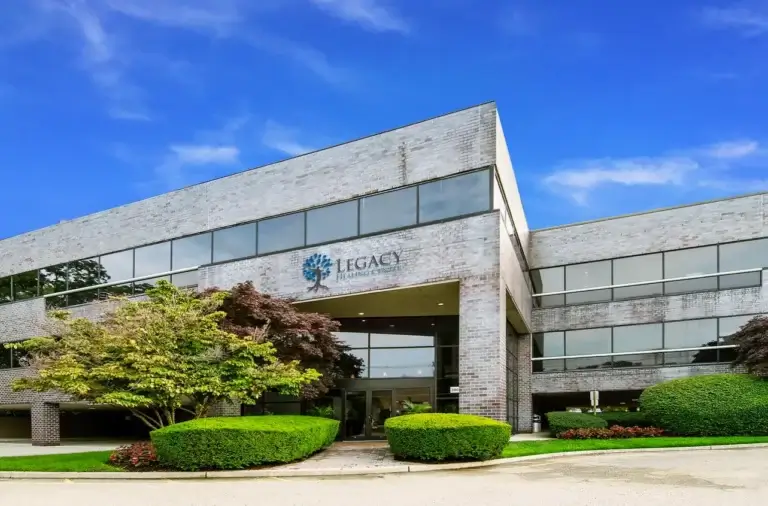
Legacy Healing Center Parsippany, NJ

Legacy Healing Center Cincinnati, OH