
Disclaimer: A treatment center will attempt to verify your health insurance benefits and/or necessary authorizations on your behalf. Please note, that this is only a quote of benefits and/or authorization. We cannot guarantee payment or verification eligibility as conveyed by your health insurance provider will be accurate and complete. Payment of benefits is subject to all terms, conditions, limitations, and exclusions of the member’s contract at the time of service. Your health insurance company will only pay for services that it determines to be “reasonable and necessary.” The treatment center will make every effort to have all services preauthorized by your health insurance company. If your health insurance company determines that a particular service is not reasonable and necessary, or that a particular service is not covered under your plan, your insurer will deny payment for that service and it will become your responsibility. We respect your privacy. We request this information to provide you with detailed coverage of benefits. By sharing your phone number, you agree to receive SMS messages via text from us – including details about your benefits. Message and data rates may apply, and frequency varies, text STOP to unsubscribe or HELP for assistance. Sharing this information is not a condition of treatment.
HUMANA Rehab Coverage: Everything You Need To Know
About HUMANA Insurance

Humana is one of the largest health insurance providers in the United States, serving millions of members through Medicare Advantage, Medicaid, military healthcare, and individual health plans. Headquartered in Louisville, Kentucky, Humana is especially known for its focus on whole-person healthcare, combining medical, behavioral health, pharmacy, and wellness services to support both physical and mental well-being. In addition to traditional healthcare coverage, Humana offers behavioral health benefits that may include therapy, psychiatric care, substance abuse treatment, medication-assisted treatment (MAT), detox, inpatient rehab, outpatient programs, and support for co-occurring mental health disorders like anxiety, depression, PTSD, and addiction.
For those searching for Humana rehab coverage, many Humana plans help cover addiction and mental health treatment when services are considered medically necessary. Humana is somewhat unique compared to other insurers because a large portion of its business is focused on Medicare Advantage plans, meaning many members seeking rehab coverage are seniors, disabled individuals, or people managing chronic health conditions alongside addiction recovery. Depending on the specific plan, coverage may include detox, inpatient rehab, Partial Hospitalization Programs (PHPs), Intensive Outpatient Programs (IOPs), outpatient therapy, and dual diagnosis treatment. Coverage levels, network rules, referrals, and prior authorization requirements vary by plan, but many rehab centers that accept Humana can verify benefits and help manage the approval process before treatment begins.
How Does HUMANA Insurance work for substance abuse treatment?
Humana works for substance abuse treatment much like other major insurance providers, but it places a strong emphasis on behavioral health coordination, medical necessity reviews, and managing care through its large behavioral health network. When someone seeks treatment, the rehab center will usually contact Humana to verify benefits, check whether the provider is in-network, estimate out-of-pocket costs, and determine if prior authorization is required for services like detox, inpatient rehab, Partial Hospitalization Programs (PHPs), or Intensive Outpatient Programs (IOPs). Depending on the specific plan, Humana may help cover detox, residential rehab, outpatient treatment, therapy, medication-assisted treatment (MAT), psychiatric care, and treatment for co-occurring mental health disorders like anxiety, depression, PTSD, or bipolar disorder. Humana also uses evidence-based clinical guidelines and ASAM Criteria to determine the appropriate level of addiction treatment based on a patient’s symptoms, safety risks, relapse history, and mental health needs.
One thing that makes Humana somewhat different from some other insurance providers is its large focus on Medicare Advantage and integrated behavioral health management, especially for older adults and people managing chronic medical conditions alongside addiction or mental health challenges. Many Humana plans use a managed behavioral health structure, which means certain behavioral health services may be reviewed through Humana’s behavioral health division or partner organizations during the approval process. Like most insurers, Humana typically requires prior authorization for higher levels of care such as residential rehab or inpatient detox, while standard outpatient therapy may not require approval under some plans. PPO plans generally offer more flexibility for choosing rehab providers, while HMO plans may require patients to stay within Humana’s network for the best coverage and lowest costs. Many treatment centers that work with Humana can handle insurance verification, clinical reviews, and authorization requests on the patient’s behalf to help simplify the admissions process.
Does HUMANA Cover Substance Abuse and Mental Health Disorders?
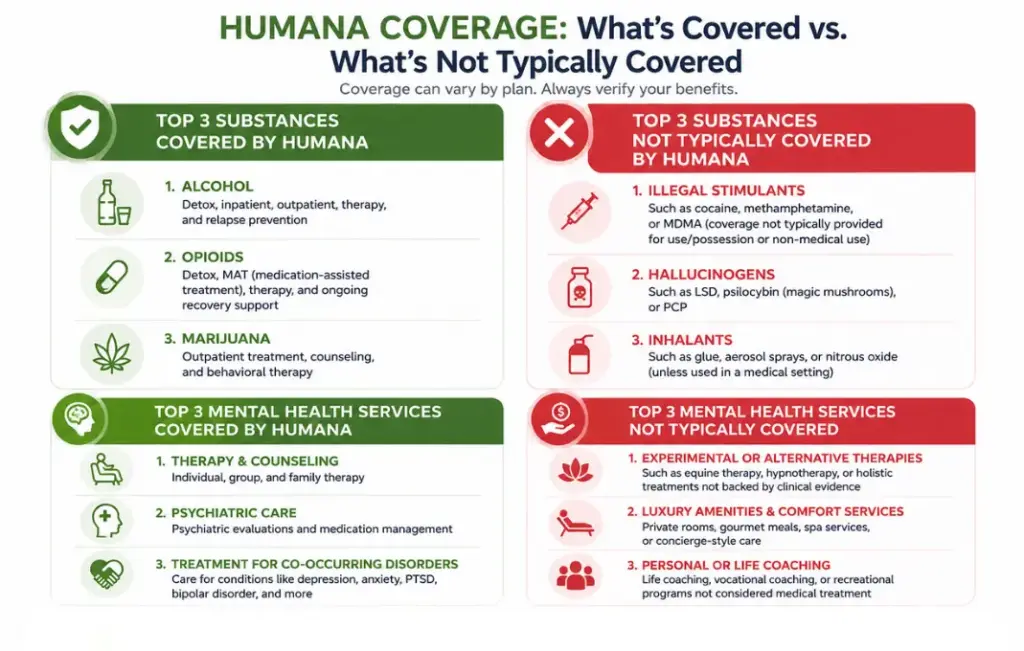
Yes, Humana generally covers both substance abuse treatment and mental health treatment as part of its behavioral health benefits, and many plans also include coverage for co-occurring disorders — when someone is struggling with addiction and a mental health condition like anxiety, depression, PTSD, bipolar disorder, or trauma at the same time. Depending on the specific plan, Humana may help cover detox, inpatient rehab, outpatient treatment, Intensive Outpatient Programs (IOPs), Partial Hospitalization Programs (PHPs), therapy, psychiatric care, medication-assisted treatment (MAT), and virtual behavioral health services. One thing that stands out about Humana compared to some other insurers is its strong focus on integrated care and chronic health management, especially for older adults and Medicare Advantage members who may be dealing with addiction alongside chronic pain, prescription medication dependence, or mental health conditions.
Many patients and treatment providers online describe Humana’s behavioral health coverage as generally solid when using in-network providers, though prior authorization and medical necessity reviews are common for higher levels of care like detox or residential rehab. Humana PPO plans often provide more flexibility for choosing rehab centers and dual diagnosis programs, while HMO plans may require members to stay within the provider network for the best coverage and lowest costs. Treatment centers that frequently work with Humana also note that the company often supports evidence-based and dual diagnosis care, especially when providers can clearly document the connection between mental health symptoms and substance use. Because addiction and mental health conditions are so closely connected, many Humana-approved rehab programs now focus on integrated treatment models that address both conditions together rather than separately, which is often associated with better long-term recovery outcomes.
Does HUMANA Cover Luxury Rehab Treatment?
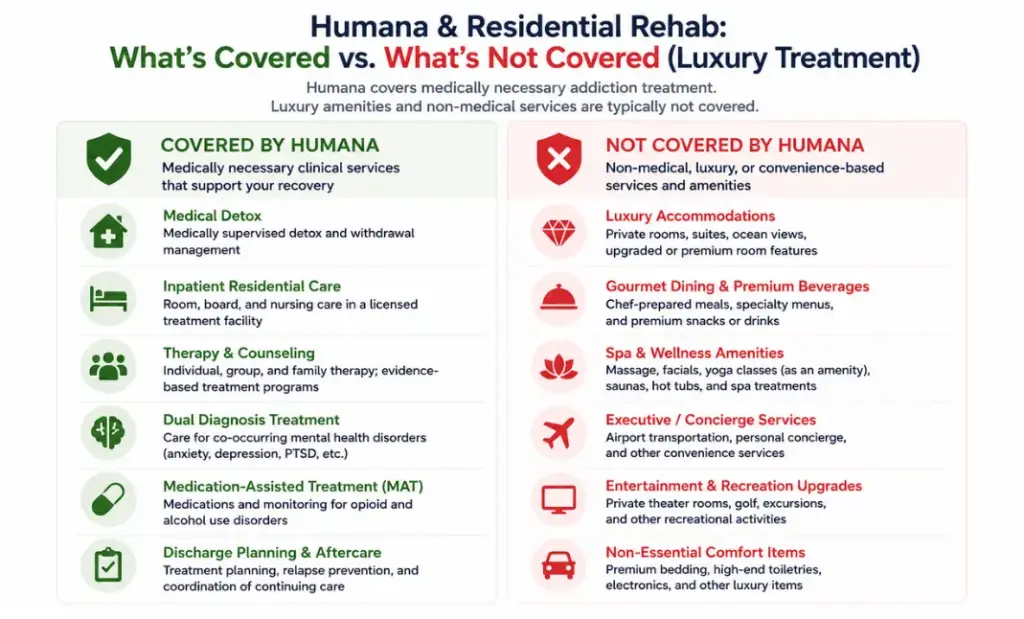
Yes, Humana may cover treatment at a luxury rehab center, but like most major insurance providers, it usually covers the medically necessary clinical services rather than the luxury amenities themselves. This means Humana may help pay for detox, inpatient rehab, therapy, psychiatric care, medication-assisted treatment (MAT), and dual diagnosis treatment for co-occurring mental health conditions like anxiety, depression, PTSD, or bipolar disorder — even if treatment takes place at a high-end facility. However, premium features such as private suites, spa treatments, gourmet dining, executive accommodations, or resort-style amenities are generally considered non-essential and are often not covered under the plan. Many patients and rehab providers online report that Humana tends to focus heavily on medical necessity reviews, prior authorization, and using in-network behavioral health providers to keep treatment costs manageable, especially under Medicare Advantage and HMO-style plans. PPO plans usually offer more flexibility for out-of-network or luxury rehab options, while HMO and Medicare Advantage plans may have stricter network requirements and utilization reviews during treatment. One thing that stands out about Humana compared to some insurers is its large behavioral health network and strong focus on integrated care for people dealing with addiction alongside chronic medical or mental health conditions, though approvals for residential treatment are often reviewed in stages based on clinical progress.
Does HUMANA Cover Residential Rehab Treatment?
Yes, Humana commonly covers residential rehab treatment for drug addiction, alcohol addiction, and co-occurring mental health disorders when the treatment is considered medically necessary. Depending on the plan, Humana rehab coverage may include medical detox, inpatient residential care, therapy, psychiatric treatment, medication-assisted treatment (MAT), and dual diagnosis care for conditions like anxiety, depression, PTSD, or chronic pain alongside addiction recovery. One thing that makes Humana somewhat different from many insurers is its strong focus on Medicare Advantage and senior healthcare, meaning many members seeking rehab treatment are older adults or individuals managing chronic medical conditions in addition to substance abuse. Because of this, Humana-approved rehab programs often emphasize integrated behavioral healthcare, medication management, and treatment for age-related addiction challenges like prescription drug dependence or polypharmacy risks.
Humana typically requires prior authorization and medical necessity reviews before approving residential rehab, and many plans use ASAM Criteria to determine whether inpatient care is appropriate compared to outpatient treatment. PPO plans usually provide more flexibility for choosing rehab centers and may include some out-of-network coverage, while HMO and Medicare Advantage plans often require members to stay within Humana’s network to reduce costs. Many patients and treatment providers online describe Humana’s residential rehab approval process as structured but manageable when facilities provide strong clinical documentation and handle utilization reviews directly with the insurer. Another important thing to know is that Humana often reviews treatment progress throughout the stay to determine whether additional days of residential care will continue to be covered, so rehab centers frequently coordinate ongoing clinical updates on the patient’s behalf.
Does HUMANA Cover Outpatient Drug and Alcohol Treatment?
Yes, Humana commonly covers outpatient drug and alcohol treatment, but the type of outpatient care can affect how coverage works and whether prior authorization is required. Depending on the specific plan, Humana may help cover standard outpatient therapy, Intensive Outpatient Programs (IOPs), Partial Hospitalization Programs (PHPs), medication-assisted treatment (MAT), psychiatric care, relapse prevention, virtual therapy, and treatment for co-occurring mental health conditions like anxiety, depression, PTSD, or bipolar disorder. Lower levels of care — such as weekly individual counseling or medication management — are often easier to get approved and may not always require preauthorization, while higher-intensity outpatient programs like PHPs or IOPs usually involve medical necessity reviews and clinical documentation before treatment begins.
One thing many people find helpful about outpatient treatment is that it allows them to continue working, attending school, or living at home while still receiving structured addiction and mental health support several days per week. Humana PPO plans generally offer more flexibility when choosing outpatient providers and rehab centers, while HMO and Medicare Advantage plans may require members to stay within Humana’s behavioral health network for the best coverage and lowest costs. Many rehab centers that work with Humana can submit authorization requests, verify benefits, and estimate out-of-pocket costs before treatment starts, which can help reduce delays and confusion during the admissions process.
Additional Information about HUMANA
One unique thing about Humana when it comes to substance abuse treatment is its strong focus on integrated whole-person care, especially for people dealing with addiction alongside chronic medical or mental health conditions. Because Humana has a large Medicare Advantage population and a heavy emphasis on care coordination, many Humana behavioral health plans are designed to connect addiction treatment with primary care, pharmacy support, mental health services, chronic pain management, and case management programs. This can be especially helpful for people recovering from prescription drug dependence, opioid addiction, or dual diagnosis conditions where physical health and mental health are closely connected.
Another helpful aspect for many Humana members is the company’s growing investment in virtual behavioral health and telehealth services, which can make therapy, psychiatry, medication management, and outpatient addiction treatment easier to access from home. Many rehab providers also note that Humana often supports evidence-based and long-term step-down care, meaning coverage may continue beyond detox or inpatient rehab into outpatient therapy, medication-assisted treatment (MAT), relapse prevention, and ongoing mental health support when medically appropriate.
Personalize your treatment plan
with a benefits specialist. Call us.
Safely Detox at Castillian

Find Alcohol Treatment

Legacy Healing Center Parsippany, NJ

Legacy Healing Center Cincinnati, OH