


Cocaine Cutting Agents: What Else is In The Bag?
-
 By:
Valerie Puffenberger, PMHNP-BC
By:
Valerie Puffenberger, PMHNP-BC -
Editor:
Phyllis Rodriguez, PMHNP-BC
-
Clinical Reviewer:
Dr. Ash Bhatt, MD, MRO
 By:
By:
 Editor:
 Clinical Reviewer:
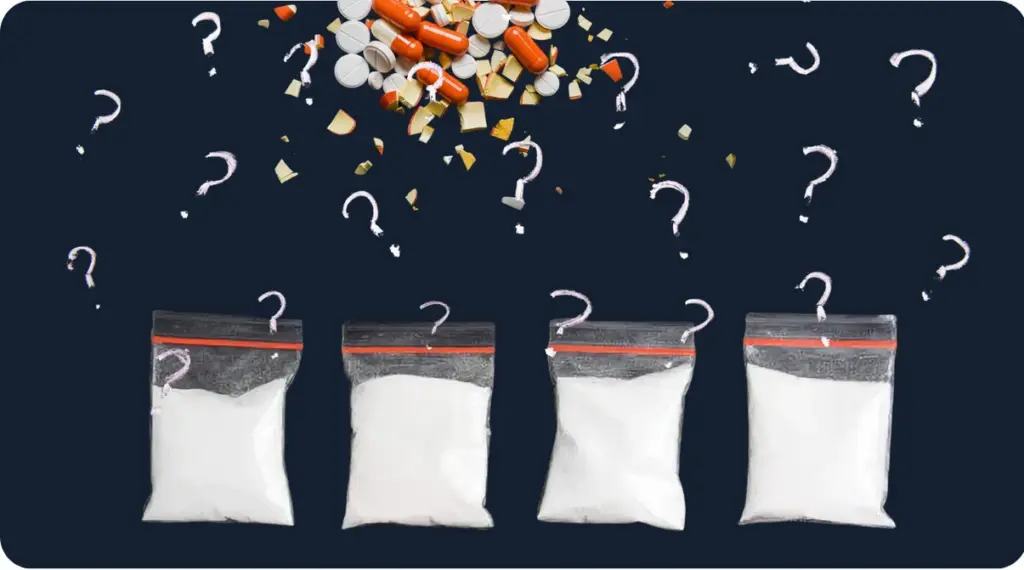
Cocaine sold through the illicit drug supply is not a standardized product. A powder sold as cocaine may contain cocaine at an unpredictable concentration along with substances added to increase volume, imitate certain characteristics of cocaine, alter its effects, or enter the supply unintentionally.
These cocaine cutting agents and adulterants matter because they can introduce risks that would not be present from cocaine alone. Some substances primarily dilute the cocaine. Others have their own pharmacological or toxic effects. Still others, including illegally manufactured fentanyl, can introduce an entirely different type of overdose risk.
Research analyzing illicit cocaine has detected substances including levamisole, lidocaine, benzocaine, procaine, caffeine, phenacetin, acetaminophen, amphetamine-type stimulants, and opioids, although what is present varies substantially by location, time, and individual supply.
For someone who continues to use cocaine, that uncertainty is important. The risk is not only what cocaine itself may do to the heart, brain, or behavior. Each episode of use also involves an unregulated supply whose potency and chemical composition cannot be reliably established from appearance, taste, numbness, packaging, or previous experience.
What Are Cocaine Cutting Agents?
Cocaine cutting agents are substances mixed with cocaine before it reaches the person using it. They may simply dilute the cocaine, have pharmacological effects of their own, imitate characteristics associated with cocaine, or be present because of contamination elsewhere in the illicit supply chain.
Although the terms are often used interchangeably, there are useful distinctions:
- A diluent or filler primarily increases the volume of the product without being intended to reproduce cocaine’s pharmacological effects.
- An adulterant is another active substance added to or present with cocaine and may change its effects or toxicity.
- A contaminant is an unintended substance that becomes mixed into the supply.
- An impurity may result from the production process rather than deliberate addition later in distribution.
In practice, it may be impossible for the person purchasing cocaine to know how or why a particular substance became part of the mixture. That distinction is especially important with fentanyl: its presence should not automatically be interpreted as proof that it was intentionally added.
What matters medically is that the final product may expose a person to more than the drug they intended to use.
Why Is Illicit Cocaine Adulterated?
Cocaine may be adulterated to increase the amount of product available for sale, but some substances may also be selected because they resemble certain physical, sensory, or pharmacological characteristics of cocaine.
Forensic research illustrates why the idea of a simple “filler” can be misleading. In one analysis of 524 samples obtained through an Austrian drug-checking program between 2012 and 2015, only about 10% contained cocaine as the only active ingredient. Researchers identified numerous additional compounds, including levamisole, phenacetin, caffeine, lidocaine, acetaminophen, and other drugs. The specific findings cannot be assumed to represent today’s U.S. cocaine supply, but they demonstrate how chemically variable illicit cocaine can be.
Some adulterants also complicate the assumptions people make about cocaine quality.
Local anesthetics, for example, can produce numbness. Other substances can contribute stimulant-like effects or bitter sensory characteristics. As a result, something that appears to confirm that cocaine is “strong” or “pure” may actually be produced partly by another drug.
This is one reason perceived purity and actual chemical composition are very different questions.
What Is Cocaine Commonly Cut With?
Common cocaine adulterants documented in forensic and clinical research include levamisole, local anesthetics such as lidocaine and benzocaine, caffeine, phenacetin and other analgesic compounds, and occasionally other psychoactive drugs. Fentanyl has also been detected in portions of the U.S. cocaine supply.
The significance of these substances differs considerably.
| Substance or category | Why its presence matters | Potential concern |
|---|---|---|
| Levamisole | A veterinary antiparasitic drug repeatedly documented in cocaine samples | Severe reductions in infection-fighting white blood cells, vasculitis, skin injury, and other immune complications |
| Lidocaine, benzocaine, procaine and related anesthetics | Can reproduce some of cocaine’s local numbing sensation | May mislead someone about purity and introduce additional medication-related toxicity |
| Caffeine | Pharmacologically active stimulant | May add to stimulant effects and make the final mixture less predictable |
| Phenacetin and other analgesics | Have been identified in analyzed cocaine samples | Introduce toxicities unrelated to cocaine itself |
| Amphetamine-type or other stimulants | May produce additional stimulant activity | Can potentially compound cardiovascular and neurological stress |
| Fentanyl or other opioids | Introduces opioid exposure into what someone may believe is solely a stimulant | Respiratory depression, loss of consciousness, and potentially fatal opioid overdose |
The exact composition of cocaine can differ greatly between markets and over time. A list of substances detected in one study should therefore not be interpreted as a formula for what is currently present in any specific supply.
That variability is itself part of the danger.
Why Is Levamisole in Cocaine a Particular Concern?
Levamisole is important because it is not merely an inactive filler. Exposure to levamisole-adulterated cocaine has been associated with potentially serious immune, blood-vessel, skin, kidney, and neurological complications.
Levamisole was previously used medically in humans and continues to have veterinary applications. Human use in the United States was discontinued after serious adverse effects, including profound reductions in certain white blood cells.
The substance has also been repeatedly documented as a cocaine adulterant. Historical U.S. surveillance and international studies found levamisole in a substantial proportion of tested cocaine samples, although those older percentages should not be presented as estimates of how much U.S. cocaine contains levamisole today. For example, an Australian clinical study detected levamisole in approximately three-quarters of the cocaine-positive urine samples that underwent additional testing.
Levamisole can affect the body’s ability to fight infection
One of the best-known complications is neutropenia or agranulocytosis.
Neutrophils are white blood cells that play a central role in fighting infection. Agranulocytosis refers to a profound reduction in these infection-fighting cells. A person can consequently become vulnerable to serious infections that the immune system would normally be better equipped to control.
Clinical reports of levamisole-associated complications helped draw attention to the substance after clusters of severe neutropenia appeared among people using cocaine.
Levamisole can also damage blood vessels and skin
Levamisole-adulterated cocaine has been associated with a distinctive inflammatory or clotting disorder affecting small blood vessels, sometimes described as levamisole-associated vasculopathy or vasculitis.
Reported manifestations include purplish skin lesions, inflammation of small blood vessels, tissue damage or necrosis, and lesions involving areas such as the ears and extremities. Kidney and, less commonly, pulmonary involvement have also been described. A recent systematic review encompassing 302 reported patients found skin involvement in 91% of cases of levamisole-associated vasculopathy or vasculitis, with purpura and tissue necrosis among the most frequent findings.
These complications are fundamentally different from the cardiovascular effects people commonly associate with cocaine. A person may therefore develop a serious medical problem without realizing that an adulterant is contributing to it.
Neurological concerns have also emerged
Research has additionally found an association between levamisole exposure among people using cocaine and abnormalities in the brain’s white matter. In one study, greater levamisole exposure was strongly associated with more and larger white-matter lesions, although the researchers noted limitations and the findings do not establish that every exposed person will experience this type of injury.
The broader lesson is important: an adulterant can create a separate toxicological problem rather than simply making cocaine less pure.
Can Cocaine Be Contaminated With Fentanyl?
Yes. Fentanyl has been detected in cocaine in the United States, but it should not be assumed that all, or even most, cocaine contains fentanyl. The frequency varies by location, drug form, supply source, and the method used to collect samples.
A U.S. community drug-checking study analyzed samples collected through 77 harm-reduction programs and clinics across 25 states between 2021 and 2023. Researchers estimated fentanyl prevalence at 14.8% among powder cocaine samples submitted to the program, with substantial uncertainty and geographic variation. No fentanyl was detected in the 53 crack cocaine samples analyzed in that particular dataset. Because samples were voluntarily submitted rather than randomly collected from the entire U.S. drug market, that 14.8% figure should not be treated as the national prevalence of fentanyl in cocaine.
More recent law-enforcement data point to continuing overlap between cocaine and fentanyl. The DEA’s 2025 National Drug Threat Assessment reported fentanyl or fentanyl-related compounds were co-reported in more than one-quarter of cocaine submissions to the National Forensic Laboratory Information System during 2024. Again, law-enforcement laboratory submissions are not a random sample of every bag of cocaine sold in the United States, so this figure should not be converted into an estimate of an individual’s probability of encountering fentanyl.
Together, these findings support a more accurate conclusion:
Fentanyl exposure within the cocaine supply is a documented and medically important risk, but its prevalence is uneven and cannot be predicted reliably for an individual supply.
Is Fentanyl Always Deliberately Added to Cocaine?
No. Available evidence indicates that fentanyl and cocaine can become mixed intentionally or unintentionally, and it is often impossible to determine which occurred in an individual case.
DEA assessments have changed as the illicit market has evolved. Earlier reporting described opportunities for accidental cross-contamination when opioids and stimulants were handled with the same equipment, while the DEA’s 2025 assessment also reports evidence of intentional cocaine-fentanyl adulteration by some U.S.-based trafficking organizations.
It is therefore misleading to claim either that dealers always add fentanyl deliberately or that fentanyl in cocaine is always accidental.
From the user’s perspective, the mechanism may matter less than the result: someone intending to take a stimulant can unknowingly be exposed to a potent opioid.
Why Is Fentanyl-Contaminated Cocaine So Dangerous?
Fentanyl creates a fundamentally different overdose risk because it can suppress breathing, including in someone who intended to take only cocaine and may have little or no opioid tolerance.
Cocaine is a stimulant. Fentanyl is a powerful opioid. The stimulant effects of cocaine do not “cancel out” opioid-induced respiratory depression.
CDC surveillance has shown that increases in stimulant-involved overdose deaths in the United States have been driven largely by deaths that also involve opioids. Although national overdose deaths declined substantially in 2024, cocaine and synthetic opioids remain important contributors to fatal overdose.
This distinction matters particularly for people who primarily use cocaine.
Someone who routinely uses opioids may have developed some opioid tolerance. A person who does not normally take opioids may have no such tolerance and may also be less likely to recognize an opioid overdose developing after using what they believed was cocaine.
Unexpected opioid exposure can therefore turn a familiar pattern of cocaine use into an unfamiliar medical emergency.
Can You Tell If Cocaine Has Been Cut by Its Appearance, Taste, or Numbing Effect?
No. Appearance, taste, smell, texture, numbness, and subjective effects cannot reliably establish what substances are present in illicit cocaine or whether it is safe. This is one of the most important misconceptions surrounding cocaine cutting agents.
Cocaine itself has local-anesthetic properties, so some people associate numbness with purity. But substances such as lidocaine, benzocaine, and procaine are themselves local anesthetics and have been documented among cocaine adulterants. A numbing sensation therefore cannot establish that a sample is pure.
The same problem applies to appearance and taste. Adulterants may be selected partly because their physical or sensory characteristics do not make the mixture obviously different.
Fentanyl presents an additional problem. CDC guidance specifically warns that fentanyl cannot reliably be detected by looking at, tasting, or smelling an illicit drug.
A familiar reaction does not establish purity either. Subjective effects depend on numerous variables, including cocaine concentration, other active substances, tolerance, sleep, physical health, and concurrent substance use.
Feeling that a batch is “normal” is not chemical analysis.
The Illusion of “Knowing Your Supply”
Buying cocaine from the same source repeatedly can create a sense of predictability, particularly if previous use did not result in an obvious adverse reaction. But a consistent seller does not create a standardized pharmaceutical supply.
Illicit cocaine can move through multiple stages of production and distribution before reaching the person using it. Its composition can change over time, and forensic surveillance repeatedly demonstrates regional and temporal differences in the substances detected.
Even drug-checking studies should not be interpreted as guarantees about another sample. A result from one substance, one location, or one point in time does not establish the contents of cocaine obtained later.
This is why statements such as:
“I know who I buy from.”
“It looked exactly the same as last time.”
“I’ve used this batch before.”
or
“It made my mouth numb, so I know it was good.”
do not resolve the underlying uncertainty.
There is no quality-control system requiring illicit cocaine to contain the same concentration or ingredients from one purchase to the next.
That uncertainty becomes increasingly important as opportunities for exposure increase. Someone using cocaine once faces one episode of risk. Someone using repeatedly or in prolonged binges is repeatedly returning to an unpredictable supply.
Does Drug Checking Make Cocaine Safe?
No drug-checking method can guarantee that illicit cocaine is safe. Drug checking can provide useful information about certain substances, but its limitations are important.
CDC supports fentanyl test strips as a harm-reduction tool because they can detect the presence of fentanyl in many drug products, including cocaine. At the same time, the agency explicitly cautions that no test is 100% accurate and that a negative result does not guarantee that fentanyl or fentanyl-like substances are absent.
More sophisticated community and laboratory drug-checking programs can identify a wider range of compounds and play an important public-health role in monitoring changes in the illicit drug supply.
But drug checking addresses only part of the problem. It cannot turn illicit cocaine into a regulated product or remove cocaine’s own cardiovascular, neurological, psychiatric, and addiction risks.
For someone whose cocaine use is becoming increasingly difficult to control, efforts to identify a safer supply can therefore become a substitute for confronting the more important issue: continued cocaine use itself.
How Can Cocaine Cutting Agents Change the Medical Risks of Using Cocaine?
Adulterants can add risks that overlap with cocaine’s effects, amplify them, or introduce completely different medical problems.
The result is not simply “stronger cocaine.” It can be a mixture with multiple mechanisms of toxicity.
Additional stimulants may increase cardiovascular stress at the same time cocaine is already increasing heart rate and blood pressure. Local anesthetics have their own neurological and cardiac toxicities. Levamisole can contribute to immune and vascular disease. Unexpected fentanyl introduces the possibility of life-threatening respiratory depression.
The body is therefore responding not necessarily to one drug, but potentially to multiple pharmacologically active substances.
CDC describes this broader issue as polysubstance exposure, which can occur whether a person knowingly uses multiple drugs or unknowingly consumes more than one substance in an adulterated product.
This distinction explains why a reaction to cocaine may occasionally feel dramatically different from previous experiences. An unexpected reaction does not prove that a specific cutting agent was responsible, but it is a reason not to assume that the substance was chemically identical to what was used previously.
What Symptoms After Cocaine Use Require Emergency Medical Attention?
Severe or unexpected symptoms after cocaine use should be treated as a potential medical emergency, particularly when the substance’s composition is unknown.
Call 911 or seek emergency medical care for symptoms such as:
- Difficulty breathing, very slow breathing, or stopped breathing
- Inability to wake the person or extreme unresponsiveness
- Blue, gray, or unusually pale lips or skin
- Seizure
- Severe chest pain
- Signs of stroke, including sudden weakness, difficulty speaking, confusion, or an unusually severe headache
- Severe agitation or confusion accompanied by significant overheating
- Collapse or loss of consciousness
- Rapidly developing purple or black skin lesions, particularly when accompanied by fever or signs of serious infection
When an opioid such as fentanyl could be involved, naloxone can reverse an opioid overdose if administered in time. It will not treat cocaine toxicity itself, but SAMHSA notes that opioid-overdose reversal medications remain effective when an opioid overdose occurs alongside stimulant exposure. Emergency medical care is still necessary after naloxone is given.
When Fear About Contaminated Cocaine Becomes Part of the Addiction Problem
Concern about fentanyl or cocaine cutting agents does not by itself mean that someone has cocaine use disorder. A person may search this topic after one frightening experience or because they are concerned about someone they know.
But the situation changes when a person repeatedly recognizes the danger and still feels unable to change their cocaine use.
Consider the difference between learning that cocaine may be adulterated and repeatedly using while thinking:
“I’m afraid there’s fentanyl in it, but I’m going to use anyway.”
“Last time scared me, but I can’t stop thinking about cocaine.”
“I keep telling myself I’ll use less next time.”
“I know this is affecting my health, work, relationships, or finances, but I keep going back to it.”
At that point, contamination is no longer the only concern.
Continuing to use despite frightening reactions, escalating amounts, repeated binges, worsening consequences, or a persistent desire to stop can suggest that cocaine use itself deserves professional evaluation.
Attempts to find a “cleaner,” “safer,” or more familiar supply cannot remove the fundamental problem. Illicit cocaine remains unregulated, and continued cocaine use means continued exposure both to cocaine and to whatever else may be present in the supply.
When Should Someone Consider Cocaine Addiction Treatment?
Professional cocaine treatment should be considered when cocaine use is becoming difficult to control, continues despite significant risks or consequences, or repeatedly places someone in situations they no longer feel comfortable accepting.
A person does not have to wait for a life-threatening overdose or severe addiction before asking for help.
Reasons to seek an assessment may include:
- Using cocaine more frequently or in larger amounts than intended
- Repeated binge patterns
- Being unable to cut down despite trying
- Strong cravings or persistent preoccupation with cocaine
- Continuing after frightening cardiovascular, neurological, or psychological reactions
- Continuing despite fear of fentanyl or other contaminants
- Using despite problems involving work, finances, relationships, or health
- Feeling that avoiding cocaine is becoming increasingly difficult
Evidence-based cocaine addiction treatment focuses on the pattern of cocaine use itself rather than trying to make an unpredictable illicit supply predictable.
Treatment planning can also address other substances being used, physical or psychiatric complications, relapse patterns, and the circumstances that repeatedly lead back to cocaine.
The Bottom Line on Cocaine Cutting Agents
Cocaine cutting agents are not all the same.
Some substances primarily dilute cocaine. Others, such as local anesthetics, stimulants, or levamisole, have pharmacological or toxic effects of their own. Fentanyl introduces an entirely different danger by creating the possibility of unexpected opioid overdose.
Research consistently demonstrates that illicit cocaine can contain substances beyond cocaine itself, while the exact composition varies according to location, time, and supply. Historical findings about levamisole, recent community drug-checking studies, and current federal surveillance of cocaine-fentanyl combinations all reinforce the same point: there is no single, standardized composition of street cocaine.
Appearance, taste, numbness, previous purchases, and familiarity with a seller cannot eliminate that uncertainty.
Public-health strategies such as fentanyl test strips and access to naloxone can reduce certain risks and save lives, but no test can certify illicit cocaine as safe.
For someone who continues using despite frightening reactions, growing concern about contamination, or an inability to stop, the most meaningful way to reduce exposure to cocaine cutting agents is ultimately to address the cocaine use itself.
Professional assessment can help determine whether that concern has become part of a larger pattern requiring treatment, and what level of support may be appropriate.