



-
 By:
Valerie Puffenberger, PMHNP-BC
By:
Valerie Puffenberger, PMHNP-BC -
Editor:
Phyllis Rodriguez, PMHNP-BC
-
Clinical Reviewer:
Dr. Ash Bhatt, MD, MRO
 By:
By:
 Editor:
 Clinical Reviewer:
Can Meth Cause an Allergic Reaction?
Yes—it’s possible, even though it doesn’t happen often.
Some people can have an allergic reaction to methamphetamine, especially because street meth is rarely pure. It often contains unknown chemicals or contaminants that can trigger unexpected reactions in the body.
For some, symptoms may be mild—like itching or a rash. For others, it can escalate quickly into something far more serious, including trouble breathing or severe swelling.
Many people who experience unusual reactions may already be dealing with ongoing use. Understanding the broader meth side effects can help you recognize when something isn’t right.
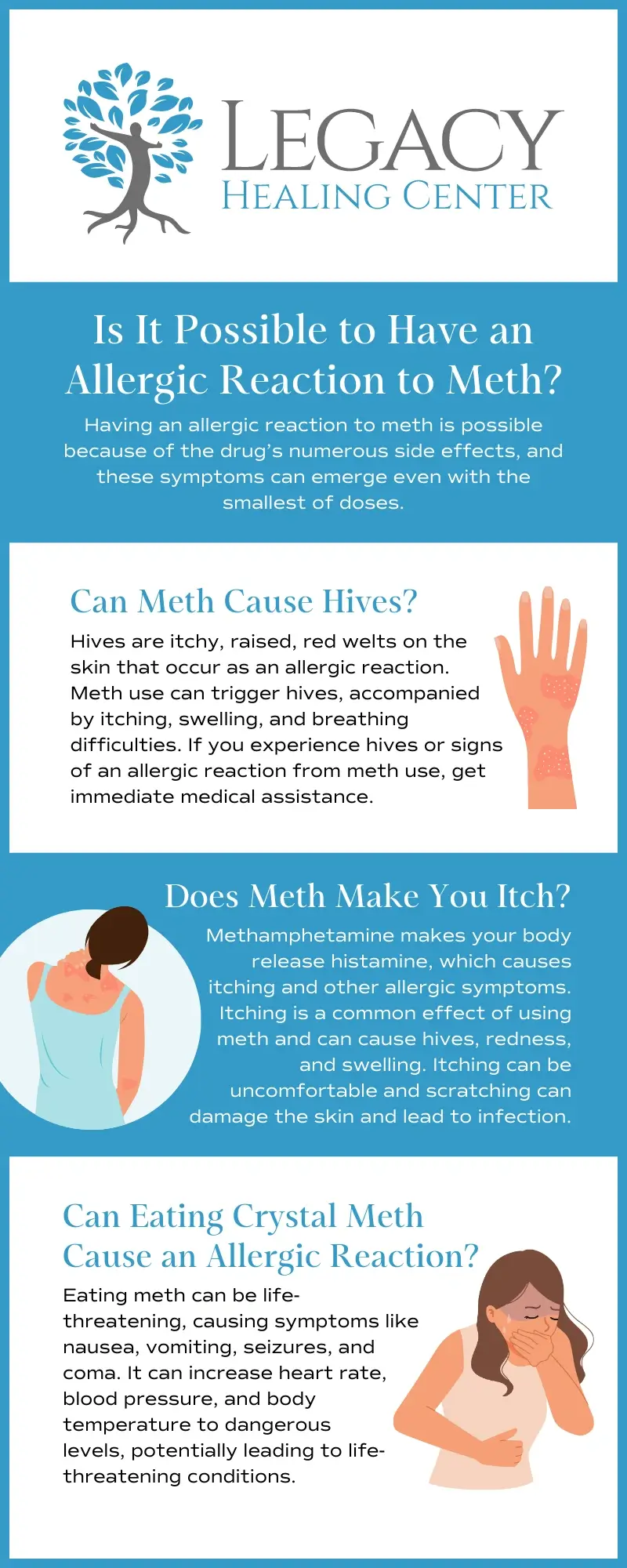
Is It Possible to Have an Allergic Reaction to Meth?
Meth addiction treatment in Los Angeles often involves addressing not just the psychological and physical effects of the drug, but also potential medical complications. One such complication, although uncommon, is an allergic reaction to methamphetamine. These reactions can stem from the drug itself or from toxic additives and contaminants commonly found in street meth.
Symptoms may include mild skin irritation and itching, or escalate to severe responses such as anaphylaxis, characterized by breathing difficulties, swelling, and dangerously low blood pressure. Symptoms such as swelling in the lips, face, throat, and tongue, hives, and difficulty breathing can also occur.
People with existing allergies or heightened sensitivities are particularly vulnerable. Prompt recognition of these symptoms is essential, especially since reactions can sometimes be mistaken for other drug-related complications.
As a trusted addiction treatment provider, we understand that meth addiction is complex and can have serious consequences. Even a single use can trigger a dangerous reaction, particularly in first-time users.
Allergic Reaction vs. Meth Overdose: How to Tell the Difference
It’s not always easy to tell what’s happening in the moment—and that confusion can be dangerous.
An allergic reaction and a meth overdose can look similar at first, but they affect the body in very different ways.
Allergic Reaction | Meth Overdose |
| Hives, rash, itching | Extreme agitation or paranoia |
| Swelling (face, lips, throat) | Chest pain or irregular heartbeat |
| Difficulty breathing | Very high body temperature |
| Rapid onset after use | Seizures or loss of consciousness |
👉 If you’re unsure, don’t try to guess. Treat both situations as emergencies.
If you’re trying to better understand the difference, it helps to review the full range of meth overdose symptoms and how they present.
Can You Get an Allergic Reaction from Eating Crystal Meth?
Methamphetamine is a highly potent and addictive drug that can cause significant harm to the body and brain. Eating crystal meth is considered extremely dangerous and can lead to life-threatening complications.
When ingested, meth can cause nausea, vomiting, abdominal pain, seizures, and even coma. It can also raise heart rate, blood pressure, and body temperature to dangerous levels.
👉 When meth is swallowed, the body may be exposed to even more impurities, increasing the risk of toxic or allergic-like reactions.
Understanding the long-term effects of meth can also provide insight into how deeply it impacts the body over time.
If you suspect someone has ingested meth, seek medical attention immediately.
Understanding Allergic Reactions to Meth
What is an allergic reaction?
An allergic reaction happens when the immune system overreacts to a substance it sees as harmful. This can lead to symptoms ranging from mild irritation to severe, life-threatening responses.
How does methamphetamine affect the body?
Methamphetamine is a powerful stimulant. While it’s not naturally allergenic, it can still trigger reactions due to impurities, additives, or individual sensitivity.
According to research and organizations like the National Institute on Drug Abuse, meth use can lead to unpredictable and serious health complications.
Symptoms of an Allergic Reaction to Meth
Allergic reactions don’t always look the same. Sometimes they start small and escalate quickly.
Early Signs
- Itchy skin or irritation
- Mild rash or redness
- Watery eyes or congestion
Symptoms That May Worsen
- Hives or spreading rash
- Swelling in the face, lips, or eyes
- Nausea or unusual fatigue
Serious Warning Signs (Emergency)
- Difficulty breathing
- Swelling in the throat or tongue
- Dizziness or fainting
These symptoms may overlap with other complications, including withdrawal. Understanding meth withdrawal symptoms can help provide additional context.
When Should You Get Medical Help?
If something feels off, trust that instinct.
Get immediate medical help if you notice:
- Trouble breathing
- Swelling in the face or throat
- Sudden dizziness or fainting
- Symptoms are getting worse quickly
👉 Allergic reactions can escalate fast—don’t wait it out.
If symptoms are tied to ongoing use, a medically supervised detox program can be a critical next step.
Managing Allergic Reactions to Meth
An allergic reaction to meth isn’t something to manage alone—it requires medical care.
Symptoms can sometimes be confused with overdose effects, which makes it even more important to look for signs like swelling, hives, or breathing difficulty.
In severe cases, reactions can quickly impact breathing, heart function, and blood pressure.
For individuals who experience repeated reactions, this may point to a deeper issue with substance use. Recognizing the signs of meth addiction is an important step toward getting help.
Heal From Addiction with a Facility That Cares
Meth use can lead to a range of distressing symptoms, including allergic reactions that affect the skin, breathing, and overall health.
Medical detox is often the first step, providing 24/7 supervision in a safe, controlled environment. From there, individuals can transition into structured care designed for long-term recovery.
At Legacy Healing Center, treatment is tailored to provide privacy, personalization, and clinical excellence. Our programs address the physical, emotional, and psychological aspects of addiction—helping clients rebuild their health in a supportive, discreet setting.
For those ready to move forward, our private inpatient rehab programs offer a stable environment focused on lasting recovery.
To learn more about our treatment center, call us today and speak with one of our trained intake specialists.