



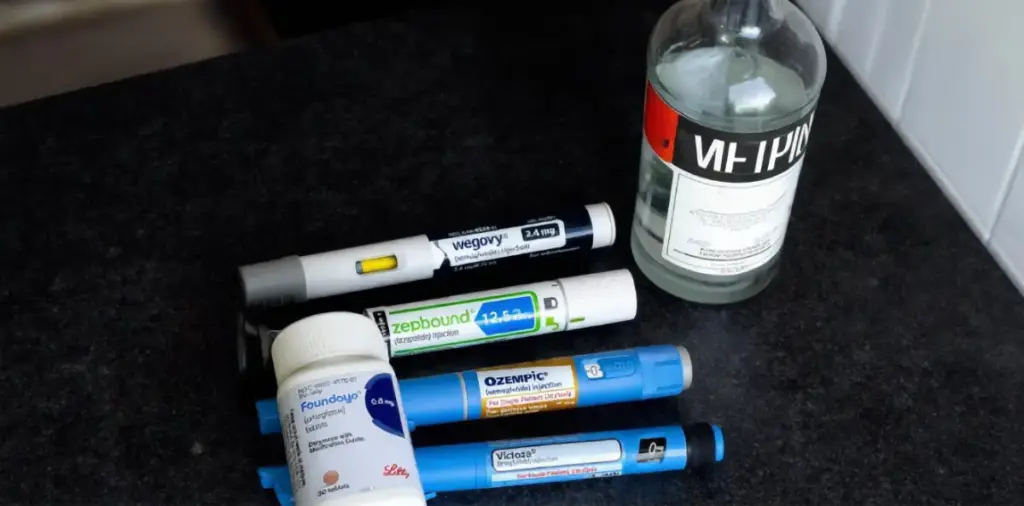
Can GLP-1 Drugs Treat Addiction? What the Research Shows
-
 By:
Valerie Puffenberger, PMHNP-BC
-
Editor:
Phyllis Rodriguez, PMHNP-BC
-
Clinical Reviewer:
Dr. Ash Bhatt, MD, MRO
 By:
 Editor:
 Clinical Reviewer:
GLP-1 drugs are not an established treatment for addiction, but they are the most promising new medication class researchers have studied for alcohol use disorder (AUD) in years. In May 2026, a randomized trial in The Lancet found that adding weekly semaglutide, the active ingredient in Ozempic and Wegovy, to cognitive behavioral therapy cut heavy drinking days more than therapy plus placebo did. That is a meaningful result. It is also a single six-month trial, limited to people with obesity.
So the honest answer to “glp1 for alcohol” is this. Human trials show that semaglutide can reduce how much some people drink. No trial yet shows that it produces lasting recovery. And no GLP-1 medication is FDA-approved to treat any substance use disorder. Here is what the research actually shows, where it stops, and what it means if you are trying to cut back or stop drinking now.
Can Ozempic Treat Addiction, or Does It Only Reduce Cravings?
Semaglutide has done more than reduce cravings in clinical trials. It has reduced measurable drinking. But reducing drinking is still not the same as treating addiction.
Researchers track several different outcomes, and the difference between them matters:
- Craving: how strongly a person says they want to drink.
- Quantity: how much they drink on the days they drink.
- Frequency: how many days they drink at all.
- Heavy drinking days: days above a risk threshold (for example, four or more drinks for women, five or more for men).
- Abstinence and return to use: whether people stop and stay stopped.
- Function and long-term remission: whether health, work, relationships, and control over drinking improve and hold.
Current GLP-1 evidence mostly covers the first four. In a 2025 JAMA Psychiatry trial, people on semaglutide drank less on the days they drank and had fewer heavy drinking days. But they did not drink on significantly fewer days. The researchers said this pattern may make semaglutide better suited to people trying to cut back on heavy drinking than to people aiming for full abstinence.
That is still clinically valuable, because heavy drinking days drive much of alcohol’s harm. But alcohol use disorder also involves learned habits, stress responses, withdrawal, mental health conditions, and environment. Lower craving does not resolve any of those on its own.
What Does the Research Show About GLP-1 Medications for Alcohol Use Disorder?
The strongest human evidence comes from three randomized trials and one large observational study. Together they show a consistent signal, with important gaps.
The 2026 Lancet trial (Copenhagen, with NIH co-investigators). Researchers enrolled 108 treatment-seeking adults who had moderate to severe AUD and obesity (BMI of 30 or higher). All participants were offered standardized cognitive behavioral therapy. Half also received weekly semaglutide injections for 26 weeks; half received placebo.
Heavy drinking days fell by 41.1 percentage points in the semaglutide group versus 26.4 points with placebo. The difference, 13.7 points, was statistically significant. Total alcohol intake fell by about 468 grams more per month with semaglutide, roughly 33 U.S. standard drinks. Phosphatidylethanol (PEth), a blood marker of recent drinking, dropped in the semaglutide group and did not change with placebo. That matters because it confirms the self-reported drinking with an objective measure.
Note what the placebo group shows: therapy alone produced large improvement. Semaglutide added to that benefit; it did not replace it. The study also had clear limits. Participants all had obesity, 88 of 108 (81%) completed the trial, and follow-up ended at 26 weeks. The authors could not separate the drinking effect from weight loss. The trial was partly funded by the Novo Nordisk Foundation, which controls the company that makes Ozempic and Wegovy.
The 2025 JAMA Psychiatry trial (University of North Carolina). This phase 2 trial randomized 48 adults with mostly moderate AUD who were not seeking treatment to semaglutide or placebo for nine weeks. In a laboratory session where participants could choose to drink, the semaglutide group consumed less alcohol and reached lower peak breath alcohol levels. In daily life, they had fewer drinks per drinking day, fewer heavy drinking days over time, and lower weekly craving. Average drinks per day and number of drinking days did not change significantly. Doses were low, below those used for weight loss, and effects grew larger after the dose increased. The trial excluded people with diabetes or other substance use disorders and did not include therapy.
The 2022 exenatide trial (Denmark). An older GLP-1 drug, exenatide, was tested in 127 treatment-seeking adults receiving therapy. Across the whole group, it did not reduce heavy drinking days more than placebo. In an exploratory analysis of 30 participants with a BMI above 30, it did. Brain imaging also showed reduced response to alcohol cues in reward regions.
Swedish registry data (2024). Among more than 227,000 people with AUD, periods of semaglutide use were associated with a 36% lower risk of alcohol-related hospitalization compared with periods without it. Naltrexone was associated with a 14% reduction. This study is large, but it is observational. It shows an association, not proof that the drug caused the difference.
What this adds up to: semaglutide has a promising but preliminary evidence base for reducing heavy drinking, strongest so far in people with obesity. Whether it works as well in people without obesity, and whether benefits last after stopping, remains unanswered.
Could GLP-1 Medications Also Help With Opioid, Cocaine, or Other Drug Addiction?
Possibly, but the evidence for other substances is far thinner than for alcohol, and some of it is negative. A drug that changes reward signaling will not necessarily work for every addiction.
| Substance | Strongest human evidence | What it found | Evidence level |
| Alcohol | Randomized trials (n=48, 108, 127) plus registry data | Fewer heavy drinking days and less alcohol with semaglutide; exenatide effect mainly in people with obesity | Promising but preliminary |
| Opioids | Pilot trial of liraglutide (n=20) in residential treatment | About 30% lower opioid craving over 19 days; dropouts at higher doses from nausea | Experimental |
| Cocaine and stimulants | Small human laboratory study of exenatide; animal studies | Animal studies show reduced cocaine-seeking; early human data did not show a clear effect | Experimental |
| Nicotine | Randomized trial of dulaglutide (n=255); smoker subgroup in semaglutide AUD trial | No improvement in quit rates with dulaglutide plus varenicline (63% vs. 65%); fewer cigarettes per day in a semaglutide subgroup | Mixed |
For opioid use disorder, the stakes are especially high. Medications such as buprenorphine and methadone reduce overdose deaths. GLP-1 drugs have no evidence that they do, and should never be treated as a substitute. Learn more about medication-assisted treatment.
How Do GLP-1 Drugs Affect the Brain’s Addiction and Reward Systems?
GLP-1 drugs appear to dampen the brain’s response to rewards, including alcohol, rather than block pleasure outright. The exact mechanism in people is still being worked out.
What is established: GLP-1 is a hormone released by the gut after eating. It signals fullness and regulates blood sugar. GLP-1 receptors also exist in the brain, including in areas involved in motivation.
What is experimental: in animal studies, activating these receptors reduces alcohol drinking and lowers the dopamine release alcohol normally triggers in the brain’s reward circuitry. This is why researchers suspected appetite drugs might affect addiction: both food and alcohol rely partly on the same “wanting” system.
What human studies suggest: in the exenatide trial, brain scans showed a weaker response to alcohol cues in the ventral striatum, a key reward region. That fits the animal findings but comes from only 22 scanned participants.
What is not supported: claims that GLP-1 drugs “turn off dopamine” or that food craving and addiction are the same thing. Addiction also involves stress systems, memory, and decision-making that these drugs may not touch. It is also unclear whether reduced drinking comes from reward changes, nausea, fullness, or some combination.
Could GLP-1 Drugs Help People Who Haven’t Responded to Traditional Addiction Treatment?
There is no direct evidence yet. No published trial has specifically tested GLP-1 drugs in people who returned to drinking after treatment or did not respond to naltrexone or acamprosate.
The 2026 trial is the closest. Its participants were seeking treatment and received therapy, so it shows semaglutide may work as an add-on to care. That supports a possible future role as an adjunct, not as a rescue for treatment-resistant cases.
If you have returned to drinking after treatment, that is common and not a personal failure. It is a signal to reassess the plan: whether a co-occurring condition such as depression or anxiety needs care, whether treatment intensity was right, whether an approved medication was tried, and what support exists after discharge. Those questions usually matter more than any single new drug. Dual diagnosis treatment and aftercare support often address what a medication cannot.
Are GLP-1 Medications FDA-Approved for Addiction Treatment?
No. As of October 2026, no GLP-1 medication is FDA-approved for alcohol use disorder or any other substance use disorder. The current Wegovy label (revised May 2026) covers weight management, cardiovascular risk reduction, and a form of fatty liver disease. Ozempic is approved for type 2 diabetes and related risks.
That leaves three categories:
- Approved use: diabetes, weight, and other labeled conditions.
- Off-label use: a physician may legally prescribe semaglutide for another purpose. That is a medical judgment, not an endorsement of proven benefit, and insurance often will not cover it.
- Research: the Department of Veterans Affairs began recruiting in August 2026 for a placebo-controlled trial of weekly semaglutide in more than 600 veterans with moderate or severe AUD, across 18 medical centers. Larger trials like this one are what approval would require.
Promising results do not guarantee approval. Many drugs that looked strong in phase 2 trials have failed in larger ones.
What Are the Risks of Using GLP-1 Medications for Addiction?
GLP-1 drugs have real side effects, and some matter more for people who drink heavily. In trials, the most common problems were nausea, constipation, diarrhea, reflux, and reduced appetite, usually mild and temporary.
The FDA label also includes:
- A boxed warning about thyroid C-cell tumors seen in rodents. The drugs are contraindicated with a personal or family history of medullary thyroid cancer or MEN 2.
- Acute pancreatitis, a risk that heavy alcohol use independently raises.
- Gallbladder disease.
- Kidney injury from dehydration due to vomiting or diarrhea.
- Low blood sugar when combined with insulin or certain diabetes drugs.
- Aspiration risk during anesthesia or sedation.
For people with AUD, poor nutrition, liver disease, and dehydration are common, and a drug that suppresses appetite can make them worse. Trials have excluded people with serious medical illness, diabetes, or other substance use disorders, so safety in more complex patients is less known.
Most importantly, GLP-1 drugs do not prevent alcohol withdrawal. Alcohol withdrawal can be life-threatening, with risks including seizures and delirium tremens. If you drink heavily every day, stopping should happen under medical supervision, such as medical alcohol detox. Do not start, stop, or switch medications on your own, and do not buy semaglutide from unregulated online sellers.
How Do GLP-1 Drugs Compare With Established Alcohol Addiction Treatments?
Established treatments have a much deeper evidence base. Three medications are FDA-approved for AUD: naltrexone, acamprosate, and disulfiram. Decades of trials support them, yet NIH leaders describe them as “vastly underutilized.”
The 2026 Lancet authors reported a number needed to treat of 4.3, meaning about one in four people benefited beyond placebo. The NIH noted approved AUD medications typically have a number of 7 or higher. That comparison is suggestive, not definitive: it pits one small trial against many larger ones, and no study has compared semaglutide and naltrexone head to head.
Behavioral therapies such as cognitive behavioral therapy and motivational interviewing remain foundational. In every major GLP-1 trial for treatment-seeking patients, the medication was added to therapy, not used alone.
Should Someone With Alcohol Addiction Consider a GLP-1 Medication?
It is a reasonable question to raise with a physician, especially if you also have obesity or type 2 diabetes. It is not a reason to delay or replace proven treatment.
Questions worth asking your doctor:
- Do I need medically supervised detox before changing anything?
- Have I tried an FDA-approved AUD medication, and is one right for me?
- Do I qualify for a GLP-1 drug for an approved reason, such as diabetes or obesity?
- How might my liver, pancreas, nutrition, or other medications affect safety?
- Is there a clinical trial I could join?
- What would therapy and ongoing support look like alongside any medication?
If you already take a GLP-1 drug and notice less interest in alcohol, tell your prescriber. It is useful information, but it does not mean the underlying disorder is gone.
What Researchers Still Need to Learn
Five open questions will decide whether GLP-1 drugs become a standard AUD treatment:
- Durability. No trial has reported whether drinking stays lower after the medication stops. That needs studies with follow-up well beyond the treatment period.
- Who benefits. Effects have been clearest in people with obesity. Trials enrolling people across a range of body weights would show whether the benefit depends on metabolic factors.
- Mechanism. If the effect runs mainly through weight loss or nausea, it may fade over time. Trials that measure these separately could tell.
- Which drug. Semaglutide results cannot simply be assumed for exenatide, liraglutide, dulaglutide, or newer combination drugs such as tirzepatide, which have far less alcohol-specific trial data.
- Combination care. It is unknown whether a GLP-1 drug adds benefit on top of naltrexone or acamprosate. That question matters most for people already in treatment.
The Bottom Line on GLP-1 Drugs and Alcohol
GLP-1 medications are one of the most important areas of addiction research today, particularly for alcohol. Randomized trials show semaglutide can reduce heavy drinking, especially in people with obesity and alongside therapy. What remains unknown is whether those benefits last, whether they extend to people without obesity, and whether they hold up in the larger trials now under way.
You do not have to wait for that research to get effective help. Evidence-based alcohol addiction treatment is available now, including medical detox, FDA-approved medications, therapy, and care for co-occurring mental health conditions in residential and outpatient settings. Legacy Healing Center’s admissions team can talk through your options confidentially and help you verify your insurance.