
Insurance Disclaimer
We may contact your insurance provider to verify benefits and obtain any required authorizations. Verification of benefits is not a guarantee of payment or coverage. Coverage and payment are subject to your health plan’s terms, limitations, and exclusions at the time services are provided. Any services denied or not covered by your insurer may become your financial responsibility.
Harvard Pilgrim Rehab Coverage: Everything You Need To Know
About Harvard Pilgrim Insurance

Harvard Pilgrim Health Care is a New England–based, not-for-profit health insurer that offers medical, behavioral health, pharmacy, Medicare, employer-sponsored, individual, and family plans.
Now part of Point32Health following its combination with Tufts Health Plan, Harvard Pilgrim serves members across the region with a focus on whole-person care, community health, preventive medicine, and easier access to high-quality providers. Its “Our Story” also highlights the Harvard Pilgrim Health Care Institute, a long-standing collaboration with Harvard Medical School focused on population health and improving care delivery.
For those researching Harvard Pilgrim rehab coverage, many plans include behavioral health benefits for mental health and substance use treatment, including support for alcohol use disorder, opioid addiction, therapy, psychiatry, care management, inpatient detox, residential treatment, medication for substance use disorders, outpatient counseling, and peer recovery support. Harvard Pilgrim also offers behavioral health care management for members dealing with mental health issues, substance use issues, or both, which can be especially helpful for people seeking dual diagnosis treatment. Coverage levels, provider access, referrals, prior authorization rules, and out-of-pocket costs vary by plan, so members should verify benefits before starting detox, rehab, PHP, IOP, or outpatient care.
How Does Harvard Pilgrim Insurance work for substance abuse treatment?
Harvard Pilgrim Health Care works for substance abuse treatment by covering medically necessary addiction care through its behavioral health benefits, with support for alcohol use disorder, opioid addiction, and other substance use challenges. Depending on the plan, coverage may include inpatient detoxification, residential treatment, outpatient counseling, medication for substance use disorder, peer recovery support, therapy, psychiatry, and care for co-occurring mental health conditions. Harvard Pilgrim also offers behavioral health care management, which can help members find appropriate programs, coordinate care after inpatient treatment, and build a recovery plan.
The process usually starts with benefit verification: the treatment center checks whether the program is in-network, what the member’s copays or deductible may be, and whether prior authorization is required. Harvard Pilgrim states that prior authorization may be needed for specific services and can vary by product or employer group, and when authorization is required, the plan uses clinical evidence-based criteria to decide whether the care is medically appropriate. In simple terms, outpatient therapy or medication management may be easier to access, while higher levels of care like detox, residential rehab, PHP, or IOP are more likely to need approval before treatment begins. The most helpful step is to choose an in-network provider when possible and have the rehab center verify benefits and submit any authorization request before admission.
Does Harvard Pilgrim Cover Substance Abuse and Mental Health Disorders?
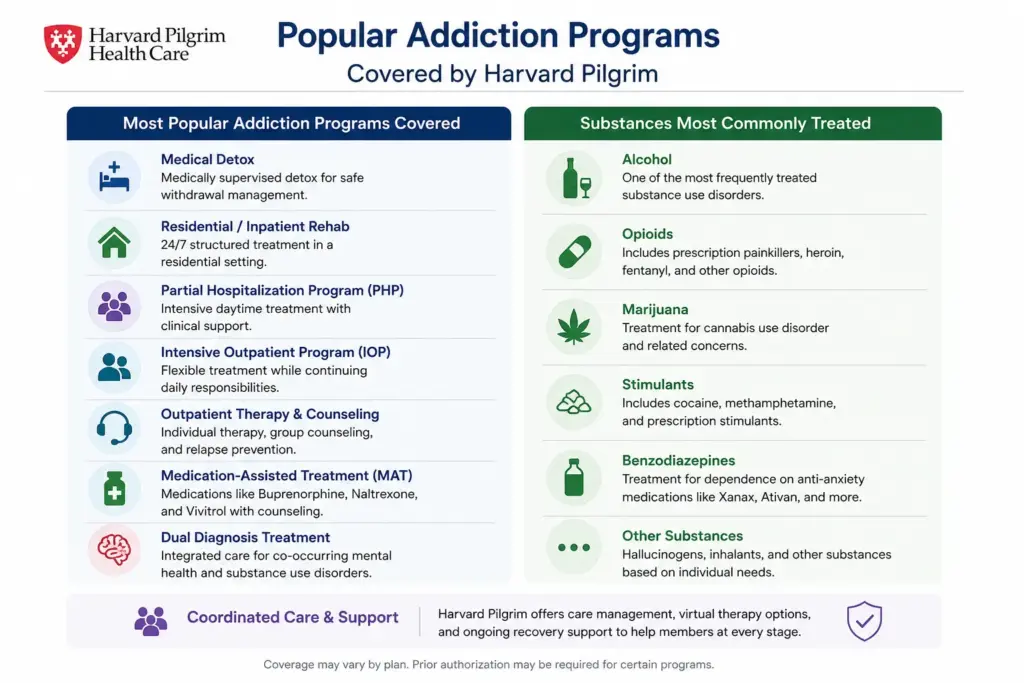
Yes, Harvard Pilgrim Health Care generally covers substance abuse treatment, mental health treatment, and dual diagnosis care, but what makes Harvard Pilgrim somewhat different from many insurers is its strong focus on integrated behavioral healthcare and care management throughout the recovery process. Depending on the specific plan, members may have coverage for medical detox, inpatient rehab, residential treatment, Partial Hospitalization Programs (PHPs), Intensive Outpatient Programs (IOPs), outpatient therapy, medication-assisted treatment (MAT), psychiatry, peer recovery support, and virtual behavioral health services. Harvard Pilgrim’s own behavioral health resources specifically state that substance use disorders are treated through a combination of counseling, rehabilitation programs, medication, support groups, and ongoing behavioral health support, rather than only short-term crisis care.
For mental health disorders, Harvard Pilgrim commonly covers therapy, psychiatry, medication management, inpatient psychiatric treatment, telehealth counseling, and treatment for conditions like anxiety, depression, PTSD, trauma-related disorders, bipolar disorder, OCD, and eating disorders. One thing many patients and providers online mention positively about Harvard Pilgrim is its emphasis on behavioral health care management and member navigation, which can help coordinate treatment between therapists, psychiatrists, rehab centers, hospitals, and outpatient programs. Harvard Pilgrim also supports virtual behavioral healthcare options, which many members say makes it easier to stay connected to treatment after inpatient rehab or detox. Compared to many large national insurers, Harvard Pilgrim is often viewed as more regionally focused and provider-connected within New England, though prior authorization and network rules still commonly apply for higher levels of care like detox, residential rehab, PHP, and IOP programs.
For people with dual diagnosis conditions — where addiction and mental health disorders occur together — Harvard Pilgrim often covers integrated treatment programs designed to treat both conditions simultaneously, which aligns with current best practices for behavioral healthcare. This may include addiction treatment combined with therapy and psychiatric care for depression, PTSD, anxiety, trauma, bipolar disorder, or other mental health conditions within the same program. Providers who regularly work with Harvard Pilgrim often note that approvals for higher levels of care tend to move more smoothly when facilities submit detailed clinical documentation explaining withdrawal risks, psychiatric symptoms, relapse history, failed outpatient treatment attempts, and the need for structured integrated care. Many members online also report that using in-network providers and treatment centers significantly lowers out-of-pocket costs, since Harvard Pilgrim plans may have more restrictive out-of-network coverage than some larger PPO-style national insurers.
Does Harvard Pilgrim Cover Luxury Rehab Treatment?
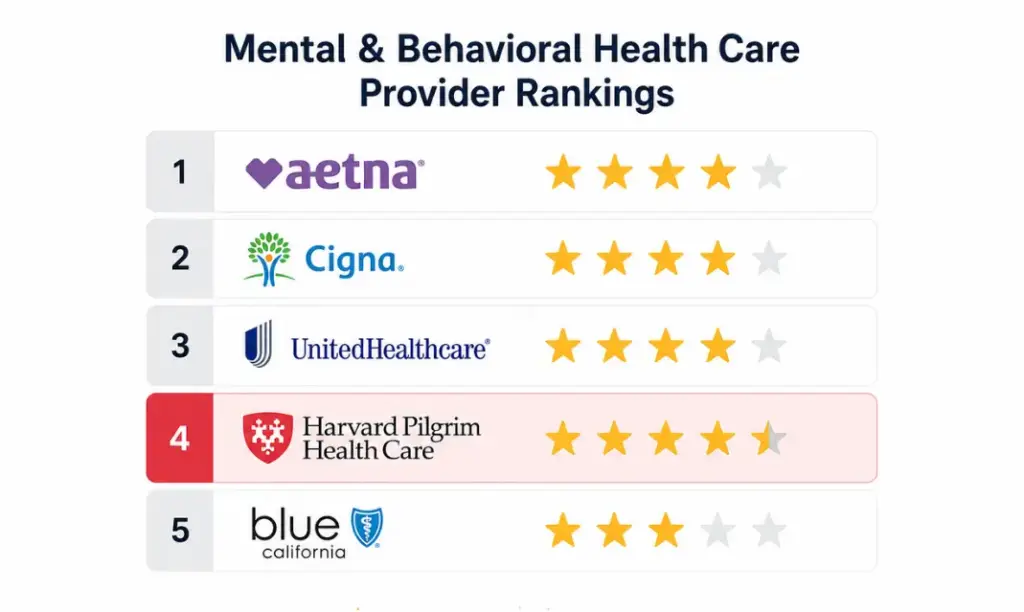
Yes, Harvard Pilgrim Health Care may cover treatment at a luxury rehab center when the addiction or mental health treatment is medically necessary and provided through an approved or in-network behavioral health provider, but coverage usually applies only to the clinical treatment itself — not the luxury amenities. Depending on the plan, Harvard Pilgrim may help cover medical detox, residential rehab, psychiatric care, medication-assisted treatment (MAT), therapy, PHP, IOP, and dual diagnosis treatment for co-occurring conditions like anxiety, depression, PTSD, or trauma, even when treatment occurs at an upscale facility. However, private suites, spa services, gourmet dining, executive accommodations, concierge transportation, and other resort-style features are generally considered non-medical expenses and are typically not covered. Many providers and patients online describe Harvard Pilgrim as offering relatively strong behavioral health coverage within New England because of its regional provider relationships and integrated behavioral health care management through Point32Health, though out-of-network luxury rehab can become expensive because many Harvard Pilgrim plans have more restrictive out-of-network benefits than large national PPO insurers. Providers also commonly note that approvals tend to move more smoothly when facilities submit detailed ASAM-based documentation showing withdrawal risks, relapse history, psychiatric symptoms, failed outpatient treatment attempts, and the need for 24/7 structured care, which is why many admissions teams recommend verifying benefits and separating clinical treatment costs from luxury amenity costs before admission.
Does Harvard Pilgrim Cover Residential Rehab Treatment?
Yes, Harvard Pilgrim Health Care commonly covers residential rehab treatment for substance use disorders and co-occurring mental health conditions when the care is medically necessary and approved through its behavioral health review process. Depending on the specific plan, coverage may include medical detox, residential treatment, inpatient psychiatric care, medication-assisted treatment (MAT), therapy, PHP, IOP, and integrated dual diagnosis treatment for conditions like anxiety, depression, PTSD, trauma, or bipolar disorder alongside addiction recovery. What makes Harvard Pilgrim somewhat different from many larger national insurers is its more regionally integrated behavioral health structure through Point32Health and its strong provider relationships throughout New England, which many providers and patients online describe as offering relatively coordinated behavioral healthcare and stronger care management support during transitions between detox, residential treatment, and outpatient recovery. Harvard Pilgrim’s behavioral health policies specifically show that inpatient and intermediate behavioral health services — including acute inpatient psychiatric treatment, substance use disorder treatment, residential care, and partial hospitalization — commonly require prior authorization and medical necessity review using evidence-based clinical criteria. Providers who regularly work with Harvard Pilgrim often note that residential rehab approvals tend to move more smoothly when facilities submit detailed ASAM-based documentation explaining withdrawal risk, psychiatric symptoms, failed outpatient treatment attempts, relapse history, and the need for 24/7 structured care. Compared to some national PPO carriers, Harvard Pilgrim plans may have more limited out-of-network flexibility, so many admissions teams strongly recommend confirming whether a rehab center is fully in-network before admission to reduce deductibles, coinsurance, and authorization complications.
Does Harvard Pilgrim Cover Outpatient Drug and Alcohol Treatment?
Yes, Harvard Pilgrim Health Care commonly covers outpatient drug and alcohol treatment, and many plans place a strong emphasis on outpatient behavioral healthcare and long-term recovery support as alternatives or step-down care after detox or residential rehab. Depending on the specific plan, coverage may include outpatient therapy, psychiatry, medication management, medication-assisted treatment (MAT), Intensive Outpatient Programs (IOPs), Partial Hospitalization Programs (PHPs), relapse prevention counseling, peer recovery support, virtual therapy, and treatment for co-occurring mental health conditions like anxiety, depression, PTSD, trauma, or bipolar disorder alongside addiction recovery. Harvard Pilgrim’s behavioral health policies specifically identify outpatient behavioral health services, structured outpatient programs, and intermediate levels of care as covered services when medically necessary, though higher-intensity programs like PHP and IOP often require prior authorization and ongoing clinical review.
Many providers and patients online describe Harvard Pilgrim as having relatively strong behavioral health coordination compared to some larger national insurers because of its regional focus through Point32Health and its emphasis on behavioral health care management. Outpatient treatment approvals are often easier to obtain than residential rehab because members can continue working, attending school, or managing family responsibilities while receiving treatment. Providers who regularly work with Harvard Pilgrim often note that approvals for PHP and IOP programs tend to move more smoothly when facilities document relapse risk, failed lower levels of care, psychiatric symptoms, or the need for structured outpatient support using ASAM Criteria. One thing many patients online mention positively is Harvard Pilgrim’s support for virtual behavioral healthcare and telehealth therapy, which can make ongoing recovery support more accessible after inpatient treatment. However, because Harvard Pilgrim plans may have more restrictive out-of-network benefits than some large national PPO carriers, many treatment providers recommend confirming whether outpatient programs, therapists, psychiatrists, and MAT providers are fully in-network before treatment begins to reduce unexpected costs and authorization issues.
Additional Information about Harvard Pilgrim
One especially important thing to know about Harvard Pilgrim Health Care is how much emphasis the company places on behavioral health navigation and care management, which can make a major difference during detox, rehab, and recovery transitions. Unlike some insurers that primarily focus on approving or denying claims, Harvard Pilgrim and Point32Health actively promote behavioral health service navigation programs that help connect members with appropriate treatment providers, outpatient support, virtual therapy, psychiatry, and recovery resources. Harvard Pilgrim publicly reports that its behavioral health navigation program has a 90% satisfaction rate, which is notable in an area of healthcare where patients often struggle to find coordinated addiction and mental health care.
Another valuable thing many people do not realize is how strongly Harvard Pilgrim supports virtual behavioral healthcare and telehealth recovery services, especially for ongoing therapy, psychiatry, medication-assisted treatment (MAT), and step-down care after inpatient rehab. This can be especially helpful in New England, where access to behavioral health providers can vary significantly by region. Research consistently shows telehealth behavioral health treatment produces outcomes comparable to in-person therapy for many mental health and substance use conditions, while also improving access and continuity of care. Many members and providers online describe Harvard Pilgrim’s telehealth and care management support as one of the insurer’s biggest advantages because relapse risk is often highest after leaving detox or residential treatment, and easier access to virtual therapy, MAT, psychiatry, and recovery support can help reduce gaps in care during that transition period.
Personalize your treatment plan
with a benefits specialist. Call us.
Safely Detox at Castillian

Find Alcohol Treatment

Legacy Healing Center Parsippany, NJ

Legacy Healing Center Cincinnati, OH