


-
 By:
Valerie Puffenberger, PMHNP-BC
By:
Valerie Puffenberger, PMHNP-BC -
Editor:
Phyllis Rodriguez, PMHNP-BC
-
Clinical Reviewer:
Dr. Ash Bhatt, MD, MRO
 By:
By:
 Editor:
 Clinical Reviewer:
Key Takeaways
- Propranolol works by increasing the levels of alcohol in the bloodstream so the effect of one glass of wine on a person will change once this drug is started.
- Most patients don’t know that propranolol was never developed to take over your blood pressure management from alcohol. Because of this, using them together could bring greater drops than if one of them was used alone.
- A lot of patients think, since propranolol treats anxiety, it means adding alcohol to it will add to more relaxed feeling only. Whereas this combination causes unintended effects like increased nervousness when the effects of alcohol pass away.
Can You Drink Alcohol While Taking Propranolol?
Quick Answer: Drinking alcohol while taking propranolol may not be a completely safe activity. This combination of substances might make certain effects such as dizziness, tiredness, and lowering of blood pressure much more pronounced. It is definitely advisable to discuss all potential risks with your doctor before consuming alcohol at all, to make sure you are on the same page with your doctor.
Propranolol and alcohol interact because both substances affect the cardiovascular system in overlapping ways. Propranolol slows the heart rate and relaxes blood vessels to keep blood pressure in check, while alcohol does something similar in the short term, widening blood vessels and, at higher amounts, blunting the nervous system’s usual responses.
When these effects stack on top of each other, blood pressure can drop further than expected. The FDA’s prescribing information for propranolol specifically notes that concomitant use of alcohol may increase plasma levels of propranolol, which means the drug can build up more than intended when alcohol is in the picture.
That’s why some people feel side effects more intensely than others. Body weight, liver function, how much alcohol is consumed, and even the specific propranolol formulation all of this affects how strong the reaction turns out to be. This is the reason why healthcare providers recommend caution rather than saying “never,” because the risk genuinely depends on the individuals.
What Is Propranolol?
Propranolol belongs to a class of medications called beta blockers, and it works by blocking the effects of adrenaline on the heart and blood vessels. Instead of the heart racing and vessels tightening under stress, propranolol keeps things steadier.
Doctors prescribe propranolol for a range of conditions, and understanding why someone is taking it often explains how alcohol might affect them differently. Common uses include:
- Generalized anxiety and performance anxiety, including the physical symptoms like a racing heart or shaky hands before a big presentation
- High blood pressure, where it helps reduce the workload on the heart
- Essential tremors, particularly hand tremors that interfere with daily tasks
- Migraine prevention, taken regularly rather than during an active headache
- Certain heart conditions, including irregular heart rhythms and recovery after a heart attack
Someone taking propranolol purely for occasional performance anxiety faces a different risk profile than someone managing chronic high blood pressure or a heart condition, which is one reason a one-size-fits-all answer about alcohol doesn’t really exist.
What Happens When You Mix Propranolol and Alcohol?
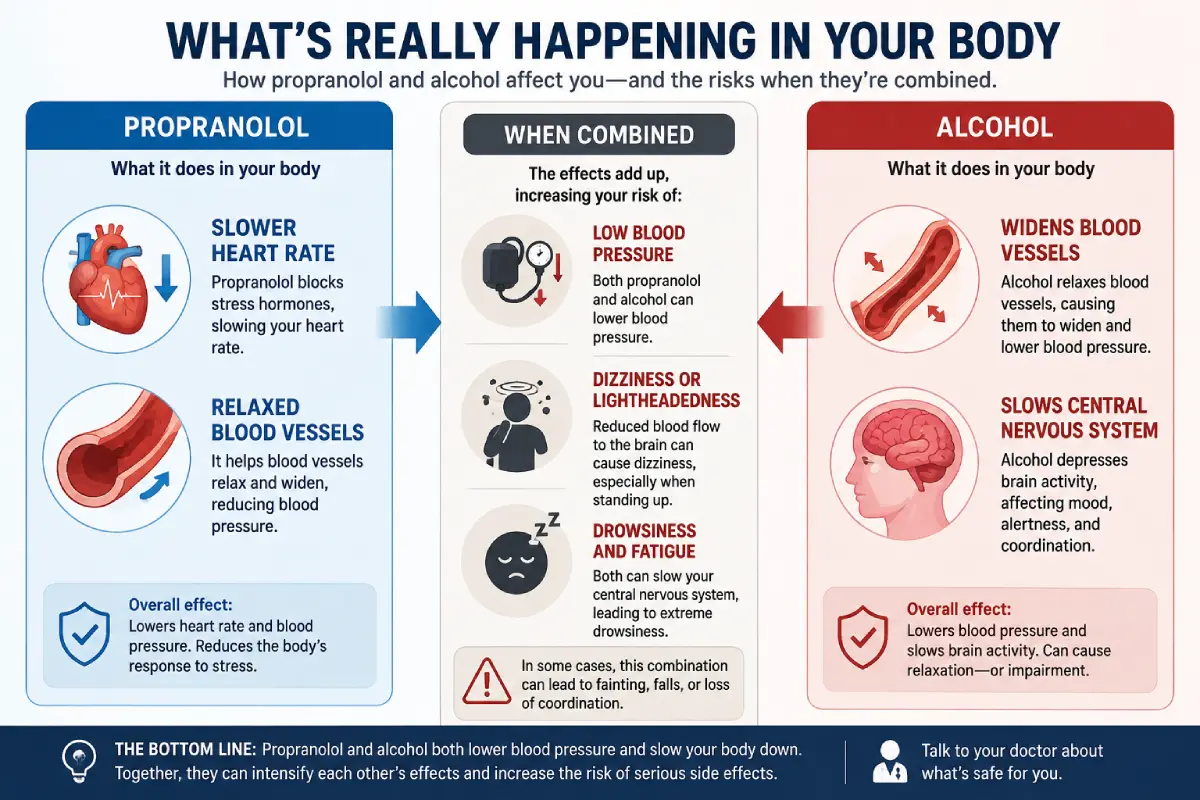
Alcohol is a depressant of the central nervous system. It decreases people’s ability to respond quickly, clouds their judgment, and can cause a drop in blood pressure and heart rate at higher dosages, which are separate effects from the effects of medication.
Propranolol, Then again, is already keeping your blood pressure and heart rate in check. When alcohol gets the picture, the body is really getting two very different messages simultaneously: one to slow down and the other to relax the heart and blood vessels.
The combination of propranolol and alcohol might not actually double the risk, but it does compound in unpredictable ways from one occasion to the next. A dose of alcohol that felt manageable last month might feel very different but now that propranolol has been added to your daily regimen, it might feel very different.
Risks and Side Effects of Mixing Propranolol and Alcohol
When you take propranolol while drinking alcohol, the combination may cause several unwanted side effects. Knowing those side effects and identifying them early on can help you catch the problem before it causes serious issues, such as:
Low Blood Pressure
Both propranolol and alcohol can reduce blood pressure. It goes so far that their combined effect can bring the blood pressure dangerously low even below normal. Individuals who naturally have low blood pressure would probably be the ones to suffer most from this.
Dizziness and Fainting
Lightheadedness typically marks the onset of sudden low blood pressure, more often when one stands up straight. If not caught in time, the condition could result in fainting, which could bring serious consequences like falls and injuries.
Drowsiness and Fatigue
Propranolol already brings about the sense of fatigue for many users. This is usually when you first start or increase the medicine dose. Propranolol’s tiredness effect is increased by the calming effects of alcohol, the two combined will leave people feeling very tired, even more than substances taken individually.
Slower Reaction Time
Driving, handling heavy equipment, or even climbing steps without hurting oneself are the tasks that mainly demand our reaction time. So combining them would greatly risk the occurrence of accidents. In fact, some of these risks would not be immediately visible!
Heart Rate Changes
One of the main things about taking propranolol is reducing heart rate, so alcohol interfering with this regulation becomes the second factor. As the combination is different for each person, the results may vary. Some may feel like their heart is slowing more than usual, and the others may experience irregular heartbeat sensations as the two drugs interact.
Difficulty Concentrating
Although it’s more of the physical effects that come up when you mix propranolol with alcohol, the mental effects will also be present. A lot of people say that they feel mentally fuzzy after going out and having a drink. These symptoms may go on the rest of the day and not stop with sleep only.
Is Any Amount of Alcohol Safe While Taking Propranolol?
There isn’t a universal answer here, and any source claiming otherwise is oversimplifying a genuinely individual question. What counts as a manageable amount of alcohol for one person taking propranolol could cause real problems for another.
Several factors shape that individual risk:
- Dosage of propranolol – Higher doses generally mean a stronger baseline effect on blood pressure and heart rate, leaving less room for alcohol’s added impact.
- Medical history – Existing heart conditions, liver disease, or a history of low blood pressure all change how the body handles this combination.
- Drinking patterns – Occasional, moderate drinking carries a different risk profile than regular or heavy alcohol use.
- Other medications – Anyone taking additional prescriptions, especially other blood pressure medications or sedatives, faces compounded risk.
Because these variables shift so much from person to person, the most reliable guidance will always come from the healthcare provider who prescribed the propranolol and knows the full picture of someone’s health.
Who Should Avoid Mixing Propranolol and Alcohol?
A few selected groups are more vulnerable when alcohol and propranolol are taken together. For them, simply refraining from drinking is often the safer, easier route.
- Older adults, whose bodies typically process both medications and alcohol more slowly, extend the window of risk.
- People with heart disease: Alcohol may impose an extra heart load because of this, interfering with the heartbeat regularization that propranolol gives.
- People with liver disease: In this case, the liver processes both the propranolol and the alcohol, so liver impairment can cause buildup of both substances in the blood.
- Individuals with heavy alcohol use or Alcohol Use Disorder: Regular consumption turns propranolol use into an unsafe and difficult-to-control matter.
- Anyone on multiple medications: In particular, when the blood pressure pills, the sedatives or the antidepressants are also among them, such a combination of medications could interact in unpredictable and harmful ways
What Should You Do If You Accidentally Drink Alcohol While Taking Propranolol?
An occasional slip doesn’t have to turn into a medical emergency, but it does call for some basic precautions. The first step is simply paying attention to how the body responds over the next several hours.
- Watch for symptoms like dizziness, unusual fatigue, or a racing or unusually slow heartbeat, and don’t dismiss them as just “feeling off.”
- Stay hydrated, since dehydration can worsen the blood pressure drop that both alcohol and propranolol can cause.
- Avoid driving or operating machinery until any dizziness or drowsiness has fully cleared, even if it feels like a mild reaction.
- Call a doctor if symptoms feel more intense than expected or don’t resolve within a few hours.
- Seek emergency care for chest pain, fainting, severe dizziness, difficulty breathing, or a heart rate that feels dangerously slow or irregular.
Most single instances resolve without lasting harm, but treating the symptoms seriously in the moment is what keeps a manageable situation from becoming a dangerous one.
Can Alcohol Make Anxiety Worse While Taking Propranolol?
This question comes up constantly, and the honest answer surprises a lot of people. Alcohol does produce a temporary calming effect, which is exactly why so many people reach for a drink when anxiety flares.
But that calm is short-lived. As alcohol leaves the system, it often triggers rebound anxiety, a documented phenomenon where anxious feelings return, sometimes more intensely than before drinking.
For someone taking propranolol specifically to manage anxiety symptoms, this creates a frustrating cycle. The medication is working to steady the physical symptoms of anxiety, like a racing heart, while alcohol’s rebound effect can undo that progress once its initial calming effect fades.
Over time, using alcohol to cope with anxiety, especially anxiety already being treated with medication, tends to make the underlying problem worse rather than better. What starts as an occasional drink to take the edge off can quietly become a pattern that neither propranolol nor willpower alone can fully offset.
Clinical Perspective: Why I Watch This Combination Closely
Alcohol increases propranolol level in the blood; because of this, the same drink that you have enjoyed in the past may make you have feel dizzy, tired or reduce your BP.
I check on alcohol use with every single patient I start on propranolol, because I’ve seen how often people miss this interaction entirely. One patient with propranolol at 40mg twice daily, once reported that two glasses of wine made her so lightheaded that she had to sit down, and she had never experienced that occurrence of sitting down due to feeling light headed before her medicine was changed or the medication was added.
My rule of thumb: If your dose is high or it’s your first week of starting or adjusting to the propranolol, consider that alcohol intake may pose additional risks until you have identified or determined the way your body will react to such situations.
When to Seek Professional Help
Some patterns are worth taking seriously on their own, separate from any single medication interaction. If any of the following feel familiar, it may be time to talk with a professional beyond a routine prescription check-in:
- Drinking has started to feel less like a choice and more like something hard to control or cut back on
- Alcohol use continues despite knowing it interacts with a prescribed medication
- Anxiety is interfering with work, relationships, or daily functioning even with propranolol and occasional alcohol use
- Attempts to reduce drinking on your own haven’t stuck, even when the motivation is genuinely there
These signs don’t necessarily mean something is deeply wrong, but they do mean it’s worth a conversation. Facilities like Legacy Healing Center offer support for people navigating both anxiety and alcohol use, including medical detox and treatment programs designed around the reality that these two challenges often show up together rather than separately.
Take Away
If you’re on propranolol and plan to drink, start with less than you normally would, wait to see how you feel before having more, and stop entirely if you feel lightheaded, unusually tired, or your heart rate feels off.
So here’s the direct answer:
- If you’re in your first two weeks on propranolol or just had a dose increase, don’t drink at all until you know how the medication affects you on its own
- If you’re on a higher dose (over 80mg daily), treat every drink as having a stronger effect than it used to, even if the amount hasn’t changed
- If you have any heart condition alongside your prescription, alcohol isn’t a “maybe,” it’s something to skip entirely unless your prescribing doctor has explicitly said otherwise
- If none of the above applies to you, moderate, occasional drinking is generally lower-risk, but it’s still worth noticing how you feel the first few times
That’s the actual takeaway: the safe amount is determined by your specific dose and timeline, and that’s the piece most people skip past.