


-
 By:
Valerie Puffenberger, PMHNP-BC
By:
Valerie Puffenberger, PMHNP-BC -
Editor:
Phyllis Rodriguez, PMHNP-BC
-
Clinical Reviewer:
Dr. Ash Bhatt, MD, MRO
 By:
By:
 Editor:
 Clinical Reviewer:
Key Takeaways
- Propranolol treats the body, not the worry. It’s prescribed for the physical jolt of anxiety, racing heart, shaky hands- not the anxious thoughts causing it.
- Physical calm isn’t the same as “cured.” It’s easy to mistake symptom relief for resolution, which is why timing and expectations matter as much as the prescription itself.
- The mind still needs its own treatment. Relying on propranolol alone for years without addressing the underlying anxiety is a common pattern, and it leaves the real problem untouched.
How Does Propranolol Help Anxiety?
Propranolol helps anxiety by blocking the physical effects of adrenaline on the body, which can reduce a racing heart, shaking hands, and sweating within about 30 to 60 minutes of taking it. It is a beta-blocker originally developed for heart conditions, and it is now commonly prescribed off-label for situational anxiety such as public speaking or performance nerves.
The distinction that matters most: propranolol may quiet the physical symptoms of anxiety. It does not treat anxious thoughts, worry, or the psychological condition driving them. Those are two separate systems in the body, and understanding the difference changes how the medication should be used and what it can realistically be expected to do.
This article breaks down exactly how propranolol works on the body, when it tends to help most, who it isn’t appropriate for, and how to recognize when physical symptom relief alone isn’t enough.
How Does Propranolol Calm the Physical Symptoms of Anxiety?
Anxiety triggers the release of adrenaline, which attaches to beta receptors throughout the body. Those receptors are behind the racing pulse, the dry mouth, the shaky hands — all the physical discomfort that makes anxiety hard to sit through.
Propranolol works by occupying those same beta receptors before adrenaline can attach to them. This blocks the body’s physical reaction to the stress signal, even though the nervous system is still perceiving the trigger. In other words, the brain still registers the stressor. It’s the chain reaction that usually follows — the pounding heart, the trembling, the sweat — that gets interrupted at the receptor level.
That mechanism can meaningfully reduce:
- A racing or pounding heart
- Visible shaking or trembling, particularly in the hands
- Sweating
- Muscle tension
- Other adrenaline-driven symptoms, including a dry mouth or mild nausea
What it doesn’t touch is the thought pattern that set the adrenaline off in the first place, a distinction covered in more detail below.
When Is Propranolol Most Helpful for Anxiety?
Propranolol’s effectiveness depends heavily on what type of anxiety is being treated. It tends to do well against short, predictable spikes tied to one specific event, and much less well against anxiety that just runs in the background all day. The two sections below get into where it helps and where it starts to fall short.
1. Performance and Situational Anxiety
Propranolol tends to work best for anxiety tied to a specific, predictable event rather than anxiety that follows someone through the whole day. Its off-label use is best supported for acute, situational anxiety — public speaking, test-taking, stage performance — where physical symptoms, not the underlying worry, are the main obstacle. Common scenarios include:
- Job interviews
- Auditions or recitals
- Presentations at work or school
- Any situation where physical nervousness, rather than persistent worry, is what interferes with performance
This use case actually goes back decades. A national survey of American orchestral musicians, published in the peer-reviewed journal Medical Problems of Performing Artists, found that 27% had used propranolol or another beta blocker to manage performance anxiety — most without a prescription — and 96% of those who used it said it worked (Fishbein et al., 1988). It’s a good illustration of the medication’s narrow but genuine strength: handling the physical signature of acute performance pressure.
2. Social Anxiety, Panic Symptoms, and Generalized Anxiety
For social anxiety, panic attacks, and generalized anxiety disorder, propranolol can still take the edge off physical symptoms in the moment, but nobody should treat it as a comprehensive fix for any of these conditions. Extending its benefit from situational anxiety to something like generalized anxiety disorder or panic disorder overlooks a key fact — those conditions run on maladaptive thought patterns, catastrophizing, the endless “what if” loop, avoidance — and a beta-blocker has no way of touching any of that.
Propranolol is not the “best” anxiety medication, and it does not treat every form of anxiety. It has a narrow, specific role and performs best inside that lane.
Does Propranolol Stop Anxious Thoughts?
No, propranolol does not stop anxious thoughts. It targets the physical symptoms of anxiety, not the mental or emotional experience of worry, fear, or rumination.
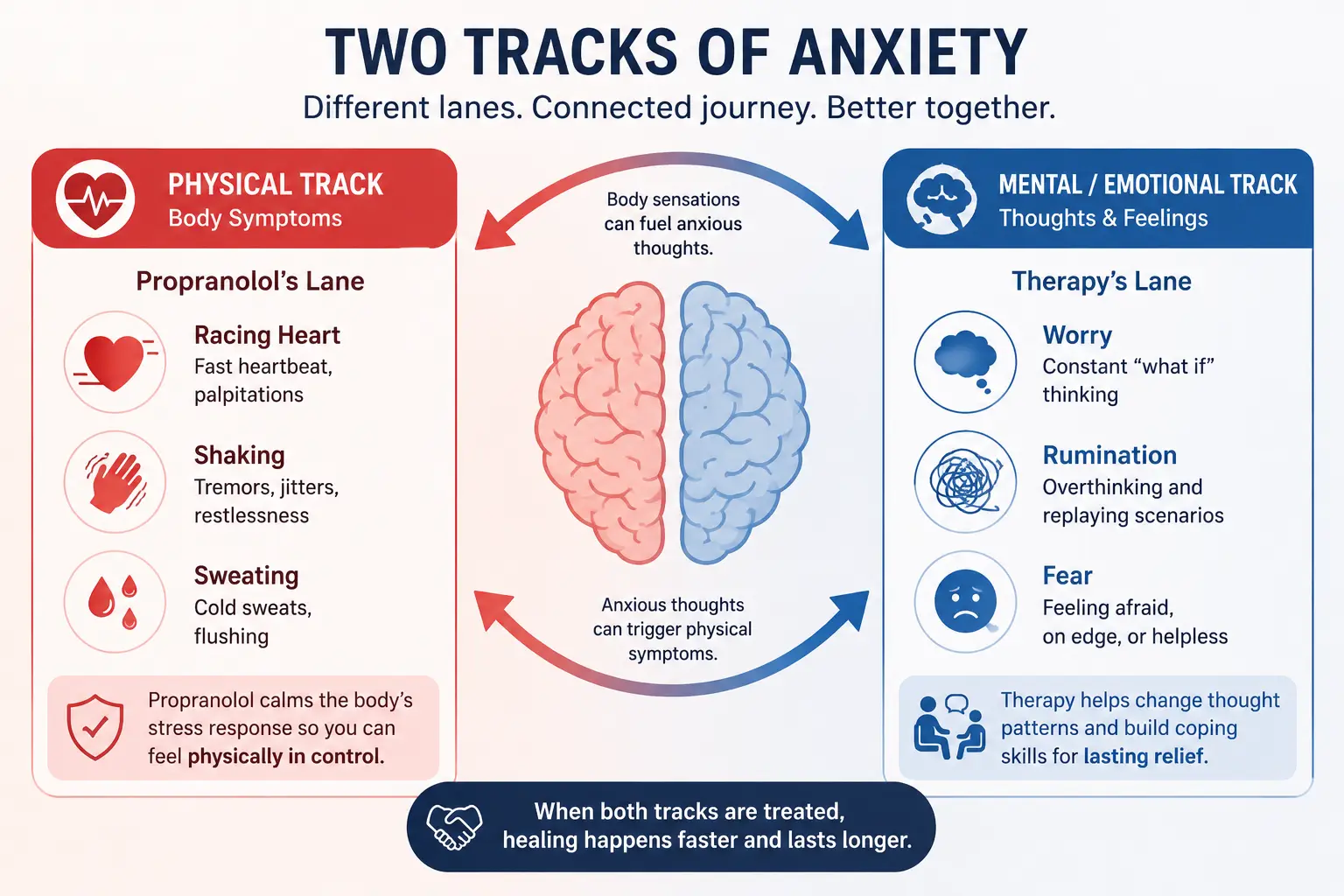
It helps to separate anxiety into two tracks that usually run together but are not the same condition:
- Physical anxiety — a racing heart, trembling, sweating, the broader adrenaline response the body kicks into when it’s under stress.
- Mental and emotional anxiety — persistent worry, fear, rumination, intrusive thoughts that loop without an obvious off switch.
Those two tracks feed each other. Anxiety produces physical symptoms, the body notices those symptoms, and noticing them generates more anxiety — a loop that can spiral fast before something like a presentation or a flight. Propranolol interrupts that loop at the physical end. By quieting the racing heart and the shaking, it can make the whole experience feel more survivable. But it isn’t touching the psychological source. The worry is still there. It’s just no longer being amplified by a body that thinks it’s in danger.
Dr. Ash Bhatt’s Clinical Perspective:
For many people, propranolol “fixes” their anxiety because their hands stopped shaking during a presentation. What actually happened is their body stopped broadcasting distress signals to their brain, which quieted the loop — but the underlying worry pattern was still there the next time a stressor showed up without a pill on hand.
How Quickly Does Propranolol Work and How Long Does It Last for Anxiety?
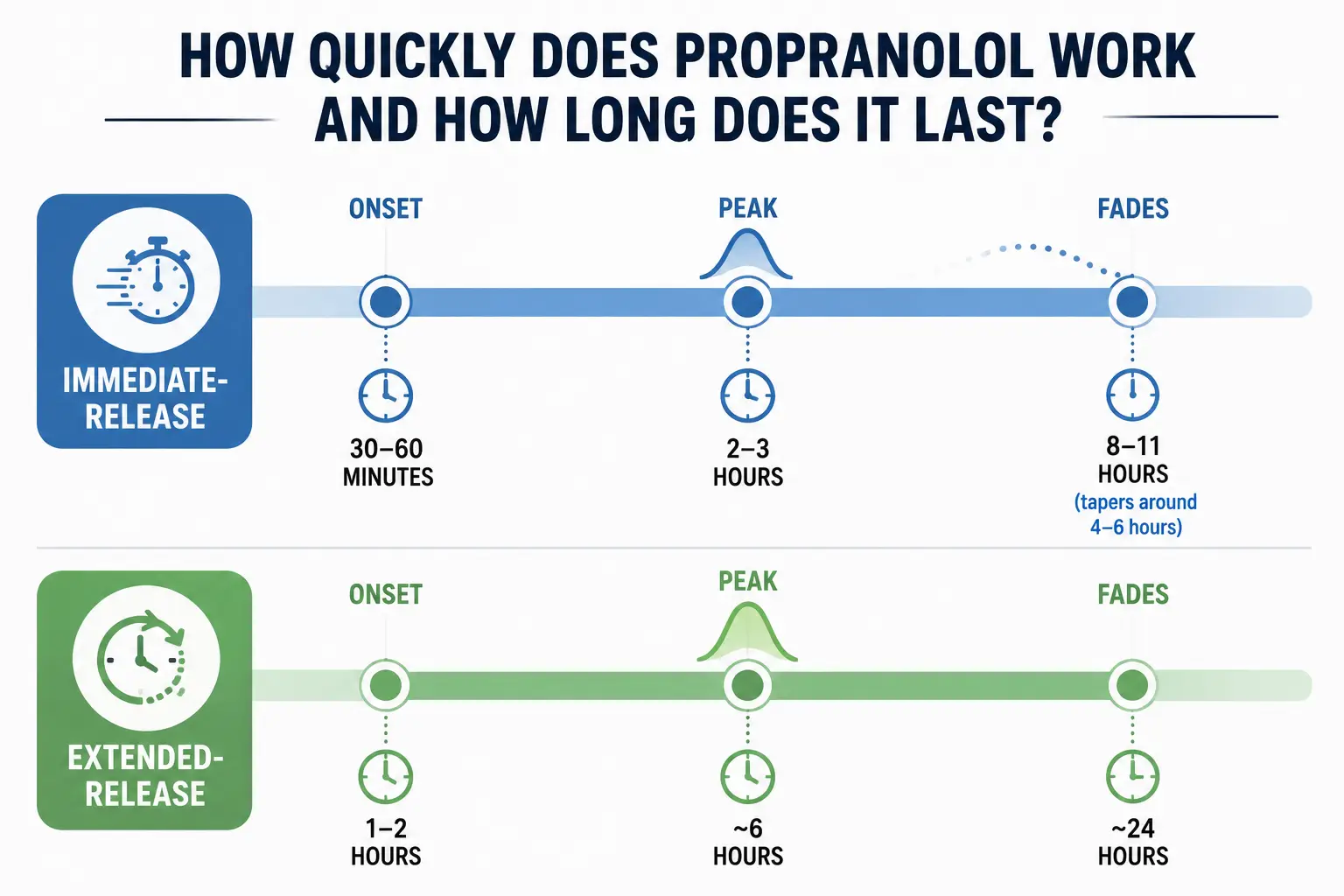
Immediate-release propranolol typically begins working within 30 to 60 minutes, which is why it is usually taken shortly before a known stressful event rather than on a fixed daily schedule. Its effects are generally noticeable for about 8 to 11 hours, though the practical benefit often tapers closer to the 4-to-6-hour mark as blood levels decline.
Extended-release formulations behave differently. They are designed for roughly 24-hour coverage and reach peak blood levels around 6 hours after dosing, making them a better fit for anxiety that persists throughout the day rather than clustering around one predictable event.
A few things explain why the timeline shifts from person to person:
- Formulation — immediate-release versus extended-release changes both onset and duration
- Liver function — propranolol is processed through the liver, so slower metabolism stretches its effects out longer
- Other medications — some drugs compete for the same liver enzymes, which can keep propranolol in the bloodstream longer than expected
- Individual metabolism — smoking, for example, tends to speed up clearance and can shorten how long the medication stays effective
This is exactly why dosing and timing should come from your prescriber, not a general rule of thumb.
What Are the Side Effects and Risks of Propranolol?
Propranolol works by slowing the heart and lowering blood pressure, and most of its common side effects- fatigue, dizziness, nausea, cold extremities, and constipation- trace directly back to that mechanism, according to the NIH’s clinical reference on beta blockers.
- Fatigue – The most frequently reported side effect, since the medication reduces the physical “drive” the body is used to operating with.
- Cold hands or feet — a result of reduced blood flow to the extremities as circulation slows.
- Dizziness and low blood pressure — a direct extension of the blood-pressure-lowering effect, more noticeable when standing up too fast.
- Slow heart rate (bradycardia) — an expected effect of the mechanism, but one that warrants prompt medical attention, especially at higher doses.
- Sleep disturbances and vivid dreams — propranolol crosses the blood-brain barrier more easily than some other beta blockers, which is part of why it’s tied more often to vivid dreams and nightmares.
- Nausea and digestive upset — often eases up when the medication is taken with food.
Most of these effects show up soon after starting propranolol and tend to fade within the first few weeks as the body adjusts. Side effects become more common at higher doses — particularly above 160 mg — and they show up more often in older adults too, largely because kidney function slows with age. Severe dizziness, fainting, or a very slow pulse aren’t things to wait out; they’re a reason to call a prescriber.
Who Should Not Take Propranolol
Because propranolol affects the heart and lungs directly, it isn’t right for everyone, and a full medical history needs a look before anyone starts it for anxiety. It’s generally not prescribed for people with:
- Bronchial asthma or COPD – Propranolol may provoke a bronchial or asthmatic attack by blocking the bronchodilation the body normally produces in response to stress hormones.
- Sinus bradycardia or greater-than-first-degree heart block, unless a pacemaker is already in place
- Cardiogenic shock or decompensated heart failure
- Insulin-dependent diabetes, since beta blockade can mask the early warning signs of low blood sugar, such as changes in pulse rate, making hypoglycemia harder to detect
- Known hypersensitivity to propranolol or its components
- Peripheral vascular disease, where reduced circulation can worsen existing symptoms
Is Propranolol Addictive?
No, propranolol is not considered addictive. It is generally regarded as non-sedating and non-addictive when used as directed by a clinician, setting it apart from medications like benzodiazepines that carry a recognized dependence risk.
That said, addiction is not the only consideration. The body can still physically adjust to regular propranolol use, and stopping it abruptly can cause a rebound in heart rate and blood pressure. That is a physical adjustment issue rather than addiction, but it still means discontinuation should be planned with a doctor rather than done independently.
Can You Drink Alcohol While Taking Propranolol?
Alcohol and propranolol should generally not be combined, because both substances lower blood pressure and slow the central nervous system in overlapping ways. Propranolol slows the heart rate, while alcohol temporarily increases it, and when combined, these opposing actions can trigger irregular heart rhythms or palpitations.
The bigger concern is blood pressure. Mixing propranolol with alcohol can cause a significant drop, leading to dizziness, nausea, or fainting. There’s a metabolic piece to this as well — both substances get processed by the liver, and since alcohol takes priority there, propranolol’s breakdown gets delayed. That lets it build up to higher levels in the bloodstream and makes its effects stronger than expected.
There’s a masking risk worth flagging too. Propranolol can blunt the physical cues that normally signal alcohol intoxication, like a racing heart, which makes it harder to gauge how much has actually been consumed, a particularly relevant risk for anyone using propranolol around anxiety-provoking social situations where drinking may already be more likely.
When Is Propranolol Alone Not Enough for Anxiety?
Controlling the physical symptoms of anxiety does not necessarily mean the underlying condition has been resolved. Anxiety disorders are common. According to the National Institute of Mental Health, about a third of U.S. adolescents and adults experience an anxiety disorder at some point in their lives, and for many of them, the physical symptoms are only one piece of a larger pattern. When the body feels calmer but the mind doesn’t, that is usually a sign more comprehensive support is needed.
The signs below are worth paying attention to, because they typically mean the anxiety has outgrown what a beta blocker alone can manage:
- Persistent worry that continues despite reduced physical symptoms
- Anxiety that interferes with work, school, or daily responsibilities
- Avoiding everyday activities or situations out of fear
- Strain showing up in relationships
- Recurring panic or distress, even outside specific “trigger” events
- Depression or other mental health symptoms alongside the anxiety
- Using alcohol or drugs to manage anxious feelings
- A general decline in quality of life
Dr. Ash Bhatt’s Clinical Perspective:
The people who do best long-term are the ones who stop asking “how do I make the shaking stop” and start asking “why does my body go into alarm mode this often.” That second question is where real treatment begins, and it’s rarely one a prescription alone can answer.
When to Consider Professional Anxiety Treatment
When physical symptom relief has only addressed part of the picture, comprehensive treatment reaches the areas propranolol was never designed to touch. Anxiety treatment at our Legacy Healing center starts with an individualized mental health assessment and builds a plan around what is actually driving the symptoms, rather than only managing them.
Depending on what that assessment finds, a plan may include:
- Evidence-based therapy that works directly with anxious thought patterns
- Medication management, when clinically appropriate, alongside therapeutic work
- Practical behavioral and coping strategies for use outside of sessions
- Treatment for co-occurring conditions, since anxiety rarely presents alone
- Dual diagnosis treatment when anxiety and substance use are reinforcing each other
Our mental health treatment programs are built specifically for the gap between symptom control and lasting recovery for anyone whose physical symptoms have eased but whose underlying anxiety hasn’t.