
Disclaimer: A treatment center will attempt to verify your health insurance benefits and/or necessary authorizations on your behalf. Please note, that this is only a quote of benefits and/or authorization. We cannot guarantee payment or verification eligibility as conveyed by your health insurance provider will be accurate and complete. Payment of benefits is subject to all terms, conditions, limitations, and exclusions of the member’s contract at the time of service. Your health insurance company will only pay for services that it determines to be “reasonable and necessary.” The treatment center will make every effort to have all services preauthorized by your health insurance company. If your health insurance company determines that a particular service is not reasonable and necessary, or that a particular service is not covered under your plan, your insurer will deny payment for that service and it will become your responsibility. We respect your privacy. We request this information to provide you with detailed coverage of benefits. By sharing your phone number, you agree to receive SMS messages via text from us – including details about your benefits. Message and data rates may apply, and frequency varies, text STOP to unsubscribe or HELP for assistance. Sharing this information is not a condition of treatment.
Blue Cross Blue Shield Rehab Coverage: Everything You Need To Know
About Blue Cross Blue Shield Insurance
Blue Cross Blue Shield (BCBS) is one of the largest and most recognized health insurance systems in the United States, providing coverage to more than 115 million people through a network of 33 independent and locally operated insurance companies.
Originally founded to help make hospital and medical care more affordable, BCBS now offers a wide range of health plans for individuals, families, employers, Medicare members, and federal employees. In addition to medical coverage, many Blue Cross Blue Shield plans include behavioral health services such as therapy, psychiatric care, substance abuse treatment, medication-assisted treatment (MAT), detox, inpatient rehab, outpatient programs, and support for co-occurring mental health disorders like anxiety, depression, PTSD, and addiction. One thing that makes BCBS unique compared to many insurers is its massive nationwide provider network through the BlueCard program, which allows members to access care across state lines more easily than many regional insurance plans.
For those researching Blue Cross Blue Shield rehab coverage, many BCBS plans help cover addiction and mental health treatment when services are considered medically necessary under federal mental health parity laws. Depending on the specific BCBS company and plan type, coverage may include detox, residential rehab, Partial Hospitalization Programs (PHPs), Intensive Outpatient Programs (IOPs), outpatient therapy, dual diagnosis treatment, and virtual behavioral health services. Because BCBS operates through independent regional companies, coverage rules, provider networks, referrals, and prior authorization requirements can vary significantly by state and plan. Many treatment providers and patients online describe BCBS as offering relatively broad behavioral health coverage overall, especially through PPO-style plans that allow greater flexibility in choosing rehab centers and mental health providers. Many rehab facilities that accept BCBS can also verify benefits and manage the authorization process before treatment begins, helping patients better understand their coverage and estimated out-of-pocket costs.
How Does Blue Cross Blue Shield Insurance work for substance abuse treatment?
Blue Cross Blue Shield (BCBS) works for substance abuse treatment much like other major health insurers, but one important difference is that coverage can vary significantly depending on the specific regional BCBS company and the type of plan a person has. In most cases, BCBS helps cover medically necessary addiction and mental health treatment services such as medical detox, inpatient rehab, outpatient treatment, Partial Hospitalization Programs (PHPs), Intensive Outpatient Programs (IOPs), therapy, psychiatric care, medication-assisted treatment (MAT), and treatment for co-occurring mental health disorders like anxiety, depression, PTSD, or bipolar disorder. When someone reaches out for treatment, the rehab center will usually contact BCBS to verify benefits, check whether the facility is in-network, estimate out-of-pocket costs, and determine whether prior authorization is required for higher levels of care like detox or residential rehab. Many BCBS plans use evidence-based clinical guidelines and ASAM Criteria to evaluate medical necessity and determine the appropriate level of care based on withdrawal risk, relapse history, mental health symptoms, and overall safety needs.
One thing many patients and providers note online is that BCBS PPO plans often provide some of the broadest provider access in the insurance industry, especially through the BlueCard network that allows members to receive care across state lines more easily than many regional insurers. HMO plans may have stricter provider network rules and referral requirements, while PPO plans generally offer more flexibility for choosing rehab centers, dual diagnosis programs, and out-of-network treatment providers. BCBS is also known for placing a strong focus on behavioral health integration and long-term recovery support, meaning coverage may continue beyond detox or inpatient rehab into outpatient therapy, MAT programs, relapse prevention, and ongoing mental health care when medically appropriate. Because approval requirements can vary widely between BCBS affiliates, many rehab centers that work with BCBS will handle insurance verification and authorization requests directly with the insurer to help simplify the admissions process for patients and families.
Does Blue Cross Blue Shield Cover Substance Abuse and Mental Health Disorders?
Yes, Blue Cross Blue Shield (BCBS) generally covers both substance abuse treatment and mental health treatment, including care for co-occurring disorders where addiction and mental health conditions like anxiety, depression, PTSD, bipolar disorder, or trauma are treated together. Depending on the specific BCBS company and plan, coverage may include medical detox, inpatient rehab, outpatient treatment, Partial Hospitalization Programs (PHPs), Intensive Outpatient Programs (IOPs), therapy, psychiatric care, medication-assisted treatment (MAT), and virtual behavioral health services. One thing many patients and providers mention online is that BCBS PPO plans are often viewed favorably because they typically offer broader provider access and more flexibility for choosing rehab centers and mental health specialists, especially through the BlueCard network that allows coverage across multiple states.
Many treatment providers also report that BCBS tends to support evidence-based and dual diagnosis treatment when medical necessity is clearly documented, though prior authorization and utilization reviews are common for higher levels of care like detox or residential rehab. Online patient experiences are mixed depending on the regional BCBS company, but many people describe strong behavioral health coverage overall when staying in-network, while frustrations usually involve approval timelines, out-of-pocket costs, or navigating plan-specific rules. Because BCBS operates through independent regional insurers, benefits can vary significantly by state and employer plan, so most rehab centers that accept BCBS will verify benefits and handle authorization requests directly before treatment begins.
Does Blue Cross Blue Shield Cover Residential Rehab Treatment?
Yes, Blue Cross Blue Shield (BCBS) commonly covers residential rehab treatment for drug addiction, alcohol addiction, and co-occurring mental health disorders when the treatment is considered medically necessary. Depending on the specific BCBS company and plan, coverage may include medical detox, inpatient residential rehab, therapy, psychiatric care, medication-assisted treatment (MAT), and dual diagnosis treatment for conditions like anxiety, depression, PTSD, or bipolar disorder alongside addiction recovery. One thing many patients and providers note online is that BCBS PPO plans are often preferred for residential rehab because they usually offer broader provider access and may include some out-of-network benefits, while HMO plans tend to require patients to stay within the BCBS network and obtain referrals or prior authorization before admission. BCBS companies commonly use evidence-based clinical guidelines and ASAM Criteria to determine whether residential treatment is medically necessary based on factors like withdrawal risk, relapse history, mental health symptoms, and previous outpatient treatment attempts.
Compared to some insurance providers with narrower behavioral health networks, BCBS is often viewed as offering relatively broad access to addiction treatment facilities across the country through its large BlueCard network, especially for members with PPO-style coverage. However, coverage details can vary significantly because Blue Cross Blue Shield operates through independent regional insurance companies rather than one national plan structure. Many rehab providers also mention that BCBS frequently reviews treatment progress throughout residential care, meaning additional inpatient days may require continued clinical updates and utilization reviews to maintain approval. Before entering rehab, it is important to verify benefits, confirm whether the facility is in-network, ask about deductibles and out-of-pocket costs, and make sure the treatment center can handle insurance authorization requests directly with BCBS to help avoid delays or unexpected billing issues.
Does Blue Cross Blue Shield Cover Outpatient Rehab Treatment?
Yes, Blue Cross Blue Shield (BCBS) commonly covers outpatient drug and alcohol treatment, including standard outpatient therapy, Intensive Outpatient Programs (IOPs), Partial Hospitalization Programs (PHPs), medication-assisted treatment (MAT), psychiatric care, relapse prevention, and treatment for co-occurring mental health disorders like anxiety, depression, PTSD, or bipolar disorder. Outpatient care is often easier to get approved than residential rehab because it is considered a lower level of care and allows patients to continue working, attending school, or living at home while receiving structured treatment several days per week. Many patients and providers online describe BCBS PPO plans as offering especially strong flexibility for outpatient behavioral healthcare through broad provider networks and BlueCard access across multiple states, while HMO plans may require members to stay in-network and obtain referrals or prior authorization for higher-intensity outpatient programs like PHPs or IOPs. Because coverage rules can vary significantly between regional BCBS companies, many rehab centers that accept BCBS will verify benefits, estimate out-of-pocket costs, and manage authorization requests before treatment begins to help simplify the process for patients and families.
Does Blue Cross Blue Shield Cover Luxury Rehab Treatment?
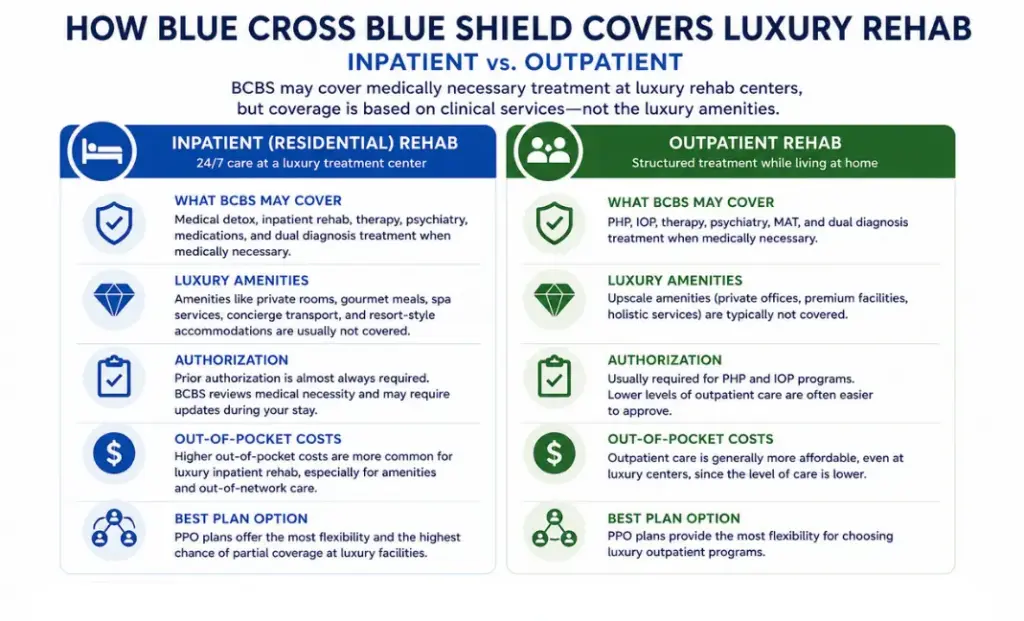
Yes, Blue Cross Blue Shield (BCBS) may cover treatment at a luxury rehab center, but coverage is usually focused on the medically necessary clinical services rather than the luxury amenities themselves. Depending on the specific BCBS company and plan, insurance may help pay for medical detox, inpatient rehab, therapy, psychiatric care, medication-assisted treatment (MAT), and dual diagnosis treatment for co-occurring mental health disorders like anxiety, depression, PTSD, or bipolar disorder — even when treatment takes place at a high-end facility. However, premium features such as private suites, spa services, gourmet dining, concierge transportation, or resort-style accommodations are generally not considered medically necessary and are often excluded from coverage. Many patients and treatment providers online report that BCBS PPO plans are often the best option for luxury rehab because they may include partial out-of-network benefits, giving members more flexibility to access specialized or upscale treatment centers outside their immediate network.
One thing many people do not realize is that BCBS coverage can vary dramatically depending on the regional BCBS company, employer group, and whether the plan is PPO, HMO, or EPO. PPO plans may reimburse 50–70% of out-of-network treatment costs after deductibles in some cases, while HMO plans often limit coverage to in-network facilities only. Many rehab providers also mention that prior authorization and ongoing utilization reviews are extremely important with BCBS residential treatment claims, meaning approvals may depend on detailed clinical documentation showing medical necessity throughout the stay. A helpful tip many experienced admissions teams recommend is asking the rehab center for a detailed breakdown of what BCBS may cover versus what would be private-pay before admission, especially for luxury accommodations or holistic services that may not qualify under evidence-based treatment guidelines.
Additional Information about Blue Cross Blue Shield
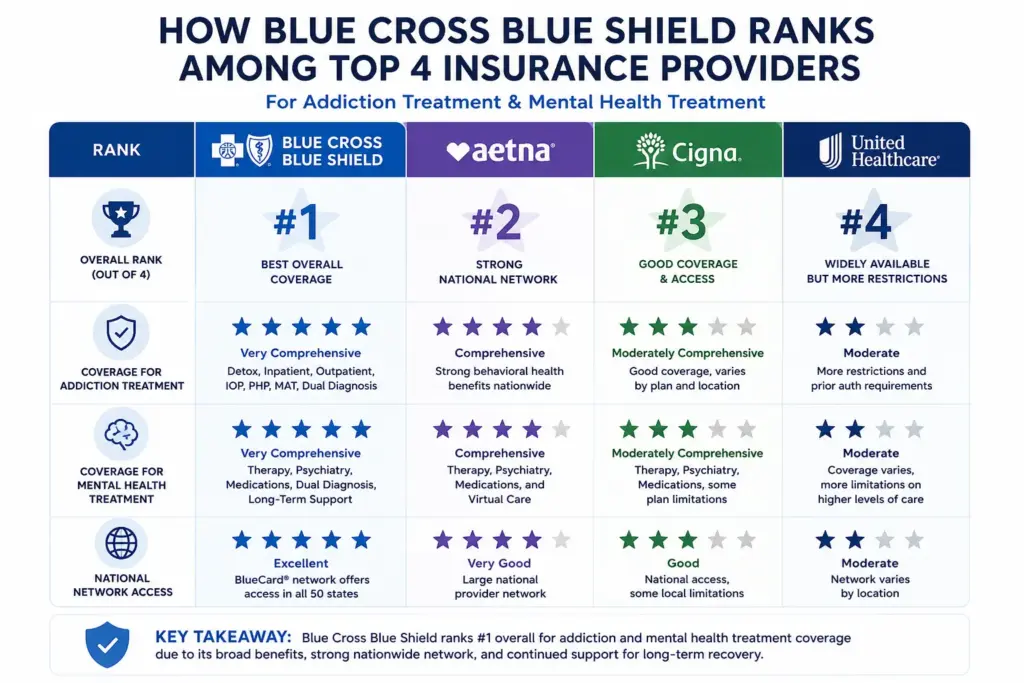
One unique thing about Blue Cross Blue Shield (BCBS) when it comes to detox and rehab coverage is the size and reach of its BlueCard nationwide provider network, which often gives members more flexibility to receive addiction treatment across state lines than many other insurance providers. This can be especially important for people seeking specialized detox centers, dual diagnosis programs, or residential rehabs outside their local area — something many patients and treatment providers online say is a major advantage of BCBS PPO plans. Unlike some regional insurers with narrow behavioral health networks, BCBS members may be able to access thousands of in-network rehab facilities nationwide while still using their home-state insurance benefits.
Another thing that stands out about BCBS is its growing use of data-driven behavioral health management and long-term recovery support. Many BCBS affiliates now use predictive analytics and evidence-based care models to help identify relapse risk, coordinate mental health services, and support step-down care after detox or inpatient rehab. Patients and providers frequently mention that BCBS often continues coverage into outpatient treatment, medication-assisted treatment (MAT), therapy, and relapse prevention longer than some insurers when strong clinical documentation supports ongoing care.
Personalize your treatment plan
with a benefits specialist. Call us.
Safely Detox at Castillian

Find Alcohol Treatment
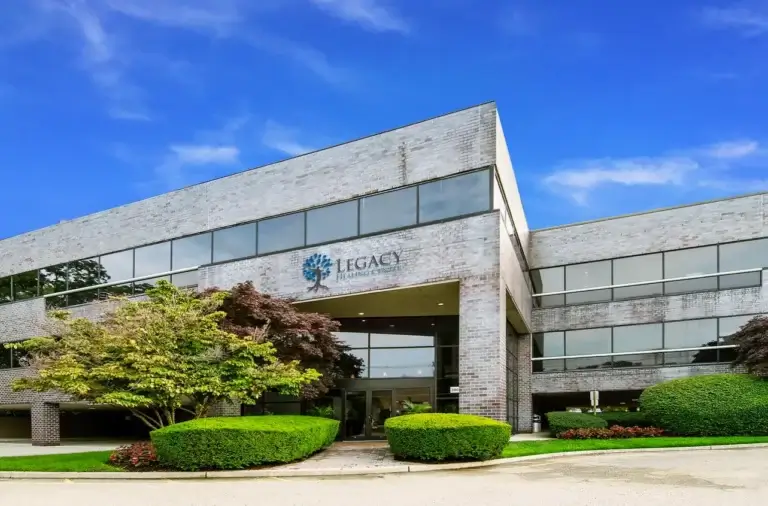
Legacy Healing Center Parsippany, NJ

Legacy Healing Center Cincinnati, OH