



-
 By:
Alex Herrera
By:
Alex Herrera
-
Editor:
Phyllis Rodriguez, PMHNP-BC
-
Clinical Reviewer:
Dr. Ash Bhatt, MD, MRO
 By:
By:
 Editor:
 Clinical Reviewer:
At Legacy Healing Center, we understand the devastating effects of methamphetamine addiction. Meth is a highly addictive stimulant drug that affects the central nervous system, and its use has become an epidemic in many parts of the world. One of the key components of the meth epidemic is P2P chemical, which is used to make the drug.
As a leading rehab center, we are committed to helping those struggling with meth addiction find a path to recovery.
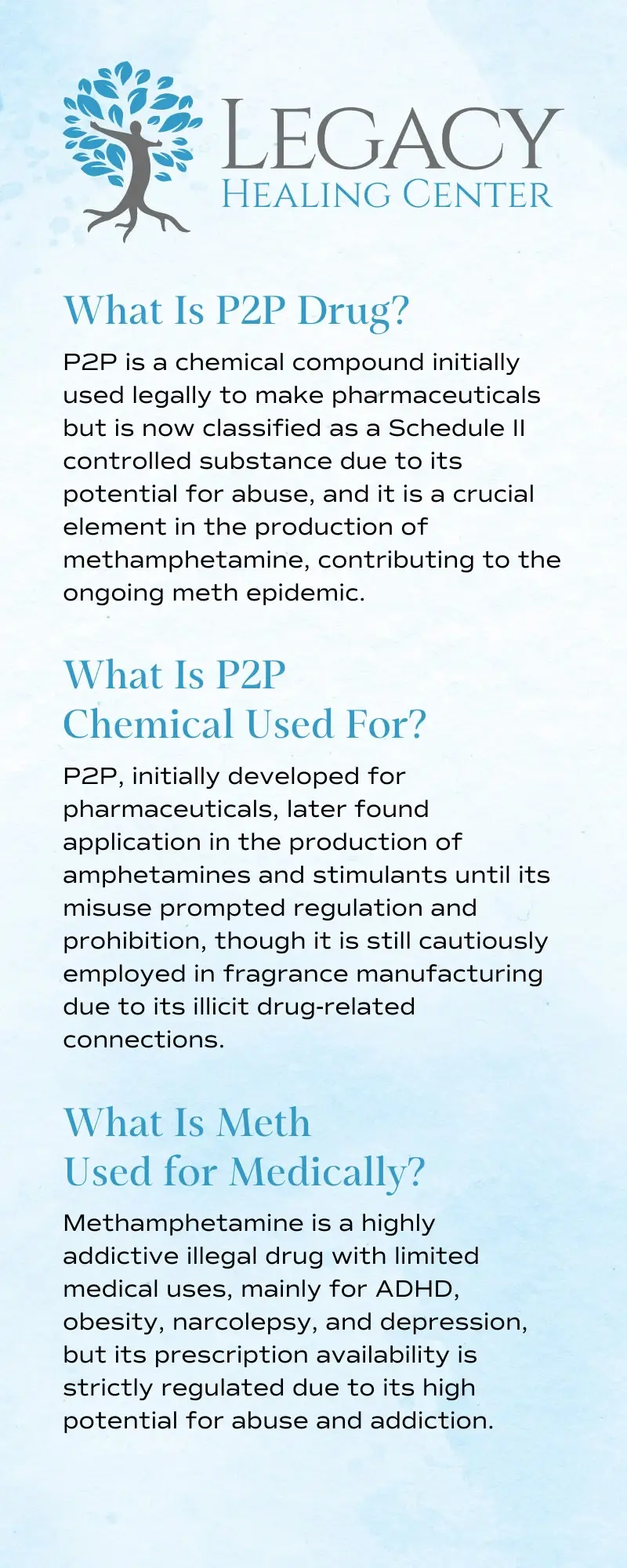
What Is P2P Drug?
P2P, or phenyl-2-propanone, is a chemical compound used to create illicit drugs, including methamphetamine. It is a precursor chemical that is converted into meth through a series of chemical reactions.
P2P drugs were once used legally to make pharmaceuticals, but their production and sale were banned due to their abuse potential. It is now classified as a Schedule II controlled substance by the United States Drug Enforcement Administration (DEA).
Despite its illegal status, however, P2P remains a key component of the methamphetamine manufacturing process, contributing to the ongoing meth epidemic.
What Is P2P Chemical Used For?
P2P was first synthesized in the early 20th century and was initially used in the production of pharmaceuticals. It was used in the manufacturing of amphetamines and other stimulants until its abuse potential became apparent, leading to its regulation and eventual ban. P2P is also used in the production of some fragrances, although this use is heavily monitored and restricted due to its association with illegal drug production.
What Is Meth Used for Medically?
While methamphetamine is a highly addictive and dangerous illegal drug, it does have some limited medical uses. Meth is classified as a Schedule II controlled substance and is only available with a prescription. It is used to treat:
-
Narcolepsy (chronic sleep disorder)
-
Occasionally, obesity and treatment-resistant depression
However, its medical use is highly restricted and monitored due to its potential for abuse and addiction.
Dangers and Health Risks of P2P Meth
Meth abuse has both short-term and long-term effects on the body and mind.
Common health risks include:
-
Rapid heart rate and high blood pressure
-
Anxiety, paranoia, and severe mood swings
-
Memory loss and cognitive impairment
-
Dental damage (“meth mouth”) due to dry mouth and tooth decay
-
Skin sores, weight loss, and malnutrition
-
Long-term damage to the brain and cardiovascular system
Continued use can cause psychosis, violent behavior, and permanent neurological damage, making early intervention critical.
Legacy Healing Helps Battle The Meth Epidemic
Despite its medical use, meth is primarily known as an illicit drug of abuse. It is highly addictive and can lead to a range of physical and mental health problems. Meth abuse can cause rapid heart rate, high blood pressure, and an irregular heartbeat. Long-term use can lead to brain damage, memory loss, and paranoia. Meth use can also result in dental problems, as the drug can cause dry mouth and lead to tooth decay and gum disease.
In recent years, the production and distribution of meth have become more prevalent, leading to a growing meth epidemic. The use of P2P in the manufacturing of meth has contributed to the widespread availability and use of the drug.
For many people, the first step in treating meth addiction is to stop using methamphetamine, preferably through a meth detox. Treatment for meth addiction typically involves detox as well as a combination of cognitive behavioral therapy, medication-assisted treatment, and support from a healthcare professional.
To learn more about our treatment center, contact us today and speak with one of our trained intake specialists.
👉 Related Reading:
If you or someone you love is struggling with meth addiction, read our in-depth guide on recovery at our Los Angeles Crystal Meth Rehab Center to learn about specialized treatment options, detox programs, and ongoing support for long-term recovery.