



-
 By:
Valerie Puffenberger, PMHNP-BC
By:
Valerie Puffenberger, PMHNP-BC
-
 Editor:
Phyllis Rodriguez, PMHNP-BC
Editor:
Phyllis Rodriguez, PMHNP-BC
-
 Clinical Reviewer:
Dr. Ash Bhatt, MD, MRO
Clinical Reviewer:
Dr. Ash Bhatt, MD, MRO
When someone commits to sobriety after years of struggling with alcohol dependence, medication can serve as a powerful ally in the recovery journey. Antabuse, the brand name for disulfiram, has been helping people maintain abstinence since the 1950s—but what happens when you take it not just for weeks, but for months or even years?
Understanding the long-term effects of Antabuse is essential for anyone considering extended therapy, currently taking the medication, or supporting a loved one through recovery. This guide provides evidence-based information about what to expect, what to watch for, and how to make informed decisions about prolonged disulfiram treatment.
Fast Facts: Long-Term Antabuse Use at a Glance
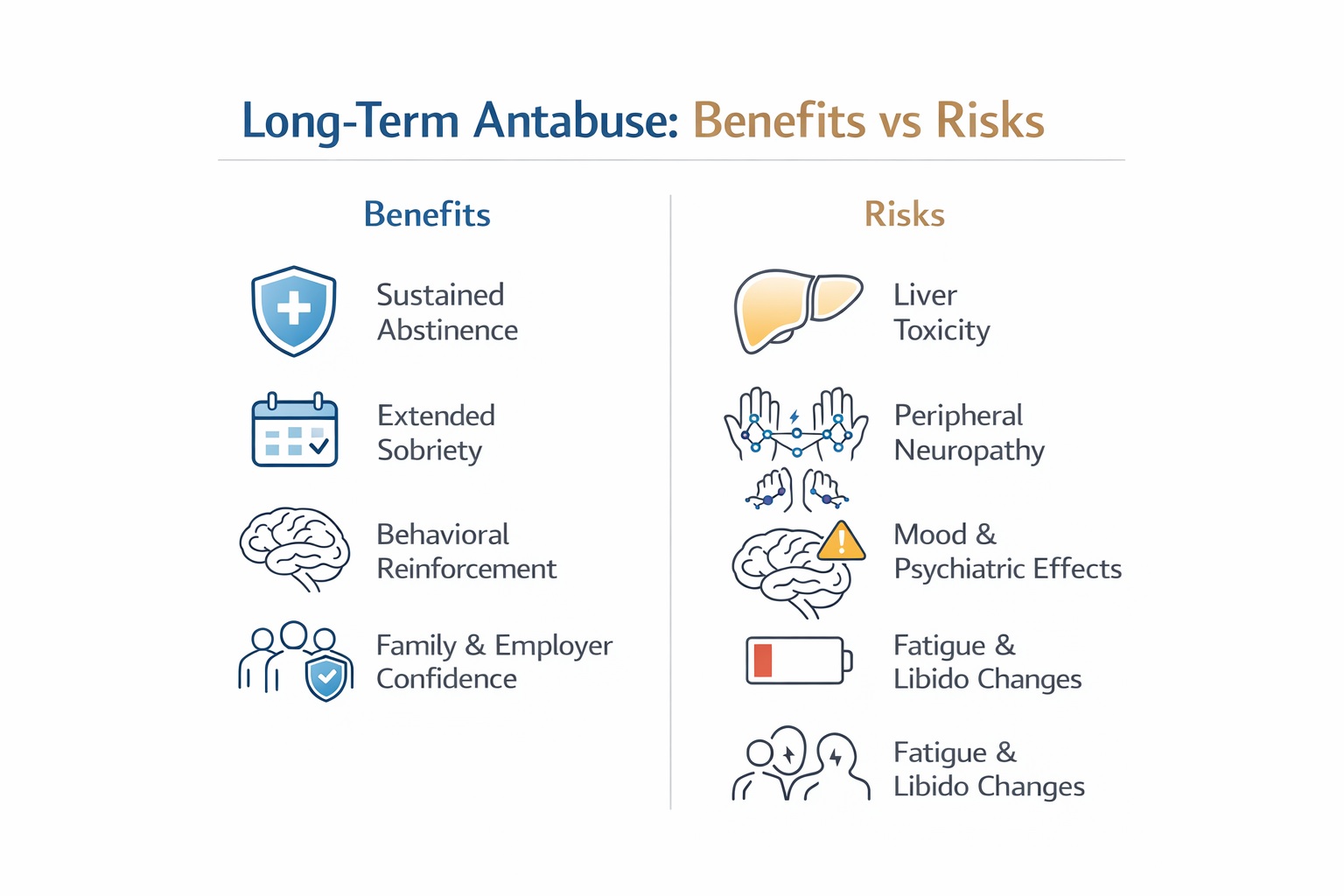
The long-term effects of Antabuse include both therapeutic benefits—such as sustained abstinence and behavioral reinforcement—and potential risks to the liver, nervous system, and mental health. Most people tolerate the medication well under proper supervision, but serious complications can develop, sometimes after many months of apparently uneventful therapy.
Potential Long-Term Benefits:
- Extended periods of abstinence from alcohol
- Daily behavioral reinforcement and accountability
- Psychological structure that supports recovery
- Improved family and employer confidence in the recovery process
Potential Long-Term Risks:
- Hepatotoxicity (liver damage), including rare hepatic failure
- Peripheral neuropathy (nerve damage in hands and feet)
- Psychiatric effects including depression, anxiety, and rare psychotic reactions
- Sexual dysfunction and decreased libido
- Chronic fatigue and cognitive changes
Disulfiram has been in clinical use since FDA approval in 1951, with much of our long-term data coming from supervised treatment programs in Scandinavia and the United States between the 1970s and 2010s. The effects you experience depend on several factors: your daily dose (commonly 250–500 mg), duration of treatment (months to years), any pre-existing liver or heart disease, and whether your treatment includes structured supervision.
Important: No one should start, stop, or continue taking Antabuse long-term without guidance from a physician experienced in treating alcohol use disorder.
What Is Antabuse and How Does It Work Over Time for Alcohol Use Disorder?
Antabuse is the brand name Antabuse for disulfiram, a medication FDA-approved in the United States since 1951 for treating chronic alcohol dependence. Unlike medications that reduce cravings, Antabuse works as a deterrent—it makes drinking alcohol an intensely unpleasant experience.
The mechanism centers on the enzyme aldehyde dehydrogenase (also called enzyme acetaldehyde dehydrogenase), which normally breaks down acetaldehyde, a toxic byproduct of alcohol metabolism. Disulfiram irreversibly inhibits this enzyme, causing acetaldehyde to accumulate in the body if any alcohol is consumed. This buildup triggers the disulfiram alcohol reaction: flushing, throbbing headache, nausea, vomiting, chest pain, difficulty breathing, and a profound sense of discomfort.
What makes this relevant to long-term use is that this inhibition does not “wear off” quickly. Disulfiram and its metabolites bind tightly to tissues and enzymes, so the deterrent effect can persist for up to approximately 14 days after your last dose. Your body must synthesize entirely new enzymes before normal alcohol metabolism returns.
Antabuse does not reduce cravings or address the underlying neurobiology of addiction. Instead, it creates a conditioned fear of drinking—the knowledge that any alcohol consumed will make you severely ill shapes long-term behavior through avoidance learning.
Typical long-term dosing patterns involve a daily oral tablet ranging from 125 to 500 mg, taken for many months or sometimes years. Treatment is often supervised by a clinic, family member, or treatment program to ensure adherence. Some patients cycle on and off Antabuse over several years, adjusting based on relapse risk, life stressors, and the stability of their recovery.
Documented Long-Term Benefits of Antabuse Treatment
Long-term Antabuse therapy can be genuinely helpful for carefully selected, motivated patients—particularly when treatment is supervised and embedded within a comprehensive treatment plan that includes psychosocial support.
Clinical data from multi-year follow-up studies, including research from Scandinavia and the United States, consistently show that supervised disulfiram therapy extends periods of abstinence compared to unsupervised use. An early review of long-term Antabuse treatment found that when patients received the medication alongside nurse support and psychiatric care, sobriety was significantly prolonged.
One illustrative long-term aftercare study followed approximately 10 alcohol-dependent patients for more than 50 weeks. Seven of these patients remained abstinent for an average of around 70 months, with relapses often delayed beyond two to three years. While this represents a small sample, it demonstrates what structured long-term therapy can achieve.
Beyond biological effects, there are meaningful psychological and social benefits:
- Commitment ritual: Taking a daily pill reinforces the decision to stay sober
- Accountability: Family members and treatment providers gain confidence in the recovery process
- Structure: The medication provides a concrete daily action supporting sobriety
- Safety net: Knowing that drinking will cause severe illness removes “maybe just one drink” from consideration
Long-term Antabuse works best as one component of broader treatment—combining it with counseling, cognitive behavioral therapy, peer support groups like AA or SMART Recovery, and sometimes other medications yields the strongest outcomes.

Common Long-Term Side Effects and Tolerability
Many side effects associated with Antabuse are dose-related and appear early in treatment. However, some can persist or emerge with prolonged use, affecting quality of life and adherence.
Common Physical Side Effects That May Be Chronic:
| Side Effect | Description | Management Strategies |
|---|---|---|
| Fatigue and drowsiness | Persistent low energy, possibly causing drowsiness | Take medication at bedtime, ensure adequate sleep |
| Headache | Mild to moderate, often described as males headache metallic in quality | Over-the-counter pain relief as approved by physician |
| Metallic or garlic like taste | Persistent taste disturbance, sometimes affecting the mouth skin area | Sugar-free gum or mints, good oral hygiene |
| Gastrointestinal upset | Nausea, abdominal discomfort | Take with food, stay hydrated |
| Skin rash or acne | Mild skin eruptions | Gentle skincare, report worsening to clinician |
Common side effects of disulfiram include drowsiness, fatigue, and a metallic or garlic-like taste in the mouth.
Some people report ongoing low energy and reduced sexual function with long-term use, particularly at the 500 mg dose. These effects may improve if the dose is lowered to 125–250 mg daily.
Lifestyle Adjustments That Help:
- Taking tablets with food to reduce stomach upset
- Prioritizing rest and hydration
- Using sugar-free gum or mints for taste disturbances
- Discussing persistent symptoms with your health care professional
Mild side effects do not always require stopping the medication but should be discussed with your clinician. Persistent or worsening symptoms over months should trigger reassessment of whether continued treatment is appropriate.
Regular follow-up appointments—typically every one to three months—allow your healthcare professional to evaluate the ongoing risk-benefit balance of continuing Antabuse.
Serious Long-Term Risks: Liver, Nerves, and Mental Health
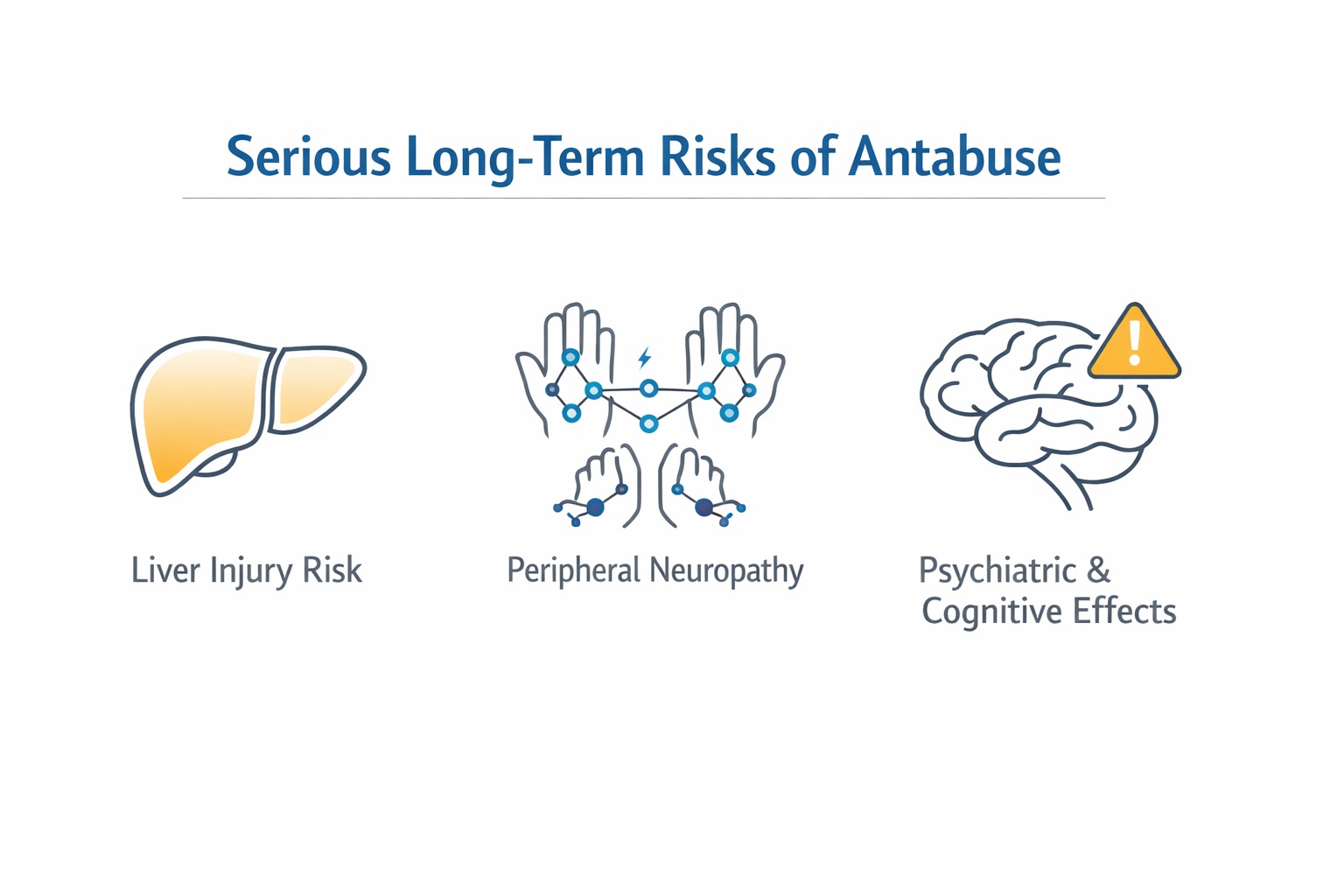
Although many patients tolerate long-term Antabuse reasonably well, rare but serious complications become more relevant with prolonged exposure. Anyone taking Antabuse for more than a few months needs regular medical supervision and laboratory monitoring, particularly for liver health.
Risk does not necessarily increase linearly with time, but cumulative exposure can unmask underlying vulnerabilities—such as pre-existing fatty liver, viral hepatitis, or subclinical neuropathy—that may not have been apparent initially.
Serious adverse events should prompt immediate medical attention and usually require discontinuation of disulfiram. These long-term risks are one reason why Antabuse is now prescribed less frequently than alternatives like naltrexone or acamprosate.
The following sections detail specific organ systems affected by prolonged therapy. This information is presented in a balanced manner—neither alarmist nor dismissive—to help you recognize red-flag symptoms that require rapid medical evaluation.
Long-Term Liver Effects (Hepatotoxicity and Liver Function Tests)
Disulfiram is associated with idiosyncratic liver injury that can appear weeks to months after starting treatment—and importantly, may also emerge after extended periods of apparently safe use. StatPearls notes that hepatic failure may develop after many months of therapy.
Patterns of Antabuse-Induced Hepatitis:
- Fatigue and malaise
- Loss of appetite (anorexia)
- Nausea
- Right upper quadrant abdominal pain
- Dark urine
- Jaundice (yellowing of skin and eyes)
- Altered liver function tests showing elevated AST, ALT, and bilirubin
Published case reports include severe hepatitis and rare hepatic cell damage leading to hepatic failure, sometimes requiring hospitalization. The estimated incidence of fatal fulminant hepatic failure is approximately 1 in 30,000 patients treated per year. Most cases resolve after the drug is stopped, but some can be irreversible.
Recommended Monitoring for Long-Term Therapy:
- Baseline liver function tests before starting
- Recheck at 2–4 weeks after initiation
- Repeat at 3 months
- Then at least every 6–12 months during continued therapy
- More frequent testing for those with liver risk factors
Clinicians must distinguish progression of alcoholic liver disease from disulfiram toxicity, as long-term heavy drinking itself causes liver damage. Patients with cirrhosis, decompensated liver disease, or markedly abnormal baseline liver tests are generally advised not to use long-term Antabuse.
Long-Term Neurological and Peripheral Nerve Effects
Chronic disulfiram exposure has been linked with peripheral neuritis and neuropathy—numbness, tingling, burning sensations, and weakness in the hands and feet. More rarely, optic neuritis (affecting vision) and encephalopathy (affecting brain function) have been reported.
Neuropathy may develop gradually over months, making it easy to misattribute symptoms to past alcohol use unless specifically evaluated. The estimated incidence is approximately 1 per 1,000 patients treated per year.
Warning Signs Requiring Prompt Investigation:
- New or worsening balance problems
- Difficulty walking
- Loss of fine motor skills
- Eye pain or vision changes
- Numbness or burning in extremities
In many case reports, neurological symptoms improved after stopping disulfiram, though recovery can take months and may be incomplete if damage is advanced.
Concurrent vitamin deficiencies—particularly B1 (thiamine) and B12—from alcoholism can compound nerve injury and should be corrected as part of long-term care. Clinicians may consider dose reduction or switching to another medication for alcohol use disorder if neuropathic symptoms arise during treatment.
Long-Term Psychiatric and Cognitive Effects
Long-term psychiatric side effects are uncommon but documented. These include depression, anxiety, irritability, confusion, memory impairment, and rare psychotic reactions such as hallucinations, paranoia, and severe agitation.
People with pre-existing mood disorders, PTSD, or psychiatric disorders may be more vulnerable to these effects and require closer monitoring. Mental changes that emerge after months on Antabuse should not be dismissed.
Watch for These Signs:
- Personality changes
- Withdrawal from social contact
- Unusual behavior
- Severe mood swings
- Confusion or disorientation
In rare cases, serious psychiatric reactions such as mutism, stupor, or self-harm behavior have been reported, usually warranting immediate discontinuation and psychiatric evaluation. Coordinated care between addiction specialists and mental health providers is essential in long-term treatment, particularly when psychiatric medications are also being used.
Many patients can safely continue Antabuse with mild mood changes under close supervision, but severe or abrupt shifts require urgent attention from your healthcare professional.
Sexual and Hormonal Effects with Prolonged Use
Long-term Antabuse has been associated with decreased libido and erectile dysfunction in men, sometimes persisting throughout therapy. Women may experience changes in sexual interest or satisfaction, though data are less robust.
Chronic fatigue, depression, and relationship stress related to alcohol history can also contribute to sexual function problems, making causality complex to determine.
If you experience unwanted effects occur related to sexual function, discuss them openly with your clinician. Options may include:
- Adjusting your dose
- Addressing underlying mood or anxiety
- Considering switching medications
Sexual side effects rarely pose direct medical danger but can significantly affect adherence and quality of life. Normalizing this conversation as a standard part of long-term medication reviews helps ensure these concerns are addressed.

Garlic Like Taste and Other Sensory Effects
One of the most noticeable experiences you might have with disulfiram, known by the brand name Antabuse, is a persistent garlic-like or metallic taste that can stay with you throughout your recovery journey. This unusual taste is something many people experience, and while it can linger throughout your day and sometimes affect how much you enjoy meals and beverages, we want you to know it’s not dangerous. It’s often one of the first things you’ll notice when beginning this medication, and understanding this can help you feel more prepared and less concerned.
This distinctive taste happens because disulfiram works by inhibiting a specific enzyme in your body—acetaldehyde dehydrogenase—which normally breaks down a byproduct of alcohol metabolism. Even when you’re not consuming alcohol, the way disulfiram supports your recovery can lead to this taste. For most people navigating this part of their journey, the taste becomes manageable, and simple strategies like chewing sugar-free gum or enjoying mints can help you reduce its intensity and feel more comfortable.
Along with taste changes, you might also experience other effects like drowsiness, fatigue, and headaches as your body adjusts to this important part of your treatment plan. These symptoms may impact your daily activities, especially in the early stages of your recovery journey or if your dose is on the higher side. If you find these effects are interfering with your routine, your healthcare team is there to help adjust your comprehensive treatment plan to make this experience more comfortable for you.
We want you to be aware that disulfiram can interact with other medications you might be taking, including prescription pain medicine and over-the-counter products like cough syrups that may contain alcohol. Using alcohol-containing products while on Antabuse can create risks in your recovery, so we encourage you to always check labels carefully and speak with your healthcare professional before starting any new medication. This awareness is part of taking care of yourself during this important time.
On rare occasions, you might experience more serious effects such as vision changes, eye pain, or mental changes. These may signal underlying concerns that need immediate attention, and if you experience any of these symptoms—or if any unwanted effects feel severe or persistent—we want you to reach out to your healthcare professional right away. Your wellbeing is the priority, and getting prompt evaluation and care is crucial to keeping you safe and supported.
While the garlic-like taste and other sensory effects are common experiences with Antabuse, most can be managed with the right support and adjustments to your treatment plan. Staying informed, communicating openly with your healthcare team, and avoiding alcohol-containing products are key steps to minimizing uncomfortable symptoms and achieving the best possible outcome in your journey toward healing from alcohol use disorder. Remember, this is part of your path to transformation, and with the right guidance and support, recovery is absolutely possible.
Long-Term Disulfiram–Alcohol Reaction: Does It Change Over Time?
The disulfiram–ethanol reaction (DER) remains potent throughout long-term use as long as the enzyme inhibition persists. There is no evidence that sensitivity to alcohol “fades” with chronic disulfiram therapy.
Even after months or years of taking Antabuse, drinking alcohol can rapidly trigger:
- Flushing of the face increased sweating nausea
- Throbbing headache
- Severe nausea and vomiting
- Pounding heartbeat flushing and palpitations
- Chest pain
- Shortness of breath and difficulty breathing
- Low blood pressure
- In rare cases, arrhythmias, collapse, or severe reaction requiring emergency care
In some individuals, the DER may feel subjectively stronger over time if cardiovascular health has deteriorated.
Hidden Sources of Alcohol to Avoid:
| Category | Examples |
|---|---|
| Oral products | Mouth washes, cough syrups, liquid prescription medications |
| Foods | Alcohol containing foods, cooking wines, some sauces, vinegars |
| Topical products | After shave lotions, colognes, after bath preparations, rubbing alcohol |
| Medical products | Dental anesthetics, some prescription pain medicine, certain nonprescription medicine |
Patients must continue to avoid alcohol during treatment and for at least 14 days after the last dose, regardless of how long they have been taking the medication. This applies to alcohol containing products of all kinds.
Practical Advice:
- Read all product labels carefully
- Inform healthcare providers and dentists that you take disulfiram
- Ask about alcohol content in any new medications, including liquid prescription or nonprescription medicine
- Be cautious with paint thinner, shellacs, and other related chemicals that may contain alcohol
- Discuss planned medical or dental procedures that may involve alcohol-containing solutions
Monitoring and Safety Strategies for Long-Term Antabuse Therapy
Structured monitoring reduces the risk of long-term complications and improves both adherence and outcomes. Taking Antabuse for extended periods requires active medical partnership, not a “set and forget” approach.
Recommended Baseline Assessments Before Long-Term Therapy:
- Complete medical and psychiatric history
- Physical examination
- Liver function tests
- Kidney function tests
- Pregnancy status in women of childbearing age
- Comprehensive medication review for potential interactions with other drugs
Typical Monitoring Schedule:
| Timepoint | Assessments |
|---|---|
| Baseline | Full medical workup, LFTs, medication review |
| 2–4 weeks | Liver function tests, clinical review |
| 3 months | Liver function tests, side effect assessment |
| Ongoing | Clinical review every 1–3 months; LFTs at least annually |
| As needed | More frequent monitoring for liver risk factors |
Additional Safety Strategies:
- Supervised dosing: Some programs use clinic nurses, pharmacists, or family members to observe daily dosing, reinforcing adherence and reducing covert drinking, especially during the first 6–12 months
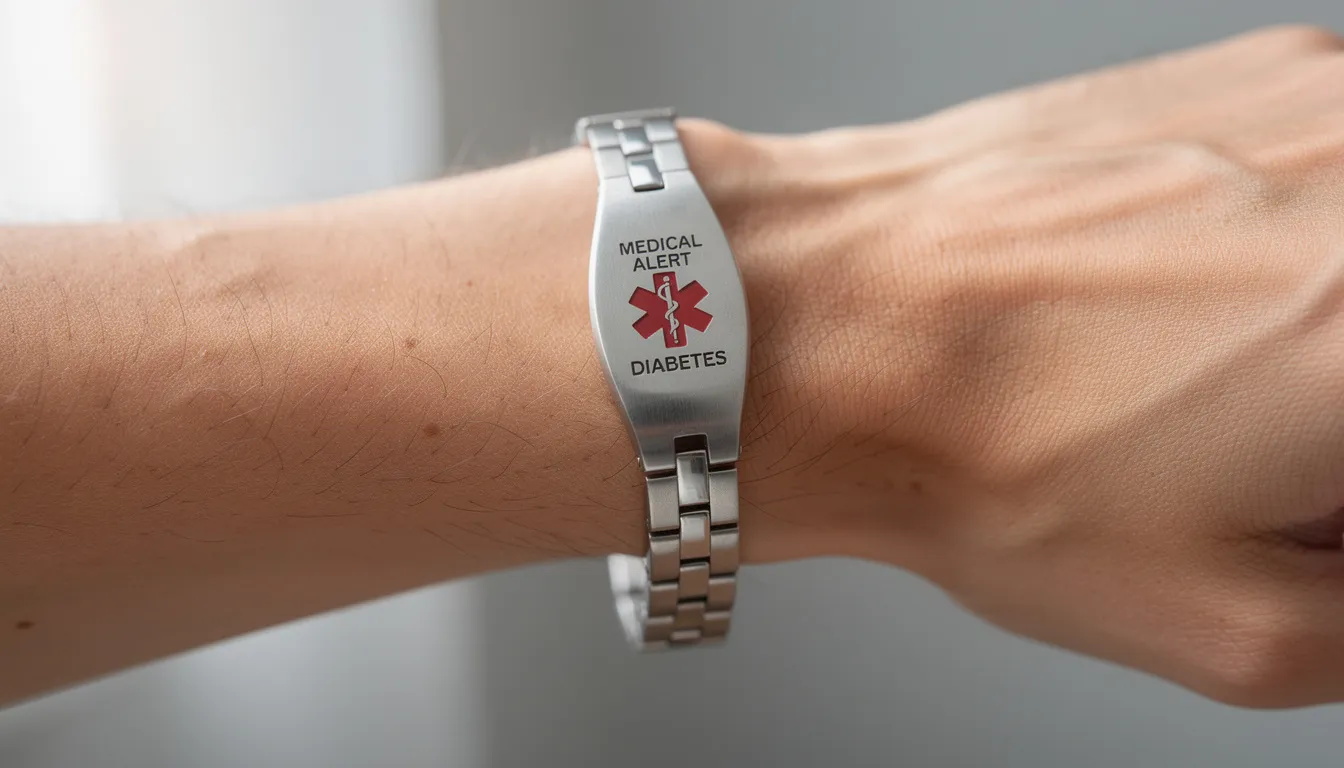
- Medical identification: Long-term patients should carry a medical ID card or wear a bracelet noting they take disulfiram, listing typical DER symptoms, and providing emergency contact details
- Medication interactions: Any new medications—including warfarin, phenytoin, isoniazid, metronidazole, sleeping medicine, other CNS depressants, or certain medications for psychiatric disorders—should be checked for interactions that may increase toxicity
If you are prescribed new medications, immediately report this to the clinician managing your Antabuse therapy. Interactions between disulfiram and other drugs can emerge at any point during long-term treatment.
Duration of Therapy: How Long Is “Long-Term” Antabuse Use?
“Long-term” can mean anything from 6–12 months to many years, depending on your relapse history, severity of alcohol use disorder, and personal preferences.
General Guidelines:
- Some protocols support using disulfiram for at least 6–12 months in high-risk patients
- Others allow continuation for several years if benefits clearly outweigh risks
- Long-term aftercare studies have documented patients maintaining supervised disulfiram for multiple years, with abstinence averaging around 5–6 years in some cohorts
Periodic Review Points:
Rather than committing to indefinite therapy, most treatment plans incorporate annual (or more frequent) decision points where you and your clinician evaluate:
- How stable is your sobriety?
- Are there concerning side effects?
- Has your health status changed?
- Are other treatment options now more appropriate?
Stopping Antabuse does not cause physiological withdrawal—you will not experience alcohol withdrawal symptoms from discontinuing disulfiram. However, psychological relapse risk may increase if other supports are not strong.
Recommendations for Discontinuation:
- Plan ahead with your clinician
- Strengthen therapy and support systems before stopping
- Understand that alcohol left in disulfiram’s “blocking window” can still trigger a reaction for up to 14 days
- Review relapse prevention strategies thoroughly
Get immediate, confidential guidance on your treatment options and insurance. Answer a few quick questions to see if you may qualify for treatment.


Talk to a Treatment Specialist

Check Your Insurance in 2 Minutes
Who Is (and Is Not) a Good Candidate for Long-Term Antabuse?
Patient selection is crucial for safe and effective long-term use. The medication works best for people who approach it as a tool within a broader recovery strategy.
Characteristics of Good Candidates:
- Strong internal motivation for complete abstinence
- Prior success with an initial Antabuse trial
- Ability to adhere to regular monitoring appointments
- Relatively preserved liver function
- Access to psychosocial support (counseling, peer groups, family involvement)
- Stable living situation and reliable daily routine
Patients with co-occurring psychiatric disorders can still use Antabuse long-term but need close collaboration between addiction and mental health services.
High-Risk Groups and Contraindications:
| Factor | Consideration |
|---|---|
| Significant liver disease | Generally contraindicated |
| History of severe disulfiram reactions | Avoid long-term use |
| Pregnancy | Typically avoided due to limited safety data |
| Severe cognitive impairment | May not be able to adhere to precautions |
| High suicide risk | Requires intensive psychiatric monitoring |
| Need for frequent alcohol-based medications | May trigger DER; consider alternatives |
| Other allergies to disulfiram or thiuram derivatives | Contraindicated |
For some individuals, safer alternatives may be preferred over long-term disulfiram. Oral or injectable naltrexone and acamprosate offer different mechanisms without the risk of DER and may be better suited for certain patients.
Treatment options should be individualized and revisited over time as your health status and life circumstances evolve. What works during early recovery may not be the best choice years later—and vice versa.
Balancing Long-Term Risks and Benefits: Is Antabuse Right for You?
Antabuse can be a powerful long-term tool for maintaining sobriety in selected patients, but it is not suitable or necessary for everyone with a drinking problem. The decision to continue therapy for months or years involves weighing real benefits against real risks.
Before committing to long-term therapy, discuss with your physician or addiction specialist:
- Your complete medical history, including liver health and any nervous system concerns
- Your psychiatric history and current mental health
- Your goals for recovery and what role medication should play
- What monitoring schedule is realistic for your situation
Combining Antabuse with counseling, peer support, and healthy lifestyle changes offers the best odds of sustained recovery. The medication provides a behavioral scaffold, but lasting sobriety typically requires building internal resources and external support systems.
Important Reminders:
- Never adjust your dose without medical advice
- Do not stop suddenly or restart after a break without consulting your healthcare professional
- If you experience vision mood changes, severe reaction symptoms, or signs of liver problems (dark urine, jaundice, abdominal pain), seek immediate medical attention
Long-term recovery from alcohol dependence is possible with the right combination of medication, therapy, and support. If you are considering Antabuse or already taking it, speak with a health care professional experienced in treating alcohol use disorder. Explore all medication-assisted treatment options available to you, and never hesitate to seek immediate help if concerning symptoms or relapse risk emerge.
Recovery is a journey, and the tools you use may change over time. What matters most is staying engaged with your care team and committed to your health.