

 By:
By:
 Editor:
 Clinical Reviewer:

What is 7OH in kratom?
Traditionally used in countries like Thailand and Malaysia, 7OH (7-hydroxymitragynine) is a naturally occurring alkaloid in kratom that binds to opioid receptors with far greater potency than morphine in laboratory studies, and is now being sold in the U.S. as powders, capsules, and extracts. While some people use it for pain management or easing opioid withdrawal, the presence of 7OH greatly increases its potency and risk of addiction.
It is chemically derived from mitragynine, another major kratom alkaloid, but it is significantly stronger in terms of receptor binding and psychoactive effects. While mitragynine is more abundant in kratom leaves, 7OH disproportionately drives its pain-relieving and sedative properties. Because even small amounts can trigger tolerance and dependence, researchers and clinicians view 7OH as the most pharmacologically important—and concerning—component of kratom.
In addition to being present in kratom leaves, studies show that 7OH can also form in the body when mitragynine is metabolized by the liver. This means that kratom users may be exposed to higher levels of 7OH than the raw plant alone would suggest, further explaining why its effects feel stronger than expected and why dependency can develop quickly.
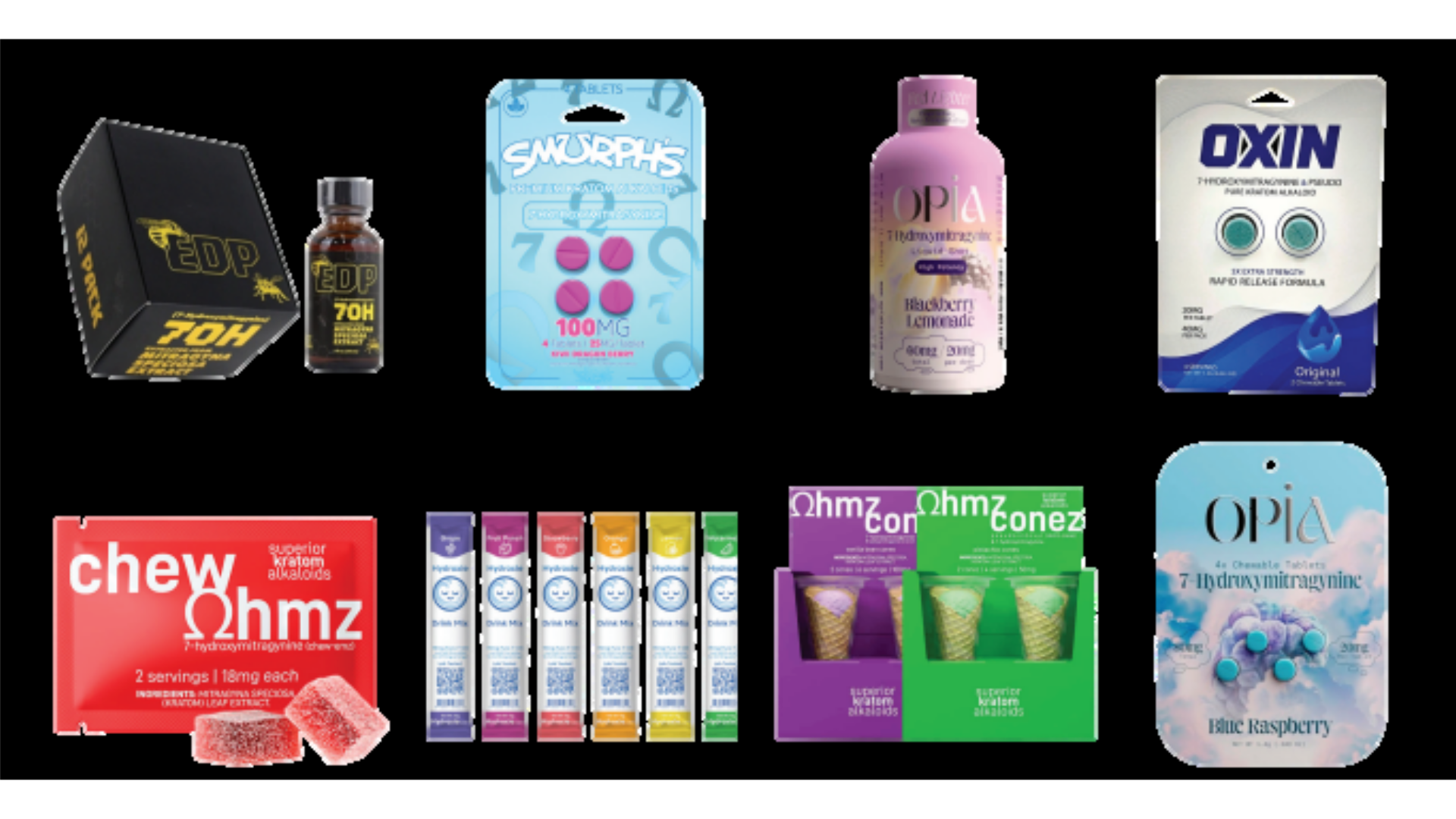
Disclaimer: This image was sourced from the U.S. Food & Drug Administration (FDA) publication “Preventing The Next Wave of the Opioid Epidemic: What You Need to Know About 7-OH.” All products, brand names, logos, and trademarks depicted are the property of their respective owners. Legacy Healing Center does not endorse or have any affiliation with these brands.
How does 7OH work in the body?
7OH activates mu-opioid receptors in the central nervous system, releasing dopamine and endorphins that create short-term effects such as stimulation, relaxation, and pain relief.
Unlike opioids such as heroin, oxycodone, or fentanyl, 7OH comes from a plant source, but it engages the same neural pathways for pain and reward. At lower doses, users may feel increased energy or well-being; at higher doses, sedation and analgesia dominate. Over time, this activity can rewire brain chemistry, driving compulsive use.
Pharmacologically, 7OH is considered a partial agonist at the mu-opioid receptor, meaning it does not fully activate the receptor the way drugs like fentanyl or oxycodone do. However, this does not make it safe—its receptor activity is still strong enough to produce opioid-like effects and dependence. Some users mistakenly believe kratom is safer because it is plant-based and only partially stimulates opioid receptors, but clinical evidence shows that repeated exposure still carries high addiction risks.
How is 7OH found in kratom products?
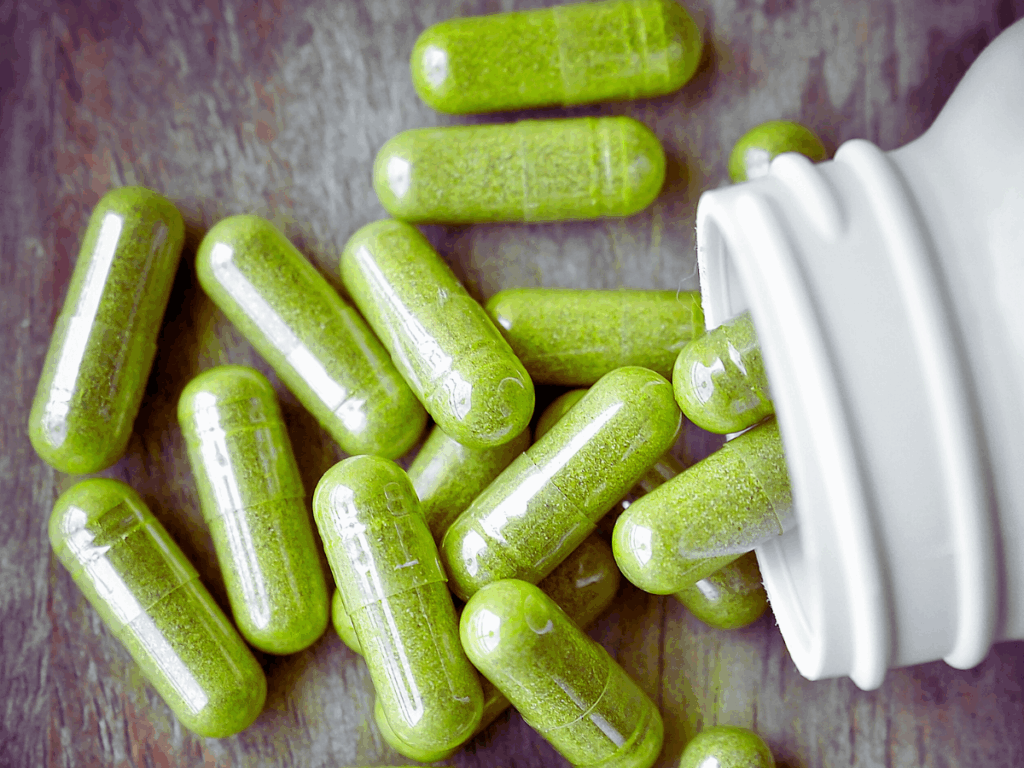
7OH is present in kratom powders, capsules, teas, and especially concentrated extracts, where levels are much higher than in raw leaves.
Disclaimer: This image was sourced from the U.S. Food & Drug Administration (FDA) publication “Preventing The Next Wave of the Opioid Epidemic: What You Need to Know About 7-OH.” All products, brand names, logos, and trademarks depicted are the property of their respective owners. Legacy Healing Center does not endorse or have any affiliation with these brands.
In Southeast Asia, kratom tea or chewed leaves contain relatively low 7OH. In the U.S., however, extracts and resins often concentrate alkaloids, amplifying opioid-like effects. The FDA has issued warnings about kratom being sold as a dietary supplement, and the DEA has considered scheduling kratom alkaloids due to abuse potential. Mislabeling is also common, leaving consumers unaware of 7OH content or contaminants.
The popularity of kratom has surged in the United States, with industry estimates suggesting over 15 million Americans have tried kratom products. This rapid growth has outpaced regulation, leaving consumers exposed to mislabeled or contaminated products. Legal status also varies—while kratom remains legal at the federal level, several states and municipalities have banned its sale, including Alabama, Indiana, Wisconsin, Vermont, and parts of Florida and California.
What are the risks and dangers of 7OH?
7OH carries a high risk for substance use disorder because of its opioid-like effects, and misuse can lead to liver injury, seizures, respiratory depression (rare), and mental health complications such as anxiety, depression, or psychosis—especially in cases of polysubstance abuse with alcohol, opioids, or benzodiazepines.
Case studies link kratom and its alkaloids to abnormal liver function, seizures at high doses, and psychiatric disturbances. Because 7OH acts so strongly on opioid receptors, repeated use significantly increases the risk of developing an opioid-like addiction.
Public health data reinforces these risks. According to the CDC and the National Institute on Drug Abuse (NIDA), U.S. poison control centers have received thousands of kratom-related calls, many involving symptoms such as rapid heart rate, high blood pressure, seizures, or severe withdrawal. The FDA has also linked kratom products to dozens of deaths, often involving polysubstance abuse with opioids or benzodiazepines.
What are the signs of kratom and 7OH addiction?
The main signs of addiction include compulsive use, cravings, tolerance, and withdrawal syndrome, along with behavioral changes such as secrecy, financial strain, and patterns consistent with DSM-5 criteria for opioid use disorder.
Addiction may show up as hiding kratom use, spending excessively, or prioritizing the drug over responsibilities. Because 7OH’s effects mirror opioids, the warning signs are nearly identical to those of heroin or prescription painkillers, making early recognition critical.
What happens during withdrawal and detox from 7OH?
Withdrawal can trigger muscle aches, insomnia, irritability, anxiety, and flu-like effects, and recovery is safest with professional detoxification and withdrawal management.
Symptoms typically begin within 12–24 hours of the last dose, peak in 2–4 days, and taper after about a week, though cravings and depression may persist longer. Medical detox programs provide monitoring, comfort medications, and in some cases, medication-assisted treatment (MAT) to reduce cravings and stabilize mood—making detox safer and more effective than quitting at home.
Compared to traditional opioids, kratom withdrawal is often described as less intense but longer-lasting, making it particularly frustrating for users attempting to quit. Medical detox teams sometimes incorporate off-label medications such as buprenorphine, naltrexone, or clonidine to ease withdrawal symptoms, stabilize mood, and reduce cravings. These approaches can significantly improve safety and comfort while preparing clients for the next phase of treatment.
What are the treatment options for kratom and 7OH addiction?
Treatment often begins with detox referrals, followed by structured programs such as a Partial Hospitalization Program (PHP), an Intensive Outpatient Program (IOP), and ongoing aftercare.
At Legacy Healing Center, therapies include Cognitive Behavioral Therapy (CBT), Dialectical Behavioral Therapy (DBT), trauma-informed counseling, and family therapy, alongside peer support groups like 12-step and SMART Recovery. By offering a continuum of care, Legacy helps clients move from withdrawal management to long-term recovery.
Beyond clinical therapies, Legacy Healing Center integrates holistic approaches such as mindfulness, yoga, nutrition counseling, and fitness therapy to support full-body healing. Many clients also benefit from dual diagnosis care, which addresses co-occurring conditions like anxiety, depression, or trauma that may fuel substance use. This comprehensive approach ensures clients receive care not just for kratom dependence, but for the deeper emotional and psychological struggles linked to addiction.
Why should someone choose Legacy Healing Center for kratom and 7OH addiction treatment?
People choose Legacy Healing Center because our clinical team—including Ben Fox, Marc Effron, and Dr. Ash Bhatt—provides expert substance use treatment in a luxury, private, and discreet environment with a national recovery network extending beyond Cherry Hill and Parsippany, New Jersey.
Legacy is known for evidence-based therapies, trauma-informed care, and individualized treatment. Programs adapt to each client’s needs, ensuring comfort, dignity, and lasting recovery support.
Next Steps:
- Verify your insurance
- Contact admissions
- Download our free addiction recovery eBook
Legacy Healing works with most private insurance providers, making treatment accessible while maintaining a luxury standard of care. As an out-of-network provider, Legacy offers personalized support to help clients navigate benefits and maximize coverage. Families and clients frequently describe their experience as “life-changing,” praising the compassionate staff and restorative environment that made lasting recovery possible.
What should you do if you or a loved one is struggling with 7OH and kratom addiction?
The best step is to seek professional help early, because 7OH is a potent alkaloid that is addictive and potentially dangerous when misused.
At Legacy Healing Center, we provide compassionate, evidence-based treatment in safe, private settings. With locations in New Jersey and a national support network, we help individuals and families find recovery and rebuild their lives.
Take the first step today by verifying insurance, contacting admissions, or downloading our free recovery eBook.
No one has to face kratom or 7OH addiction alone—help is available now.