



-
 By:
Valerie Puffenberger, PMHNP-BC
By:
Valerie Puffenberger, PMHNP-BC
-
 Editor:
Phyllis Rodriguez, PMHNP-BC
Editor:
Phyllis Rodriguez, PMHNP-BC
-
 Clinical Reviewer:
Dr. Ash Bhatt, MD, MRO
Clinical Reviewer:
Dr. Ash Bhatt, MD, MRO
Looking for help with chemical dependency or substance use disorder? At Legacy Healing Center, our comprehensive chemical dependency treatment programs combine evidence-based care, compassionate support, and individualized planning to promote long-term recovery. This guide explains how addiction treatment programs work, including inpatient and outpatient options, therapy approaches, and aftercare services.
What Is Chemical Dependency and Substance Use Disorder?
Chemical dependency—clinically known as substance use disorder (SUD)—is a chronic condition that affects brain function, behavior, and decision-making. It is not a moral failing but a medical condition that often requires professional addiction treatment.
Substance use disorders may develop due to trauma, genetics, mental health conditions, or environmental influences. Alcohol addiction, opioid use disorder, and drug dependency can affect people of all ages and backgrounds.
Why Professional Treatment Matters
Untreated addiction impacts families, careers, and communities. Effective chemical dependency treatment addresses both substance use and co-occurring mental health disorders, improving long-term recovery outcomes.
How Chemical Dependency Treatment Programs Work
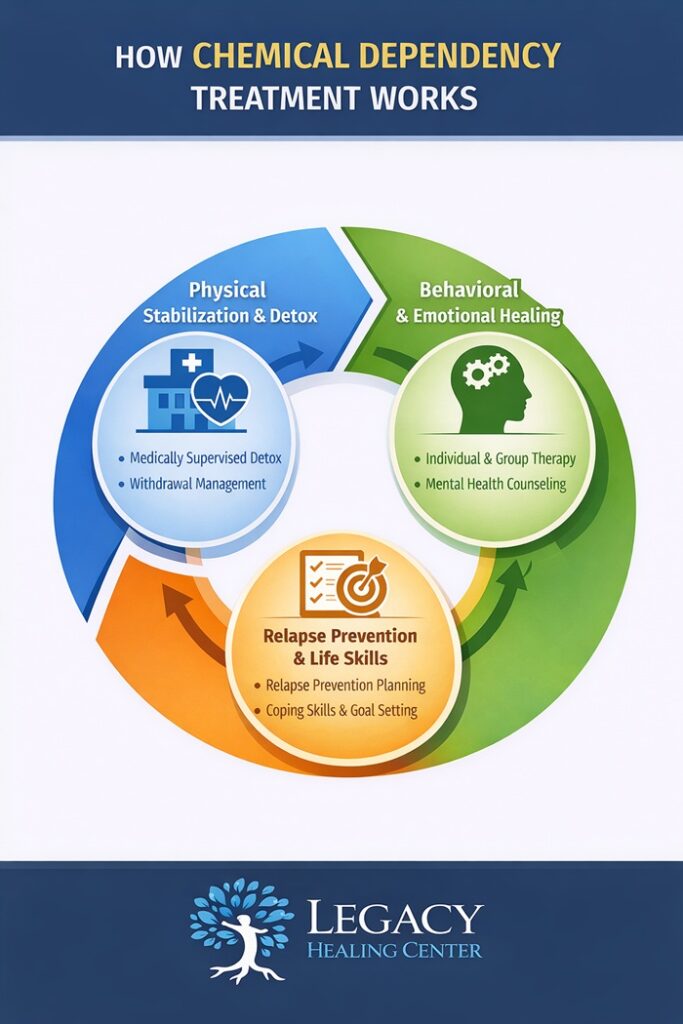
Substance abuse treatment programs use structured medical and therapeutic interventions to help individuals stabilize, recover, and regain control of their lives. Treatment focuses on:
- Physical stabilization and withdrawal management
- Behavioral and emotional healing
- Relapse prevention and life skills development
These programs empower individuals to rebuild autonomy and make healthier decisions.
Recognizing the Symptoms of Chemical Dependency
Timely identification of chemical dependency symptoms allows for early intervention and improved addiction treatment outcomes. Chemical dependency often presents with:
- Cravings and compulsive urges to use
- Tolerance and withdrawal symptoms when not using
- Neglect of responsibilities or relationships
- Using more than intended or being unable to cut back
As symptoms escalate, individuals may experience significant impairment in daily functioning. Legacy’s clinical team uses a thorough diagnostic process to assess for substance use disorder and guide the development of a personalized treatment plan. Withdrawal management and assessment for opioid use disorder or alcohol dependence are standard components of this evaluation.
Different substances produce the same effect of hijacking the brain’s reward system, regardless of the drug used. Recognizing this cycle of addiction is vital for anyone seeking services to break free from drug abuse and begin a new chapter.
Goals of Chemical Dependency Treatment
The goals of chemical dependency treatment at Legacy extend far beyond detox. Our programs are designed to:
- Achieve and maintain abstinence from drugs and alcohol
- Enhance psychological, emotional, and spiritual well-being
- Strengthen family relationships and support systems
- Improve functioning in work, school, and daily life
- Equip clients with relapse prevention tools for long-term success
We prioritize whole-person healing, integrating medical, therapeutic, and holistic elements for a truly transformative recovery experience. Treatment planning is individualized, involving each client and their treatment team in decision making and goal setting.
Our comprehensive services include ongoing support through aftercare and structured group sessions. This approach is especially beneficial for individuals who have been involved in the criminal justice system, where consistent and integrated care plays a role in long-term recovery.
Types of Chemical Dependency Treatment Programs
Legacy Healing Center offers multiple levels of care, ensuring each client receives the right intensity of support.
Inpatient Chemical Dependency Treatment Programs
Our residential treatment programs provide round-the-clock care in a structured and restrictive environment. This immersive setting is ideal for individuals facing severe substance use disorder, mental health conditions, or complex trauma.
Inpatient treatment includes:
- Medically supervised detox and withdrawal management
- Daily individual and group therapy sessions
- Psychiatric and medical services from licensed professionals
- Recreational activities that foster coping skills and personal growth
Inpatient care allows clients to remove themselves from stressful situations, focus on healing, and develop the foundation for a productive lifestyle.
Outpatient Chemical Dependency Treatment Programs
Outpatient care allows clients to remain engaged in life while participating in structured treatment.
Outpatient options include:
- Partial Hospitalization Program (PHP)
- Intensive Outpatient Program (IOP)
- Traditional Outpatient (OP)
These outpatient programs offer flexibility for those balancing work, family, or school, while maintaining access to therapy, medication management, and peer support. In outpatient settings, clients benefit from individual therapy, family therapy, and group therapy while continuing substance use disorder treatment with minimal disruption to daily life.
These treatment settings empower clients to stay active in their communities and practice recovery tools in real-world situations. Treatment learnings are immediately applicable, and support networks continue to grow through community setting involvement.

Core Elements of Effective Treatment
At Legacy, we combine evidence-based practices with personalized care. Effective treatment involves:
Pharmacotherapy for Opioid Use Disorder
Medication-assisted treatment (MAT) is often used to ease withdrawal symptoms, manage cravings, and support abstinence. Medications such as Naltrexone, Suboxone, and Acamprosate are used for opioid use disorder, alcohol use disorder, or stimulant dependence. These medications assist patients in stabilizing and remaining abstinent from substances. Medication is always integrated into a larger continuum of care.
Behavioral Therapies for Mental Health
Therapies such as Cognitive Behavioral Therapy (CBT), Motivational Enhancement Therapy (MET), and Dialectical Behavior Therapy (DBT) help clients:
- Identify negative thought patterns and change behavior
- Build emotional regulation skills
- Set goals and improve decision making
Contingency management is also used to reinforce recovery behaviors through positive reinforcement. Clients learn to navigate triggers, develop healthy routines, and stay engaged in the recovery process.
Psychosocial Interventions
We address the broader life circumstances that impact recovery. Services include:
- Family therapy and couples counseling
- Vocational, educational, and case management support
- Legal aid and housing referrals
Mental health services and access to licensed mental health professionals are key to supporting individuals with co-occurring mental health disorders.
Specialized Programs for Unique Needs
Legacy offers tailored programs for populations such as:
-
- Women (including pregnant individuals)
- Adolescents
- First responders and veterans
- LGBTQ+ individuals
Each program addresses unique social, psychological, and physical health needs, ensuring culturally competent care that resonates. Specialized disorder treatment plans are adjusted based on client input and progress.
Support Groups and Peer Recovery Programs
Support groups like Alcoholics Anonymous (AA), Narcotics Anonymous (NA), and other self help groups are essential to long-term recovery. We connect clients to:
- 12-Step and non-12-Step support networks
- Peer mentors and alumni programs
- Group therapy, group sessions, and group counseling
These therapeutic community models provide social accountability, promote self help, and build self esteem. For many, support groups are the foundation for maintaining abstinence and staying committed to sobriety.
Group sessions offer clients the opportunity to share experiences, learn coping skills, and strengthen their commitment to change behavior. Whether facing chemical dependency from alcohol or drug use, clients benefit from the safe, structured space that group counseling provides.
Aftercare, Relapse Prevention, and Self Help Groups
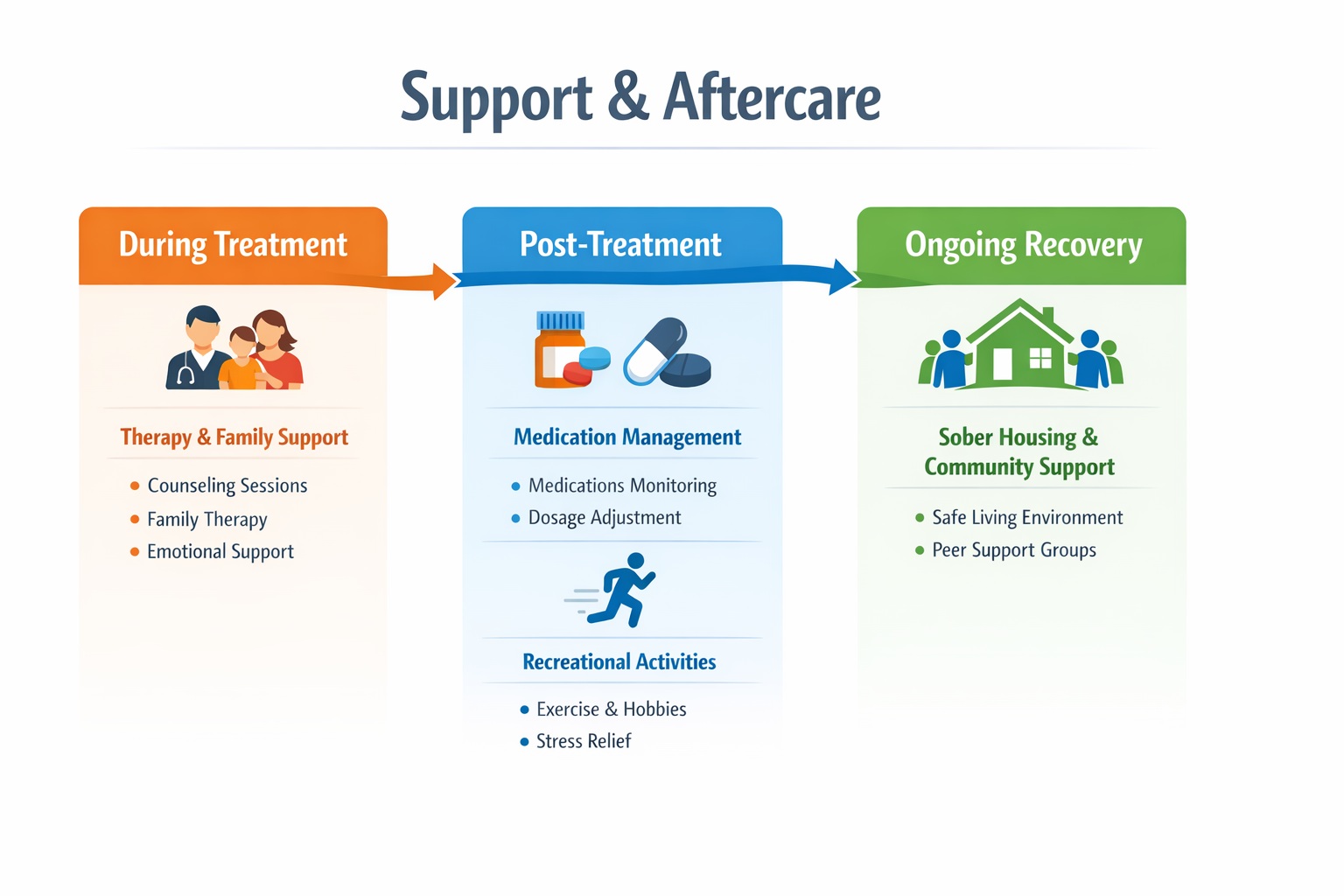
Relapse prevention is a cornerstone of Legacy’s continuum of care. Our aftercare services include:
- Continued individual therapy, family therapy, and group support
- Medication management and check-ins with the treatment team
- Sober housing and connections to therapeutic community settings
- Access to recreational activities and community support
A comprehensive continuum of services ensures long-term support for clients transitioning out of formal treatment. We also teach clients how to manage cravings, build coping skills, and remain abstinent in the face of stress or temptation.
The recovery process is ongoing. Individuals who participate in services post-treatment report greater stability, improved relationships, and reduced risk of continuing substance use. For those with a history of drug abuse or exposure to different substances, aftercare is an essential pillar of sustained wellness.
Primary Care Collaboration and Confidentiality
Our team collaborates with primary care providers to ensure integrated care for co-occurring mental health and substance use disorders. Clients benefit from:
- Medical services
- Mental health services
- Consistent communication between providers
We also uphold strict confidentiality under 42 CFR Part 2, ensuring privacy around treatment plans, substance abuse treatment progress, and family involvement.
Choosing the Right Chemical Dependency Treatment Program
Chemical dependency treatment at Legacy Healing Center is rooted in compassion, evidence-based practice, and individualized care. Our treatment programs address the full scope of addiction, offering inpatient care, outpatient programs, group therapy, withdrawal management, and comprehensive aftercare.
Through our commitment to quality, clients receive support from a skilled treatment team including therapists, physicians, and counsellors with expertise in substance use disorder treatment, mental health services administration, and relapse prevention.
With the right support and dedication, anyone struggling with drug addiction, alcohol use, or continuing substance abuse can reclaim their life and begin building a life with control over a substance disorder. Let Legacy be your trusted partner in the recovery process.
Legacy Healing Center: Restore, Recover, Rebuild.