


-
 By:
Valerie Puffenberger, PMHNP-BC
By:
Valerie Puffenberger, PMHNP-BC
-
 Editor:
Phyllis Rodriguez, PMHNP-BC
Editor:
Phyllis Rodriguez, PMHNP-BC
-
 Clinical Reviewer:
Dr. Ash Bhatt, MD, MRO
Clinical Reviewer:
Dr. Ash Bhatt, MD, MRO
One of the most common side effects of benzodiazepine (benzo) withdrawal is benzo belly. This condition affects the digestive system and can cause discomfort, pain, and distress for those experiencing it. As addiction treatment providers, the experts at Legacy Healing Center explore the symptoms, causes, and treatment options for benzo belly. We offer benzodiazepine detox programs that can effectively help you safely get through withdrawal and move forward in recovery.
What Is Benzo Belly?
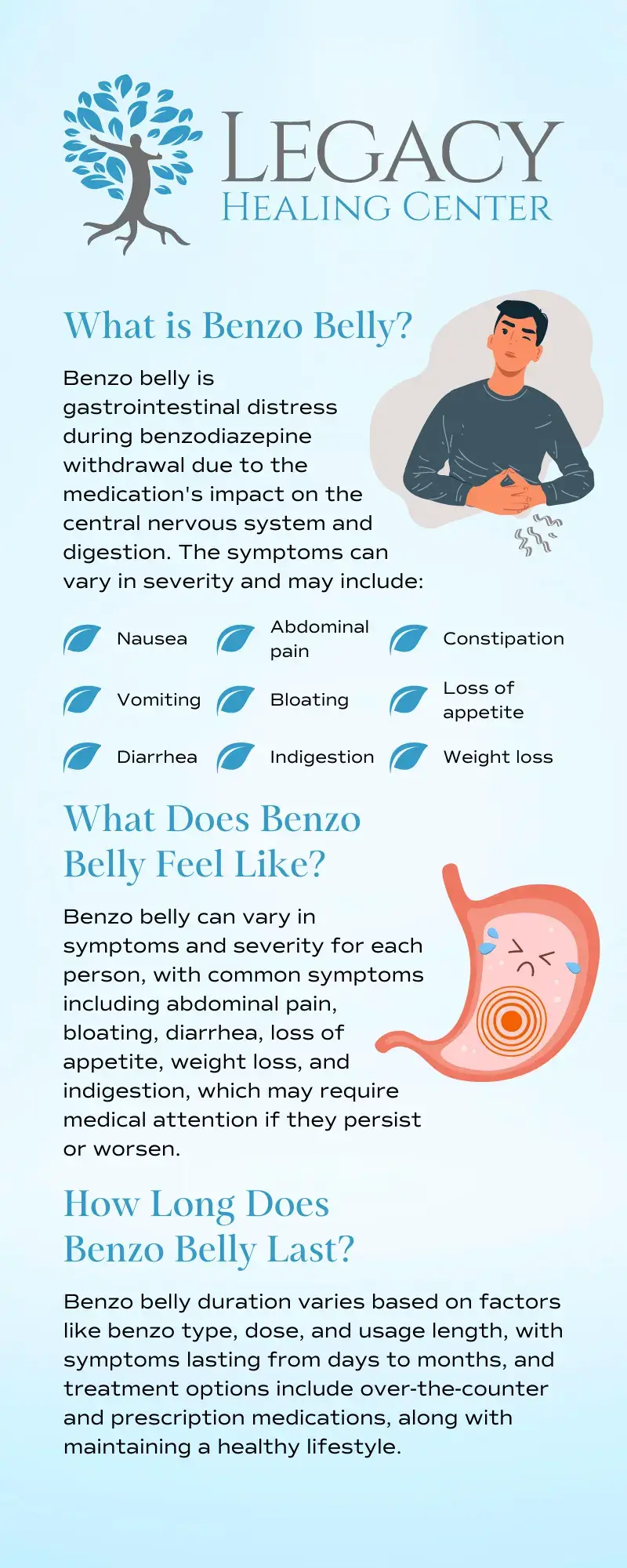
Benzo belly is a common term used to describe the gastrointestinal symptoms that occur during benzodiazepine withdrawal. Benzodiazepines are a class of medications used to treat anxiety, seizures, and insomnia. They work by slowing down the central nervous system, which can lead to physical dependence if used for an extended period.
When someone stops taking benzos, the body goes through withdrawal, which can cause a range of symptoms, including benzo belly. The digestive system can be particularly affected during this process, as it relies on the central nervous system to function correctly. As a result, the body may struggle to digest food, leading to gastrointestinal symptoms.
Benzo Belly Symptoms
Benzo belly symptoms include:
- Nausea
- Vomiting
- Diarrhea
- Abdominal pain
- Bloating
- Indigestion
- Constipation
- Loss of appetite
- Weight loss
These symptoms vary in severity and can be distressing, negatively impacting a person’s overall quality of life. It’s essential to seek medical attention if these symptoms persist or worsen.
Get immediate, confidential guidance on your treatment options and insurance. Answer a few quick questions to see if you may qualify for treatment.


Talk to a Treatment Specialist

Check Your Insurance in 2 Minutes
What Does Benzo Belly Feel Like?
Benzo belly can feel different for everyone. Some people may experience mild symptoms that come and go, while others may have severe symptoms that last for weeks or even months. The most common symptoms include abdominal pain, bloating, and diarrhea.
Abdominal pain may be mild or severe and may feel like cramping sharp pain or a dull ache. Bloating may cause discomfort and some people may feel like their stomach is distended. Diarrhea can also occur and may be severe enough to cause dehydration if not treated promptly.
In addition to these symptoms, some people may experience other issues during benzo withdrawal, such as loss of appetite, weight loss, and indigestion. These symptoms can be challenging to manage, so it’s essential to seek medical attention if they persist or worsen.
Benzo Withdrawal Diarrhea (Important Symptom to Know)
Diarrhea is one of the more common — and often unexpected — gastrointestinal symptoms people face during benzodiazepine withdrawal. When someone stops taking benzos, the nervous system, which has been slowed down by the drug, suddenly becomes overstimulated. This surge in activity directly affects the digestive tract, causing changes in gut motility that can lead to loose stools, cramping, or urgent bowel movements.
Why Benzo Withdrawal Can Cause Diarrhea
Several physiological shifts take place when benzo use is reduced or stopped:
- Reduced GABA activity: Benzos enhance GABA, the brain’s calming neurotransmitter. When levels drop, the body enters a state of heightened sensitivity.
- Increased stress hormones: Cortisol and adrenaline rise, triggering a “fight-or-flight” response that can disrupt digestion.
- Overactive nervous system: Rapid firing of nerves affects how quickly food and waste move through the intestines.
- Changes in digestive muscle function: The gut’s muscles may contract faster or irregularly, causing diarrhea or abdominal discomfort.
These changes vary from person to person, but digestive issues are a frequent part of the withdrawal process.
When to Seek Medical Help
While diarrhea can be a normal withdrawal symptom, certain signs mean it’s time to get professional support:
- Diarrhea lasting more than 3–5 days
- Trouble staying hydrated or keeping fluids down
- Dizziness, weakness, or fatigue
- Blood in the stool
- Severe or worsening abdominal pain
How Long Does Benzo Belly Last?
The duration of benzo belly can vary depending on several factors, such as the type and dose of benzo used, the length of time it was used, and the individual’s overall health. Some people may experience symptoms for a few days, while others may have symptoms that last for several weeks or even months.
Additionally, benzo belly treatment options may include over-the-counter medications to relieve nausea, diarrhea, and abdominal pain. In severe cases, a healthcare provider may prescribe medications to help manage symptoms.
It’s also essential to maintain a healthy diet, stay hydrated, and get plenty of rest to help the body heal during this time.
Legacy Healing Center Is Here to Help
Benzo belly is a common side effect of benzodiazepine withdrawal. Symptoms can be distressing and uncomfortable and may include nausea, vomiting, diarrhea, abdominal pain, and bloating. Seeking medical attention is essential to manage symptoms effectively, with treatment options possibly including medication and lifestyle changes. As a rehab center, we understand the challenges of withdrawal and recovery, and we’re here to help.
Legacy Healing Center provides comprehensive addiction therapy programs that address the physical, emotional, and mental aspects of addiction. Our team of experienced healthcare providers and therapists is dedicated to helping individuals achieve long-term recovery and live healthy and fulfilling lives.
If you or a loved one is struggling with addiction, we encourage you to reach out for help. We offer benzo addiction treatment plans that are tailored to meet the unique needs of each individual.
To learn more about our options for addiction recovery from alcohol or prescription drugs, call us today at 888-534-2295 and start one of the most important journeys of your life.